

One of the most common questions investors ask is: What happens if I add Bitcoin to my portfolio, and how much should I allocate to it?
Here’s what our analysis shows.
Correlation: Where crypto stands apart
Understanding how assets move in relation to one another is central to portfolio construction. Correlation analysis helps reveal whether a new asset amplifies existing risks or introduces meaningful diversification. To assess crypto’s fit, we examined a broad set of assets:
Figure 1: Correlation Analysis Asset Universe

Source: 21Shares, Bloomberg, Yahoo Finance, Coingecko
From July 1, 2022, to June 30, 2025, Bitcoin maintained consistently low correlations with traditional asset classes, like equities, treasuries and even gold.
This makes crypto one of the few assets that can move differently from traditional investments like stocks or bonds. For investors, that’s a big deal as it means crypto can help diversify a portfolio and reduce overall risk.
Figure 2: Correlation of Returns Across Asset Classes: July 1, 2022 - June 30, 2025

Source: 21Shares, Data from Bloomberg and Yahoo Finance. Correlation calculated on a 10D rolling return window from July 1, 2022, to June 30, 2025. Color Description: Yellow denotes high correlation across assets, white denotes low or negative correlation across assets.Source: 21Shares, Data from Bloomberg and Yahoo Finance. Correlation calculated on a 10D rolling return window from July 1, 2022, to June 30, 2025. Color Description: Yellow denotes high correlation across assets, white denotes low or negative correlation across assets.
What happens if you add 5% Bitcoin to your portfolio?
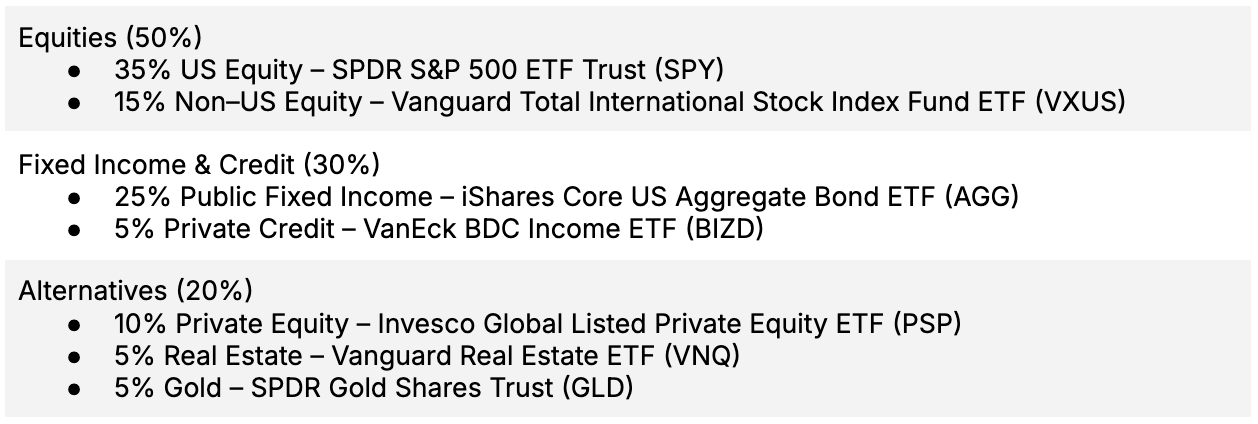
Correlation is one thing, but how does crypto actually affect portfolio outcomes? To answer that, we built a balanced, multi-asset model portfolio designed to reflect the complexity of today’s investor allocations. Rather than relying on the traditional 60/40 split, we used a more modern framework:
Figure 3: Model Portfolio
Source: 21Shares, Bloomberg, Yahoo Finance, Coingecko.
To understand how crypto might fit in, we tested a 5% allocation in Bitcoin. The weight was sourced from US equities (2%), gold (2%), and real estate (1%) to reflect Bitcoin’s hybrid nature: part asymmetric growth potential, part emerging store of value, and potentially viewed as part of an alternatives sleeve.
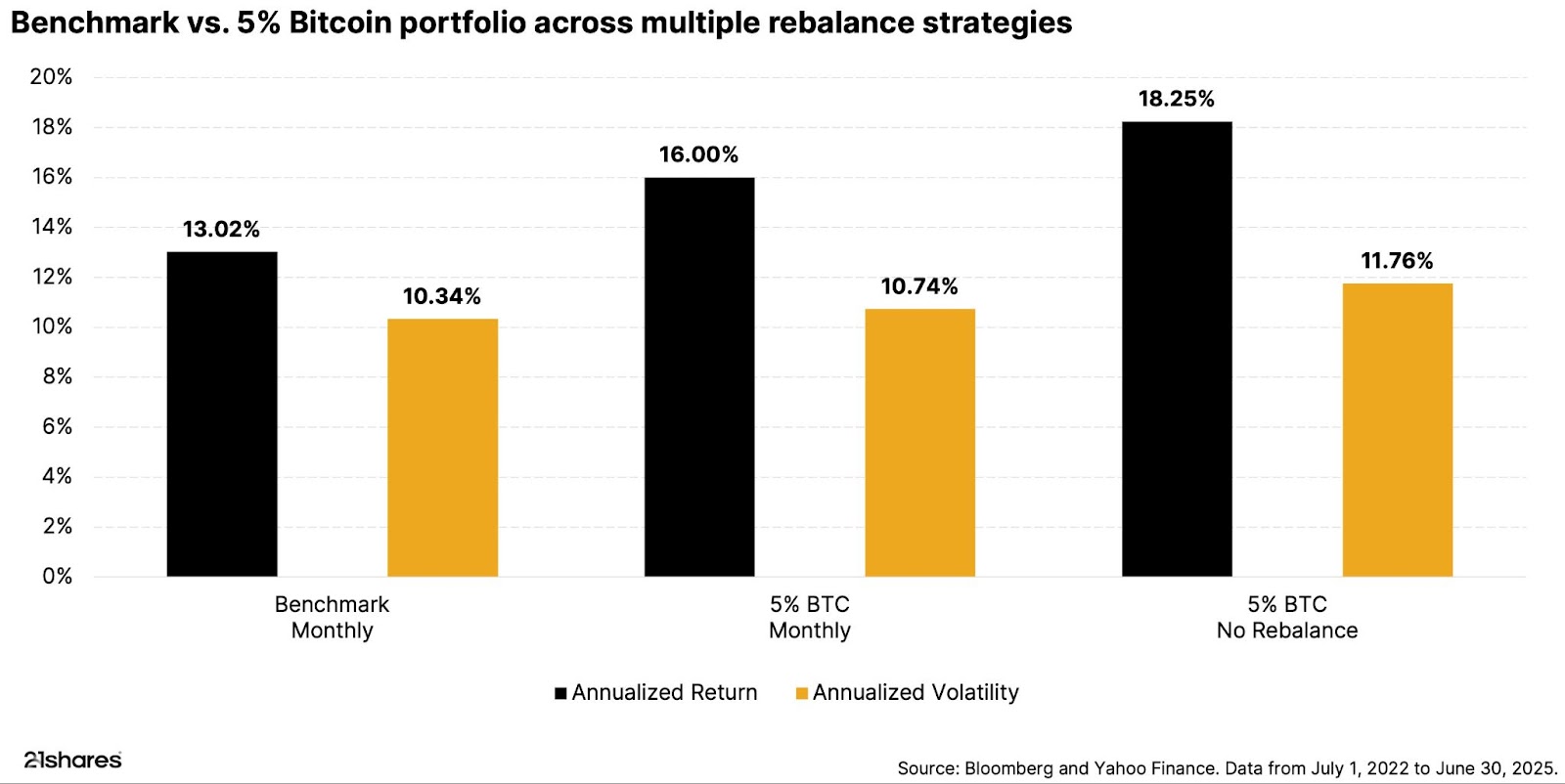
Stronger risk-adjusted returns: As shown in Figure 4, introducing a 5% Bitcoin allocation led to a clear uplift in both returns and efficiency. Cumulative returns rose to 65.34%, a gain of more than 20% over the benchmark.
Sharpe ratios improved even more dramatically, reinforcing that expanding exposure beyond a minimal allocation can strengthen overall performance.
Volatility remains manageable: Furthermore, annualized volatility remained stable. Across all strategies, it ranged from 10.74% to 11.76%, only slightly above the benchmark’s 10.34%, and still well within traditional risk tolerances.
This echoes a key finding: Bitcoin’s historical volatility doesn’t scale linearly at the portfolio level, especially when it’s a modest allocation within a diversified mix.
Figure 4: Simple Growth Portfolio with a 5% BTC Allocation Across Different Rebalancing Strategies
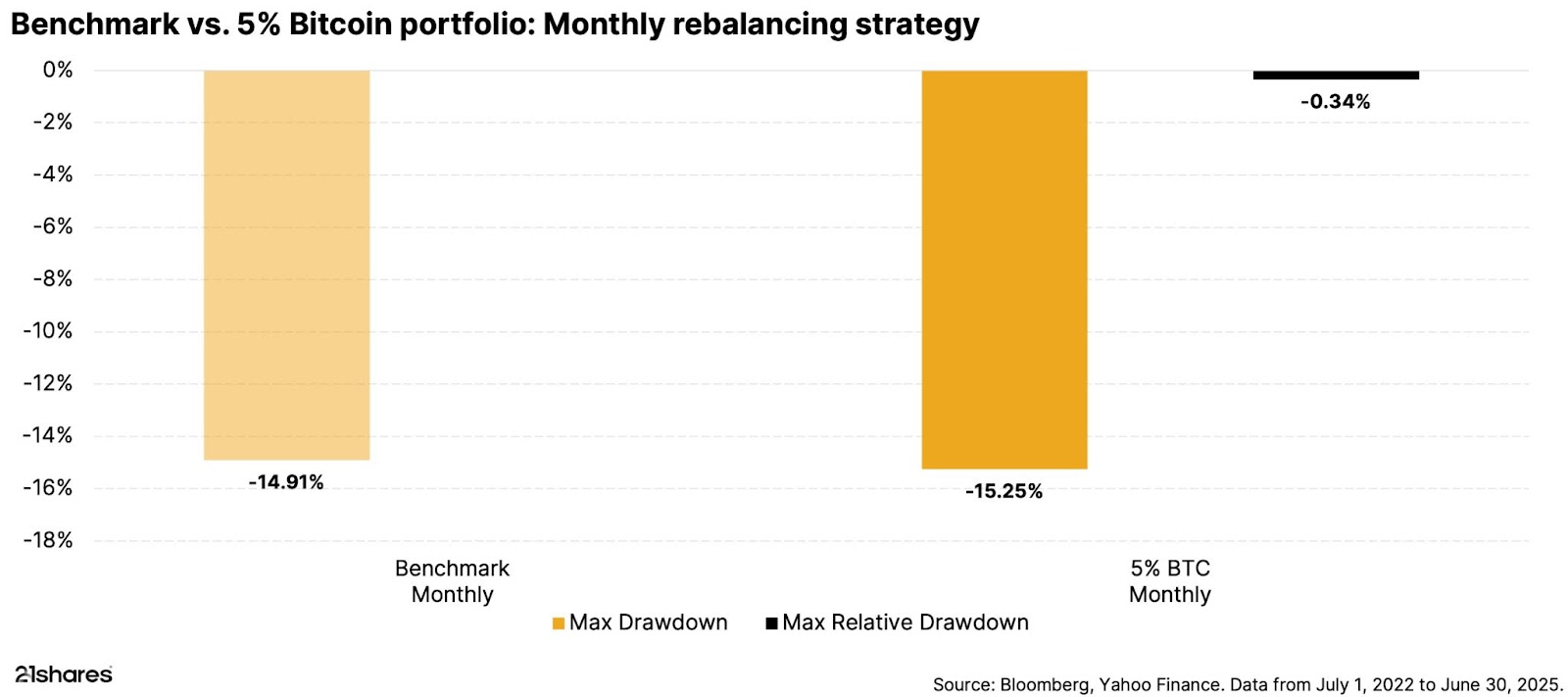
Well-contained downside risk: A common concern with crypto exposure is increased drawdown risk. Yet even at 5%, drawdowns remained tightly clustered. The worst-case scenario saw a max drawdown increase by just 0.52% at -15.43% versus the benchmark’s -14.91%. Most rebalanced strategies stayed even closer.
The key takeaway? Adding a small amount of Bitcoin to your portfolio doesn’t significantly increase risk. Historically, it boosted your returns while still staying within the safety limits of a typical investment strategy.
Figure 5: Simple Growth Portfolio with a 5% BTC Allocation Across Different Rebalancing Strategies
The Real risk? Missing the opportunity
Crypto is still growing, and any investment should match your goals and risk comfort. But two things stand out: Bitcoin is getting less volatile, and its price trend is moving up.
Want to see the full analysis? Check out our Q2 Portfolio Allocation Report for detailed backtests and examples.









_logo.svg)

.svg.png)