

We’re halfway through 2025, and it’s already been a big year for smart contract platforms like Ethereum and Solana. These networks are making major upgrades that could change how the crypto world works in the second half of the year.
Ethereum is back in the spotlight
In the first half of 2025, Ethereum (ETH) made a major upgrade called Pectra. This update brought big changes:
- It introduced smart accounts, which can make Ethereum easier to use for everyday people.
- It raised the limit for validators (the people who help secure the network) from 32 ETH to 2,048 ETH, making staking more flexible for larger players.
- It also improved how Ethereum connects with Layer 2 networks, which helps the system handle more transactions without losing security.
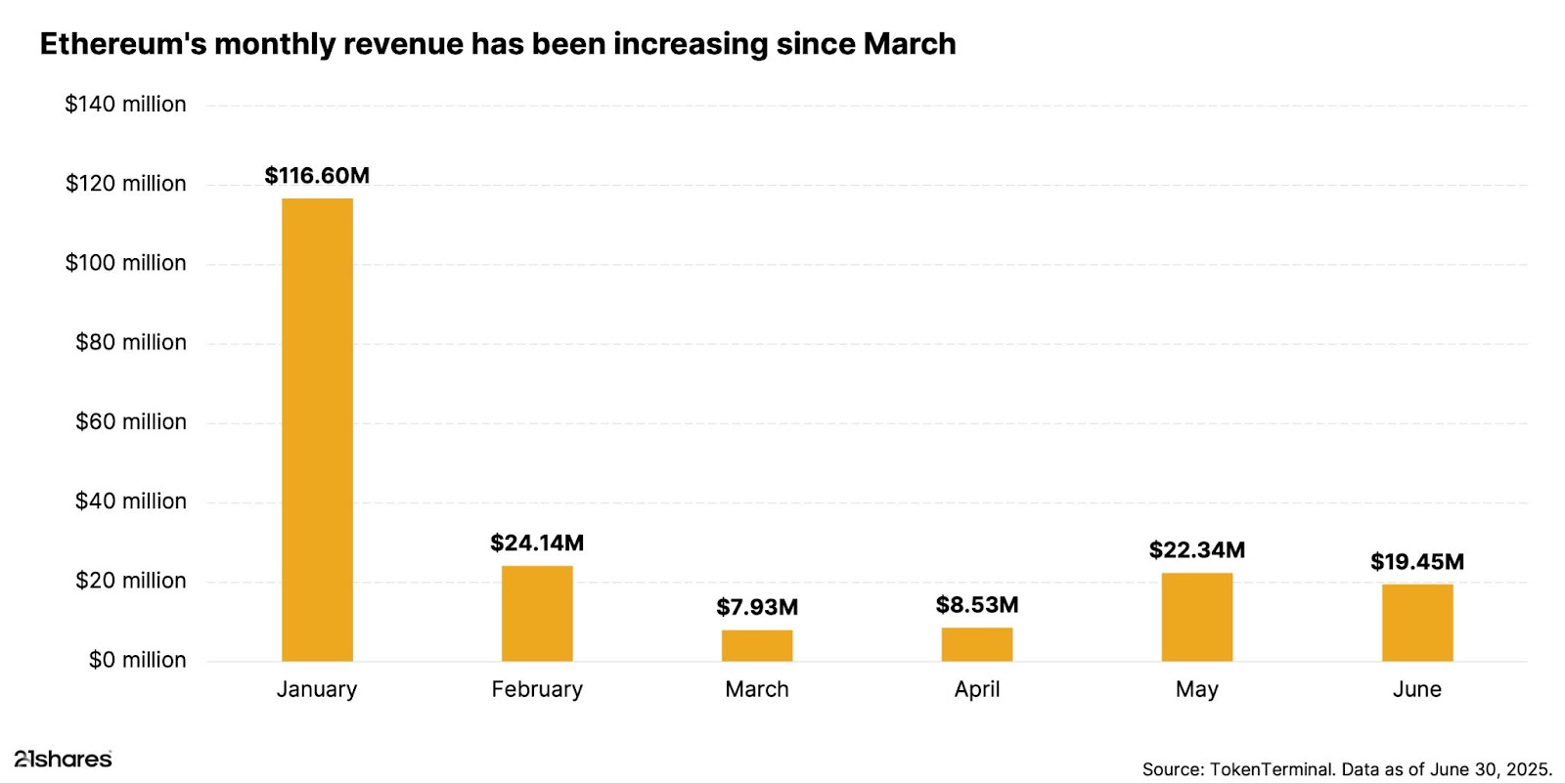
While Ethereum's activity hasn’t fully bounced back from levels seen at the start of the year, there are signs of growth. For example, monthly revenue from the network has nearly tripled, from about $8 million in March to over $19 million in June.
The Ethereum Foundation is now focusing less on deep technical research and more on real-world products. More companies are also building on Ethereum. Robinhood, for example, recently announced its own Ethereum-based Layer 2 network, another sign that big institutions are getting more involved. New efforts like Etherealize, a project focused on bringing traditional finance into Ethereum, are also picking up.
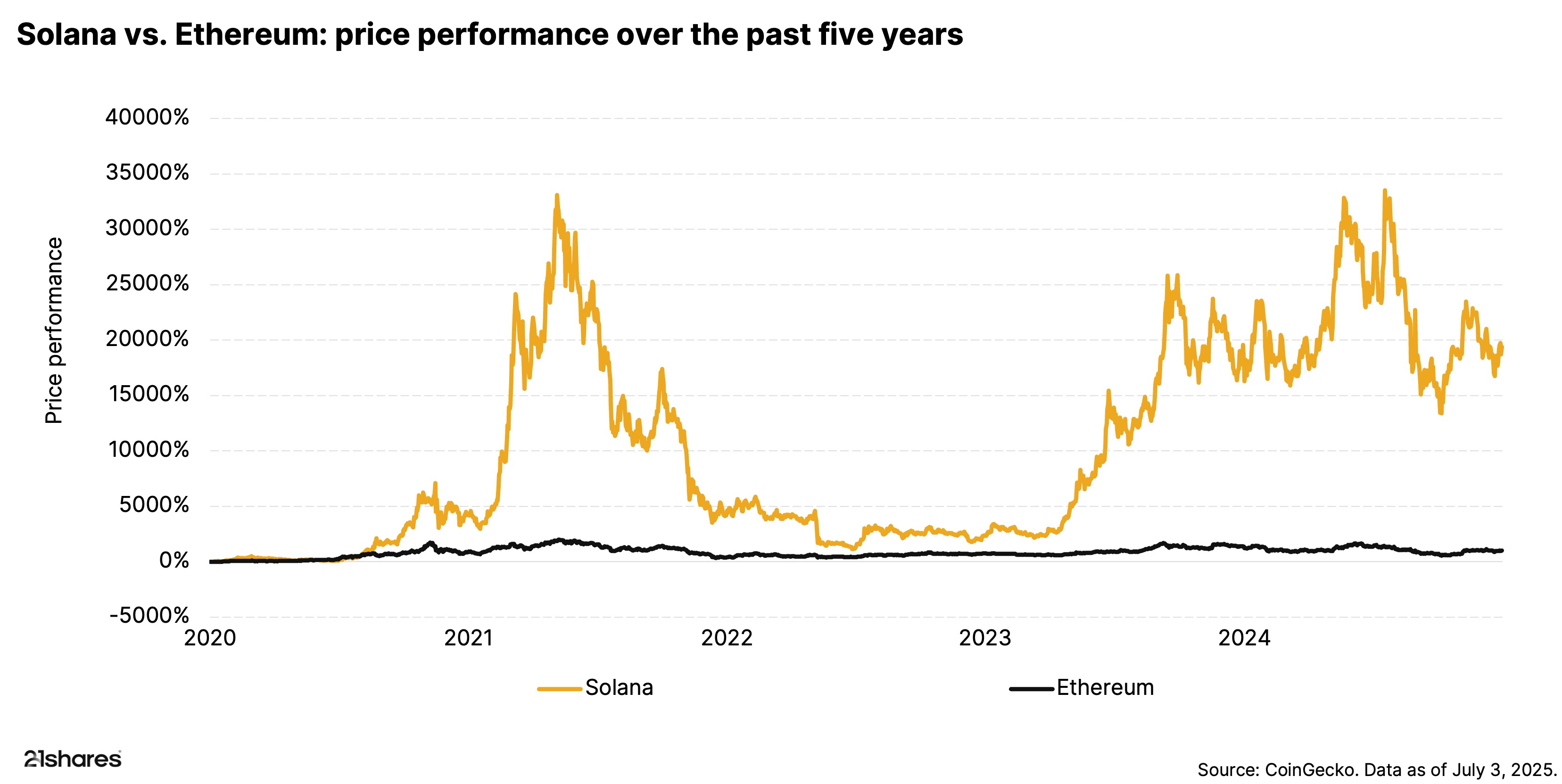
While Ethereum's fees haven’t fully returned to previous highs, the tools and upgrades for a strong comeback are starting to fall into place. Ethereum’s price has increased by 100% since April, indicating that the market is starting to take notice.
Solana is focusing on long-term growth
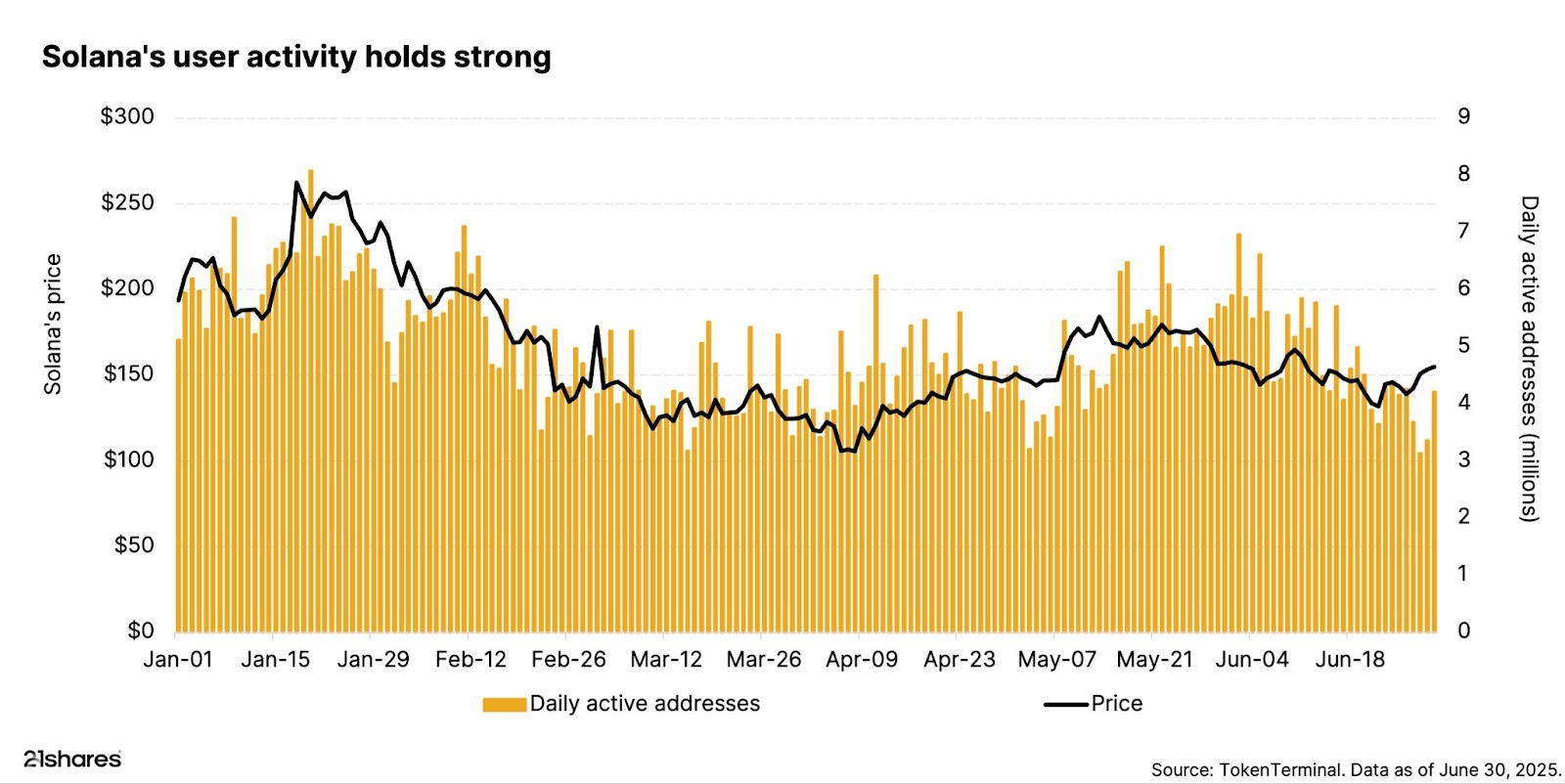
Solana (SOL) price is down around 20% this year. A big reason for that drop is the decline in memecoin hype, which also caused trading activity on Solana’s decentralized exchanges (DEXs) to fall from $82 billion in March to $58 billion in June.
But there’s more to the story. Even though prices and trading volume dropped, Solana’s user activity stayed strong. Daily active users remained in the millions, and in June, Solana hit 7 million users in a single day, close to its all-time high in January during the peak of the political memecoin craze.
On the technology side, Solana is upgrading its infrastructure:
- Firedancer, a new software client, now powers around 7% of the network. It’s designed to make Solana faster.
- Alpenglow, another upgrade, aims to reduce wait times for transactions.
While the hype may have cooled, Solana is building for the long term. It’s shifting focus from trends like memecoins to real usage and better performance, a move that could pay off as the network continues to grow.
Conclusion
This year, Ethereum and Solana took different paths. Ethereum focused on scaling and bringing in big players, while Solana worked on speed and user experience. With the market calming down, the rest of the year will be more about real progress than big stories.









_logo.svg)

.svg.png)