10 Crypto facts that might surprise you




By Adrian Fritz and Maximiliaan Michielsen
Most people still think of crypto as just speculation.
But beneath the headlines, something much bigger has been unfolding: new financial markets, business models, and infrastructure layers. Some, already larger, faster, or more efficient than their traditional counterparts. Here are 10 facts that reveal what’s happening behind the scenes.
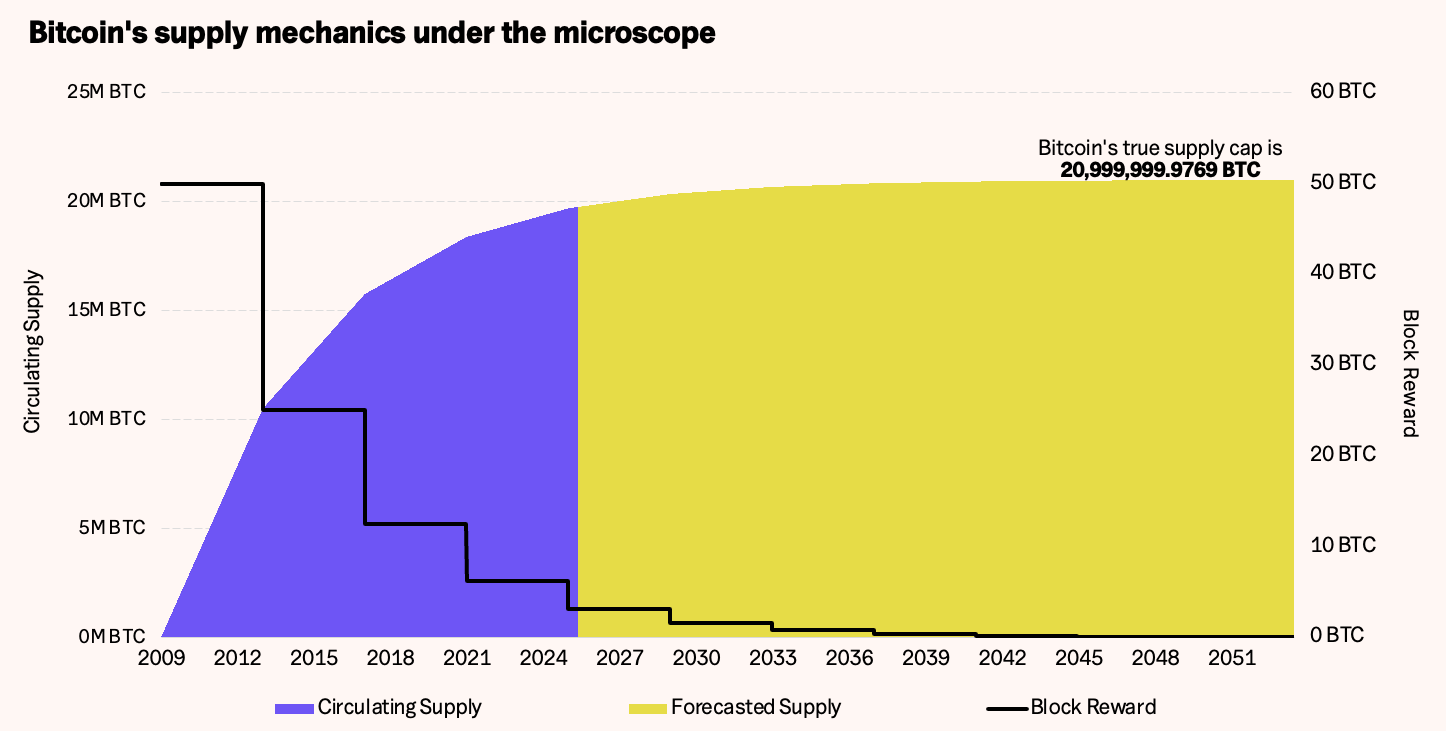
1) Bitcoin’s supply isn’t actually 21 million
Most people believe Bitcoin’s supply is capped at exactly 21 million coins.
In reality, Bitcoin’s issuance is paid in whole satoshis, and after enough halvings the block subsidy rounds down to zero before ever reaching that number. Because Bitcoin operates in discrete units, issuance stops slightly early.
The true maximum supply is 20,999,999.9769 BTC.
It’s a small difference, but it highlights something important: Bitcoin’s scarcity isn’t just a narrative but it’s mathematically enforced in code.
2) Bitcoin’s inflation rate is now lower than gold’s
Gold is often described as the ultimate inflation hedge.
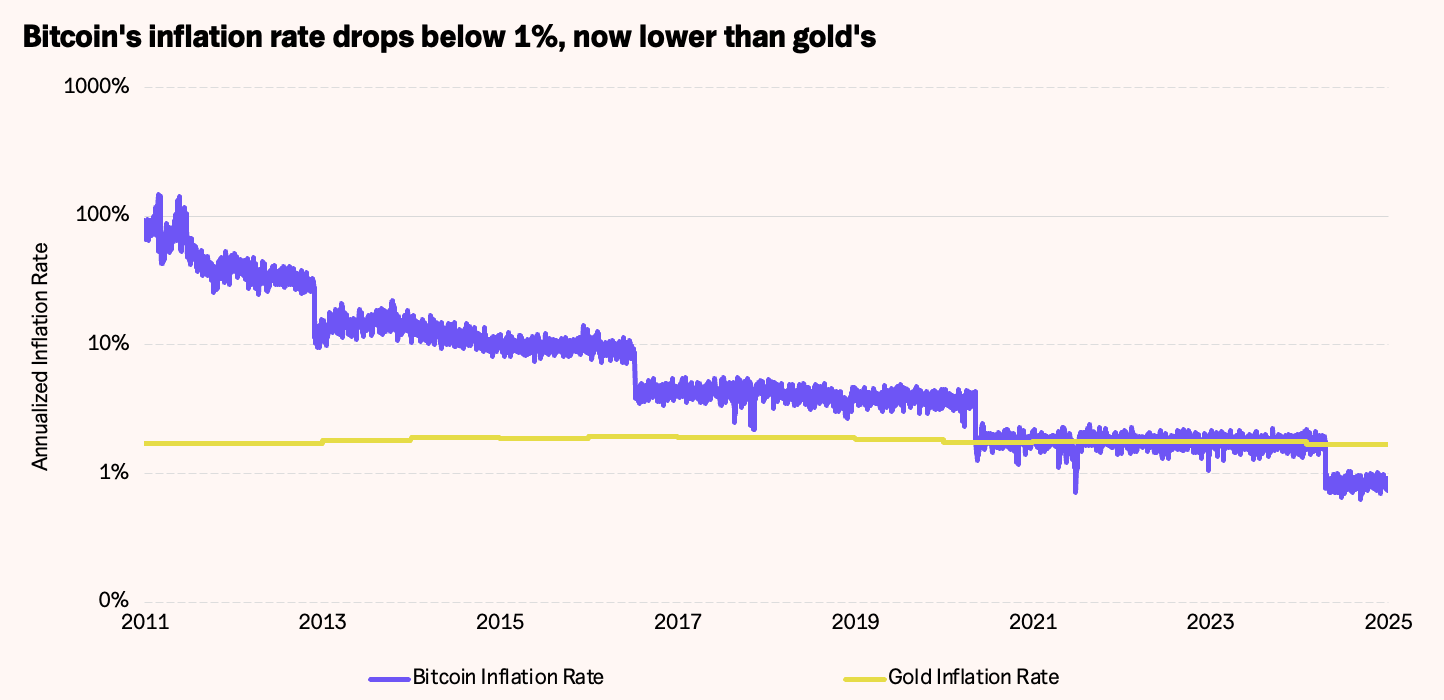
But after the latest halving, Bitcoin’s annual supply growth fell to roughly 0.8%, while gold’s supply continues to expand at around 1.5–2% per year through mining.
In practice, that makes Bitcoin scarcer than gold. It also puts Bitcoin’s inflation rate below that of every major fiat currency, all of which are subject to discretionary monetary policy.
For the first time, a globally accessible monetary asset combines declining supply growth with complete immunity from central intervention, a property no sovereign currency can offer.
3) Bitcoin has more lifetime trading hours than the S&P 500
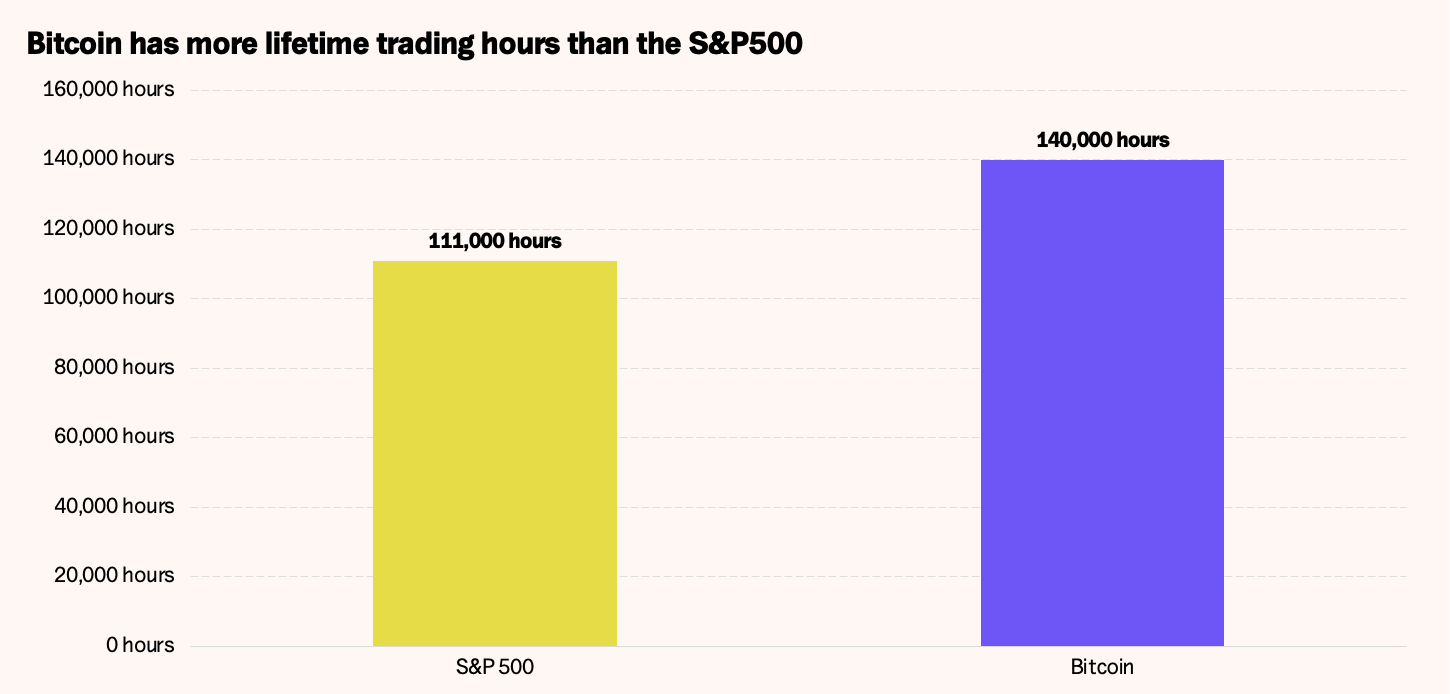
The S&P 500 has existed in its modern form for more than 55 years, but it only trades about 6.5 hours per weekday. Bitcoin, by contrast, has traded 24/7/365 since 2010.
When you add it up, Bitcoin has already accumulated more lifetime trading hours than the S&P 500, despite being decades younger. That continuous price discovery also helps explain why Bitcoin reacts instantly to global events, it never “closes.”
4) US spot Bitcoin ETFs reached $100B+ faster than any asset class in history
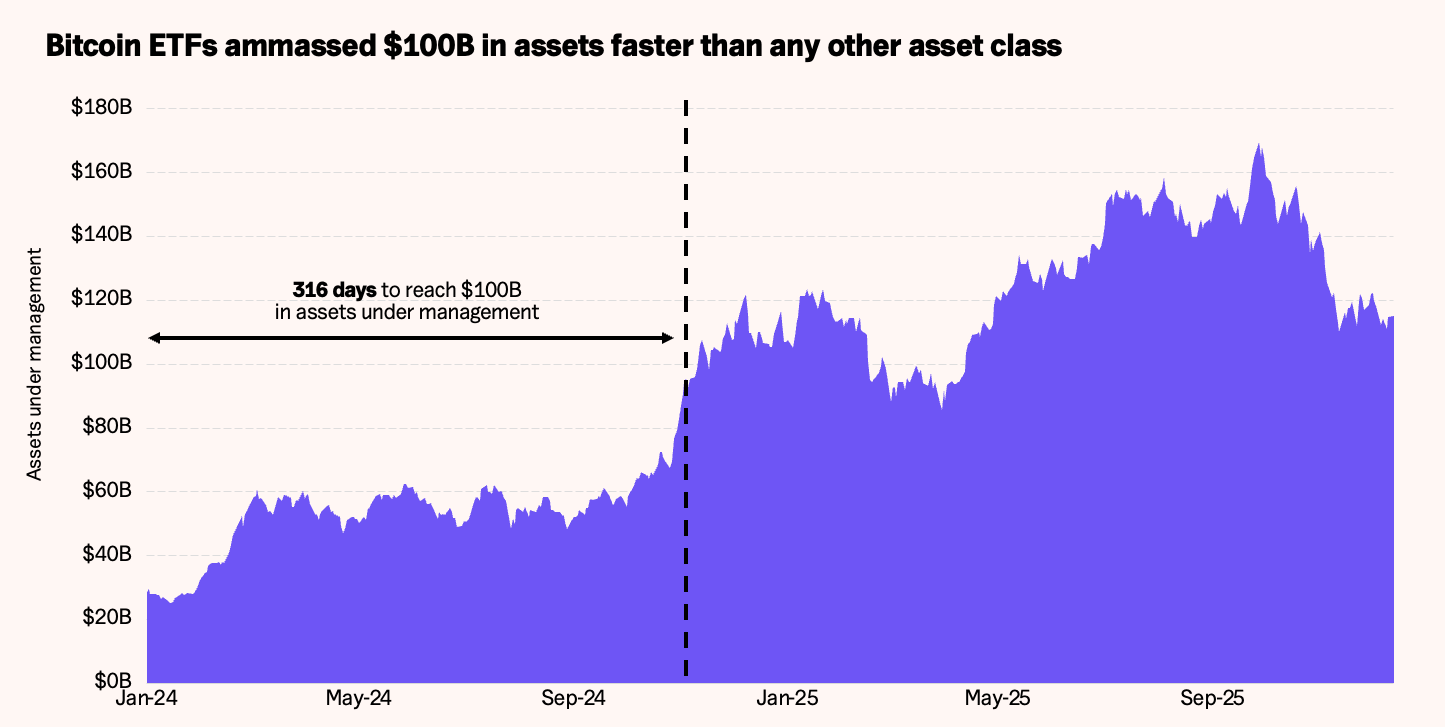
When US spot Bitcoin ETFs launched, some may have expected a slow rollout. Instead, they surpassed $100 billion in assets under management in under a year, faster than gold, equity, or bond ETFs ever managed.
This wasn’t driven by hype. It reflected rapid adoption through registered investment advisors, pension allocators, and institutional portfolios once regulatory clarity arrived, cementing Bitcoin’s place in mainstream finance.
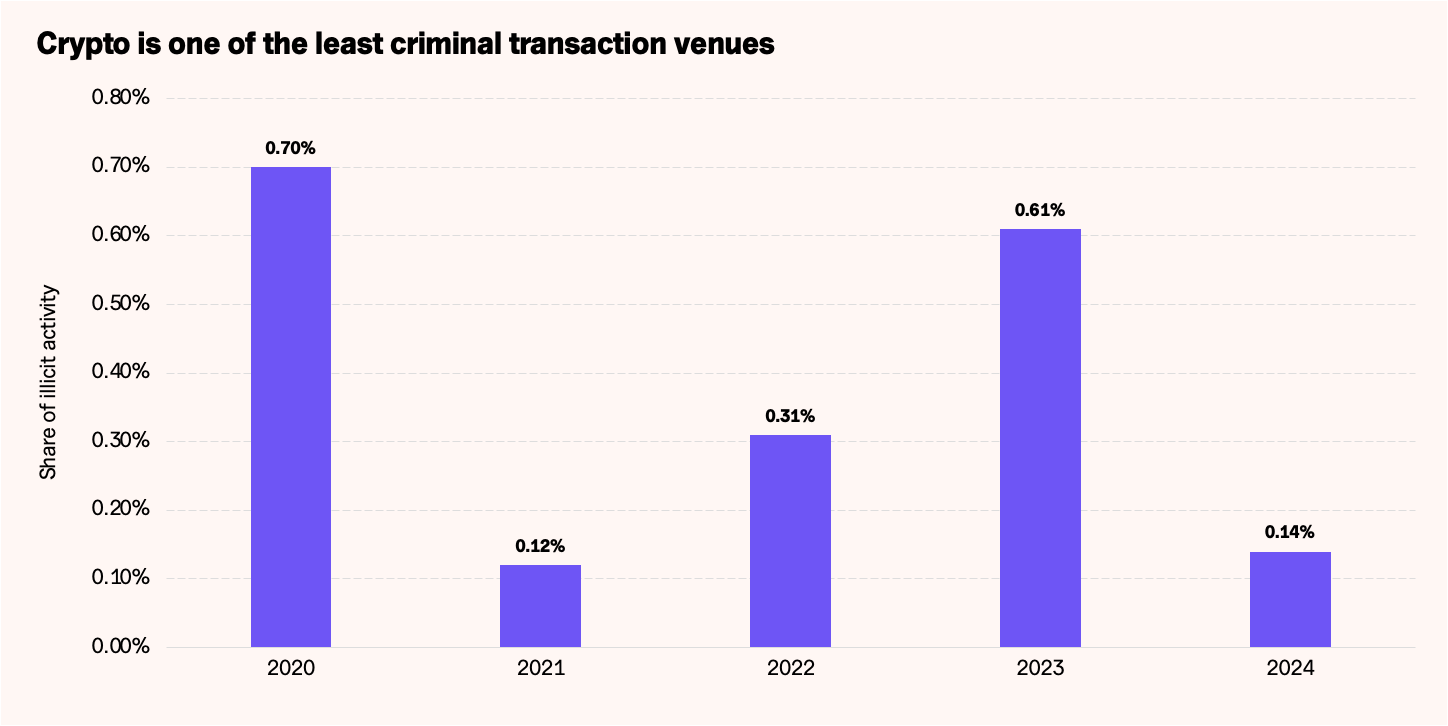
5) Less than 1% of crypto transactions are illicit
Crypto is frequently portrayed as a haven for criminal activity. In reality, blockchain analytics consistently show that less than 1% of crypto transactions are linked to illicit use.
That compares to 2–5% of global GDP estimated to be laundered each year through the traditional financial system, and to cash, which remains the preferred medium for illicit activity precisely because it leaves no trail.
Public blockchains create permanent, traceable records that law enforcement can audit in real time. Far from enabling crime, crypto often makes financial activity more transparent than legacy systems.
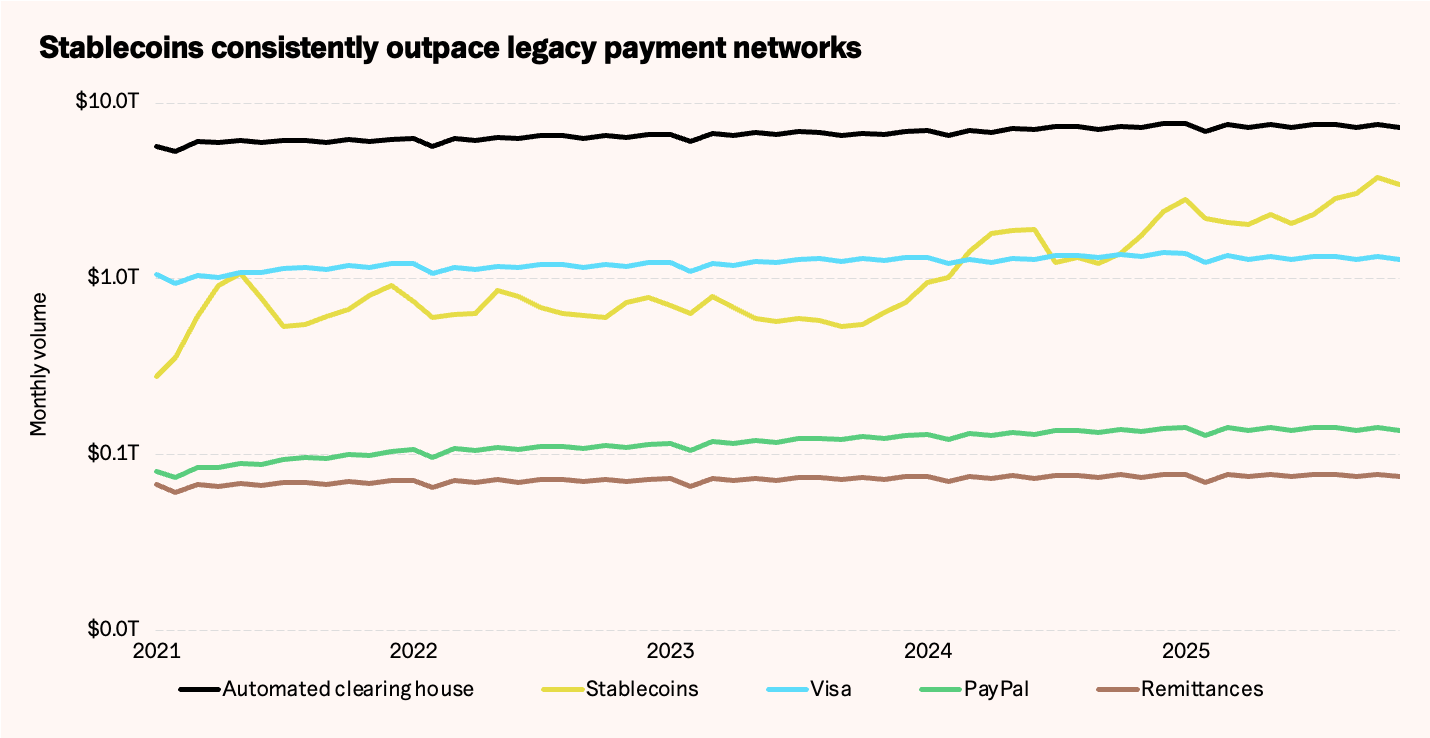
6) Stablecoins now settle more value annually than Visa
Stablecoins are crypto’s killer use case, and now settle more value than Visa, quietly becoming one of the largest payment rails in the world.
This growth isn’t driven by speculation. Stablecoins are used for remittances, payroll, savings, and cross-border commerce, particularly in regions where traditional banking is slow, expensive, or unreliable. By moving dollars on blockchains, stablecoins enable instant settlement, 24/7 availability, global reach, and dramatically lower costs.
Stablecoins didn’t win because they were exciting, they won because they replaced legacy rails with something fundamentally better.
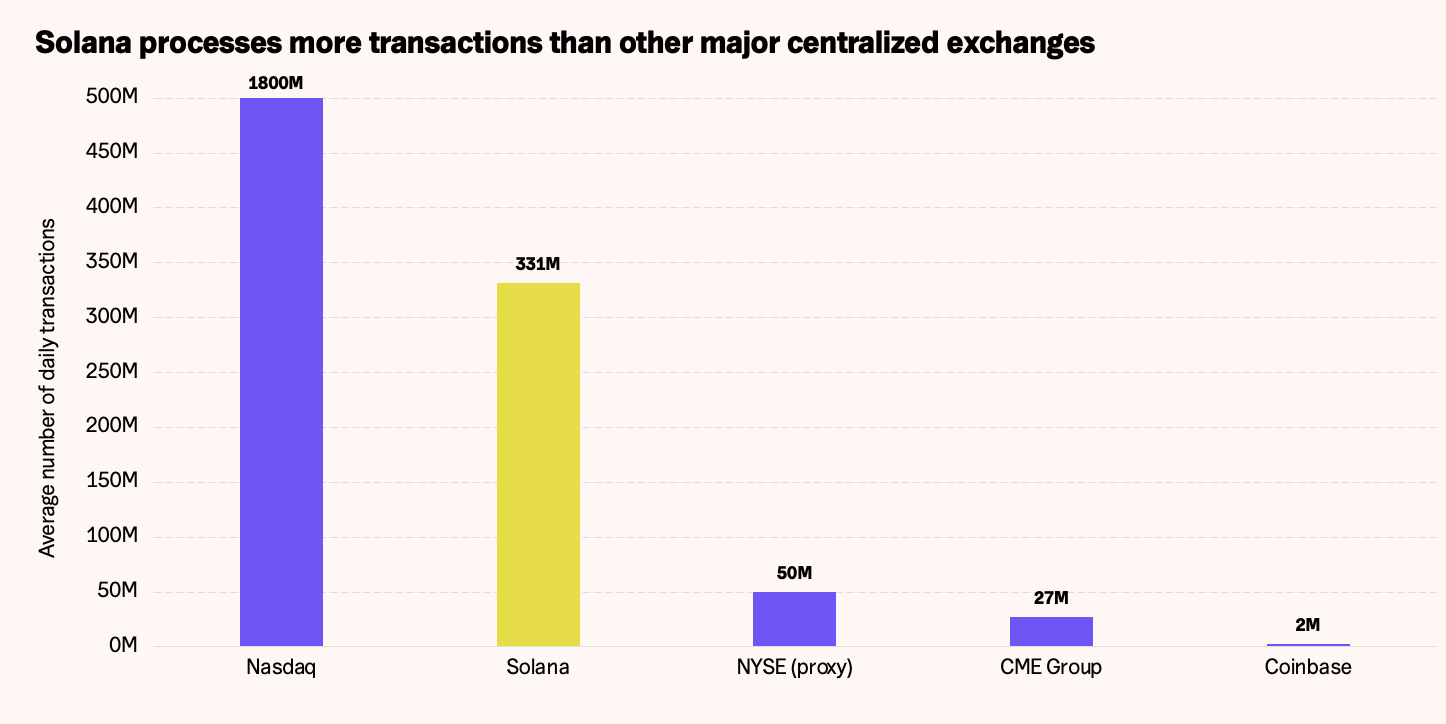
7) Solana processes more transactions than major centralized exchanges
Traditional exchanges like the NYSE or Nasdaq are often seen as the pinnacle of market infrastructure. Yet high-performance blockchains like Solana now process more daily transactions than many major centralized exchanges, earning the nickname “Nasdaq on-chain.”
Solana’s architecture is designed for this exact purpose, enabling thousands of transactions per second with negligible fees, even during periods of peak demand.
The result is a network that behaves more and more like a real-time financial operating system. Blockchains aren’t just catching up to traditional market infrastructure, in some cases, they’ve already surpassed it.
Stablecoins didn’t win because they were exciting, they won because they replaced legacy rails with something fundamentally better.
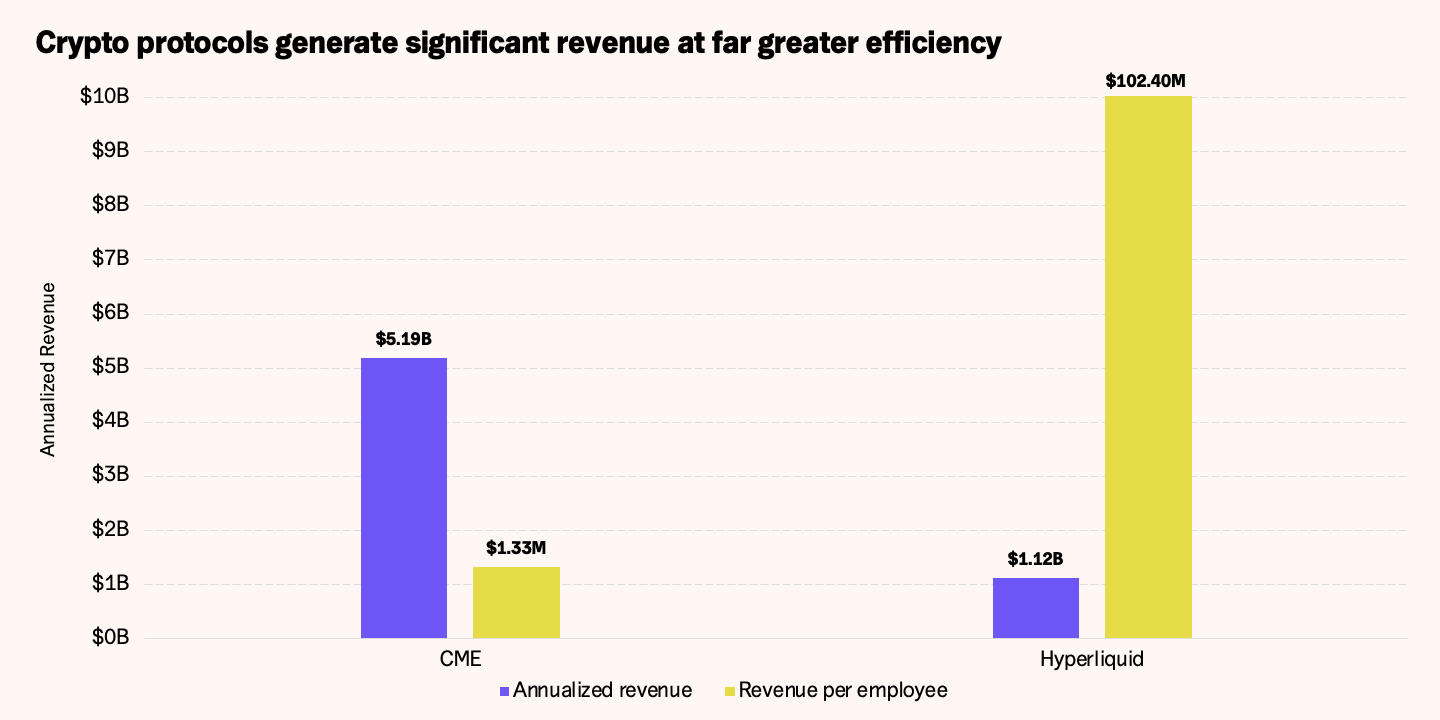
8) Crypto protocols generate significant cash flow with higher capital efficiency
Crypto is often dismissed as speculative and unproductive. In reality, many crypto protocols generate recurring cash flows with a fraction of the capital overhead required in traditional finance.
Consider the comparison. CME Group generates more total revenue, but does so with thousands of employees. Hyperliquid, by contrast, generates over $1B in annualized protocol fees with a team measured in dozens, resulting in orders of magnitude higher revenue per employee.
This isn’t an anomaly; it’s structural. Crypto replaces labor-intensive intermediaries with software, creating market infrastructure that scales globally with minimal marginal cost, a more capital-efficient operating model than anything in legacy finance.
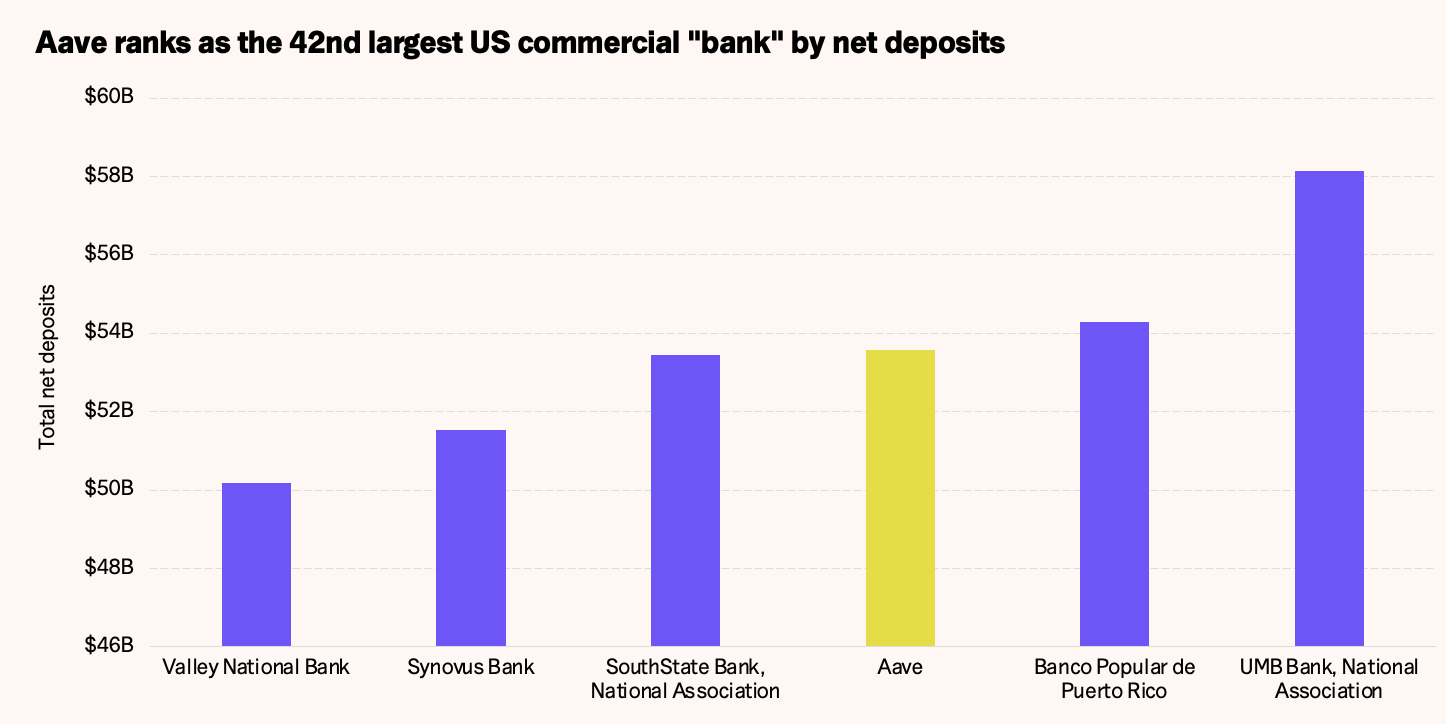
9) Aave is already one of the world’s largest “banks”, without the red tape
Aave doesn’t look like a bank, but functionally it already behaves like one. It manages tens of billions of dollars in deposits and loans, comparable to large regional commercial banks.
The difference is structural: no branches, no bankers, and no opening hours.
Users can lend, borrow, and earn interest 24/7, directly through transparent smart contracts, redefining what modern banking can look like.
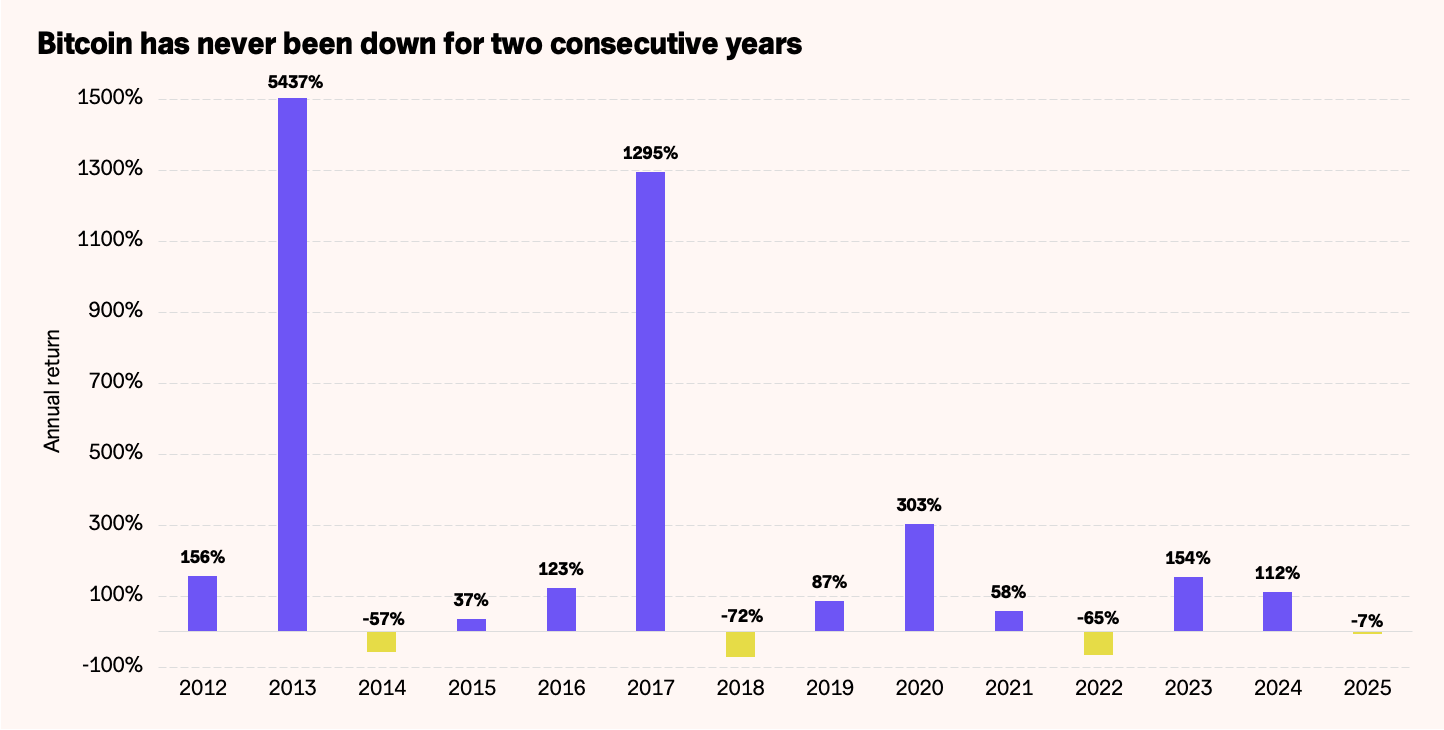
10) Bitcoin has never been down for two consecutive years
Bitcoin is often criticized for its volatility, especially in years when prices finish lower. Yet despite weathering multiple bear markets, Bitcoin has never recorded two consecutive calendar years of negative returns.
Historically, periods of consolidation have been followed by recoveries as demand reasserts itself. Today, that backdrop looks materially different from prior cycles: institutional ETFs, corporate treasuries, and sovereign allocators absorb supply, compressing volatility and shortening drawdowns.
Even if Bitcoin ends 2025 modestly lower, history suggests weakness has never persisted for more than a single year. With clearer regulation, patient capital, and a favorable macro backdrop, the setup heading into 2026 looks like the next leg up for Bitcoin.
This report has been prepared and issued by 21Shares AG for publication globally. All information used in the publication of this report has been compiled from publicly available sources that are believed to be reliable, however, we do not guarantee the accuracy or completeness of this report. Crypto asset trading involves a high degree of risk. The crypto asset market is new to many and unproven and may have the potential not to grow as expected.Currently, there is relatively small use of crypto assets in the retail and commercial marketplace in comparison to relatively large use by speculators, thus contributing to price volatility that could adversely affect an investment in crypto assets. In order to participate in the trading of crypto assets, you should be capable of evaluating the merits and risks of the investment and be able to bear the economic risk of losing your entire investment.Nothing herein does or should be considered as an offer to buy or sell or solicitation to buy or invest in crypto assets or derivatives. This report is provided for information and research purposes only and should not be construed or presented as an offer or solicitation for any investment. The information provided does not constitute a prospectus or any offering and does not contain or constitute an offer to sell or solicit an offer to invest in any jurisdiction. The crypto assets or derivatives and/or any services contained or referred to herein may not be suitable for you and it is recommended that you consult an independent advisor. Nothing herein constitutes investment, legal, accounting or tax advice, or a representation that any investment or strategy is suitable or appropriate to your individual circumstances or otherwise constitutes a personal recommendation. Neither 21Shares AG nor any of its affiliates accept liability for loss arising from the use of the material presented or discussed herein.Readers are cautioned that any forward-looking statements are not guarantees of future performance and involve risks and uncertainties and that actual results may differ materially from those in the forward-looking statements as a result of various factors.This report may contain or refer to material that is not directed to, or intended for distribution to or use by, any person or entity who is a citizen or resident of or located in any locality, state, country or other jurisdiction where such distribution, publication, availability or use would be contrary to law or regulation or which would subject 21Shares AG or any of its affiliates to any registration, affiliation, approval or licensing requirement within such jurisdiction.









_logo.svg)
.svg.png)