

In the fast-paced world of crypto, scalability is a big deal. It’s what allows a blockchain to handle more transactions without sacrificing speed, security, or decentralization, and that’s exactly where Solana shines.
Last month, we highlighted Alpenglow, a major proposed upgrade that could take Solana’s performance even further, potentially redefining what speed and scalability look like in blockchain technology. With the capacity to process up to 65,000 transactions per second and transaction fees typically under $0.01, Solana has become a top pick, not just for retail investors but also for institutions looking for real-world utility. What’s more, even some crypto exchanges that already operate their own blockchains are now turning to Solana for its unmatched performance and efficiency.
No wonder Solana is winning over everyone.
Bybit and Kraken are embracing Solana
Crypto exchange Bybit is rolling out a new decentralized exchange (DEX) called Byreal, built on Solana. The aim is to combine the liquidity of centralized exchanges with the transparency of decentralized finance (DeFi), giving users the best of both worlds.
Similarly, crypto exchange Kraken is gearing up to launch xStocks, which will bring tokenized US equities to the Solana network. In simple terms, tokenization involves converting real-world assets into digital tokens on a blockchain. Solana’s ultra-low fees, lightning-fast transaction speeds, and thriving developer community make it one of the few blockchains truly equipped to handle tokenized securities at scale.
Institutions and banks are turning to Solana
In Europe, Solana (SOL) investment products have shown remarkable resilience, continuing to grow despite broader market uncertainty. Regulated crypto ETPs (exchange-traded products) have seen steady inflows into Solana, with net investment share at times surpassing that of Bitcoin and Ethereum. This trend highlights rising investor confidence in Solana’s long-term potential. Notably, the fifth-largest crypto ETP in the entire European market is a Solana ETP managing just under $1 billion in assets.
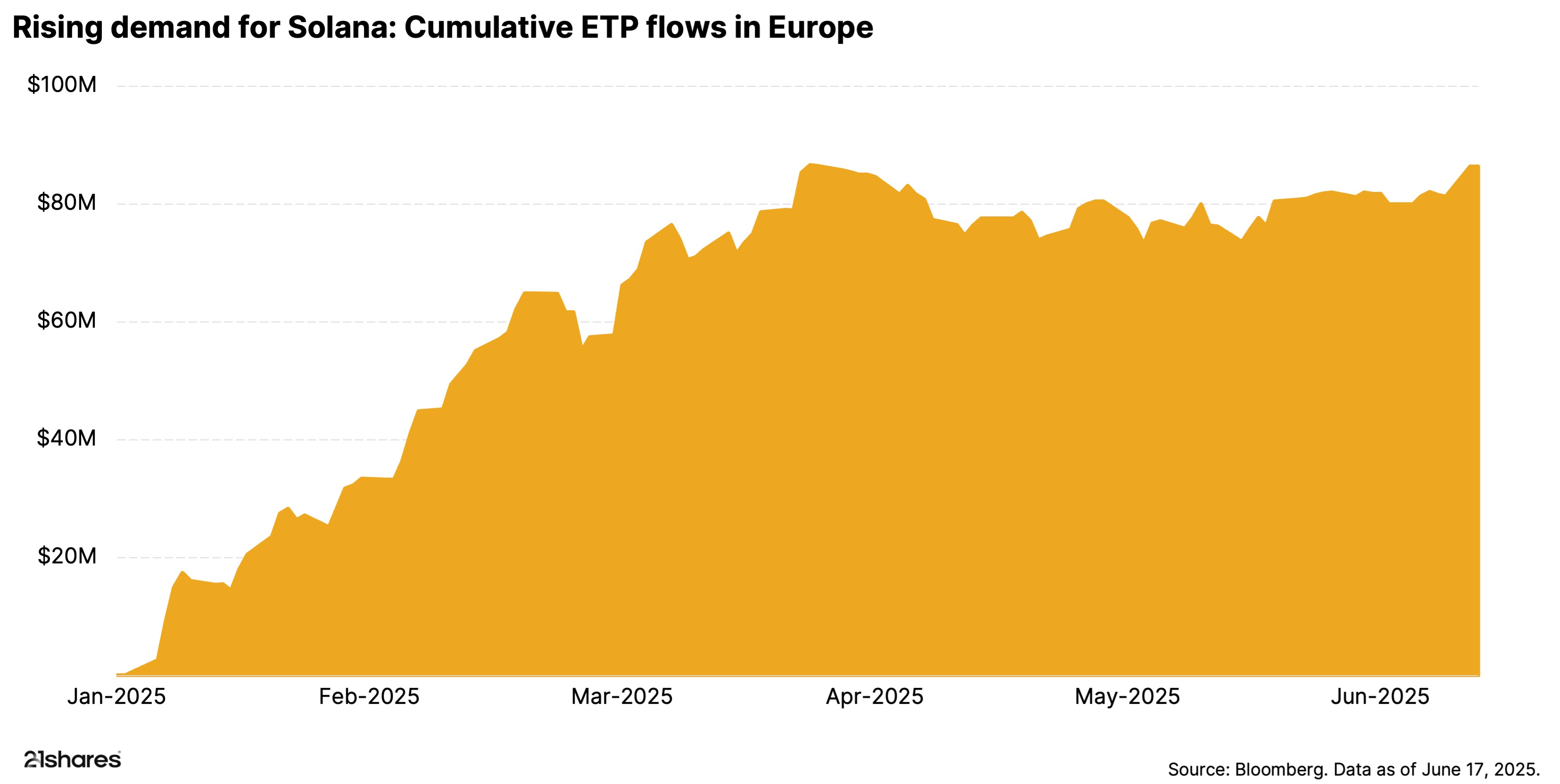
Moreover, some of the world’s largest financial institutions, including HSBC, Euroclear, Bank of America, and Singapore’s central bank (MAS), are now exploring ways to use Solana’s technology for tokenization.
Firms like Cantor Fitzgerald have issued positive reports on Solana-based platforms for managing corporate treasuries, pointing to strong staking yields and cost efficiency as key advantages.
Solana’s popularity is starting to pay off
Solana’s surge in on-chain activity, driven by DeFi applications, memecoins, and the growing adoption of tokenized real-world asset (RWA) platforms, is translating into meaningful revenue for the network. As more users participate in trading, minting, and staking, transaction activities continue to climb, signaling a steady improvement in Solana’s underlying economic fundamentals.

Conclusion
Given Solana’s real-world use cases and growing adoption, it’s clear this blockchain isn’t just promising, it’s delivering. As trends like tokenization, hybrid finance, and broader crypto adoption continue to accelerate, Solana’s traction with major players is helping it stand out from the crowd.
For investors, the message is simple: a faster, more capable Solana means greater utility, and that could point to more upside potential over time.










_logo.svg)
.svg.png)