Staking vs. Liquid Staking: Was ist der Unterschied und warum es wichtig ist




Da Blockchain-Netzwerke reifen, hat sich Staking zu einer der gängigsten Methoden für Investoren entwickelt, um Renditen auf digitale Vermögenswerte zu erzielen. Das Konzept ist intuitiv: Investoren sperren Token, helfen bei der Sicherung des Netzwerks und erhalten im Gegenzug Belohnungen.
In den letzten Jahren hat sich jedoch ein zweiter Ansatz herausgebildet. Liquid Staking verändert die praktische Funktionsweise des Stakings, auch wenn das zugrunde liegende wirtschaftliche Risiko weitgehend gleich bleibt. Die Unterscheidung zwischen traditionellem Staking und Liquid Staking zu verstehen, wird für Investoren immer wichtiger, die Projekte wie JitoSOL bewerten und ganz allgemein nachvollziehen wollen, wie sich die Krypto-Infrastruktur entwickelt.
Zuerst: Wie funktioniert Staking?
Staking ist eine zentrale Sicherheitsfunktion für viele moderne Blockchains. In Proof-of-Stake-Netzwerken wie Ethereum oder Solana sind Validatoren für die Verarbeitung von Transaktionen und die Wartung des Netzwerks verantwortlich. Um ehrliches Verhalten zu gewährleisten, müssen Validatoren Token als Sicherheit hinterlegen. Wenn sie korrekt handeln, verdienen sie Belohnungen; tun sie dies nicht, können sie sanktioniert werden.
Investoren nehmen an diesem Prozess teil, indem sie ihre Token an Validatoren delegieren. Im Gegenzug erhalten sie einen Anteil an den vom Netzwerk generierten Belohnungen. Diese Belohnungen stammen in der Regel aus neu ausgegebenen Token und einem Teil der Transaktionsgebühren.
Traditionelles Staking weist mehrere prägende Merkmale auf. Sobald Token gestakt sind, sind sie normalerweise gesperrt oder unterliegen einer Haltefrist, während der sie nicht übertragen oder verkauft werden können. Investoren müssen zudem operative Aufgaben übernehmen, wie die Auswahl der Validatoren, die Überwachung der Performance und die Verwaltung der Belohnungen. Die Renditen sind relativ vorhersehbar und eng an Faktoren auf Protokoll-Ebene geknüpft, wie etwa Inflationsraten und die Netzwerkaktivität.
Im Wesentlichen stellt traditionelles Staking einen Kompromiss zwischen Rendite und Sperrfrist dar: Investoren erzielen Einkommen, opfern dafür aber Flexibilität.
Die Grenzen des Stakings
Obwohl Staking als Sicherheitsmechanismus effektiv ist, führt es zu Hürden für Investoren. Kapital, das im Staking gebunden ist, kann nicht einfach umgeschichtet, bei Marktvolatilität schnell verkauft oder als Sicherheit für andere Finanzstrategien genutzt werden.
Für langfristige Anleger mögen diese Einschränkungen akzeptabel sein. Für Investoren, die größeren Wert auf Liquidität legen, oder für Institutionen, die unter Bilanz-, Risiko- oder Liquiditätsbeschränkungen operieren, kann dieser Kompromiss limitierend wirken. Dieses Spannungsfeld zwischen dem Erzielen von Rendite und dem Erhalt von Flexibilität hat zur Entwicklung von Liquid Staking geführt.
Zweitens: Was ist Liquid Staking?
Liquid Staking trennt das wirtschaftliche Risiko von der operativen Sperrfrist. Anstatt Token direkt zu staken, zahlen Investoren diese in einen Staking-Pool ein, der von einem Liquid-Staking-Protokoll wie dem Jito-Protokoll betrieben wird. Der Pool staked die Token im Netzwerk auf die gleiche Weise wie beim traditionellen Staking, sodass sich aus Sicht des Netzwerks nichts ändert.
Im Gegenzug erhalten Investoren ein Liquid-Staking-Token, das ihren Anspruch und die generierten Belohnungen repräsentiert. Anstatt gesperrt zu sein, kann dieser Token wie jeder andere Vermögenswert übertragen, gehandelt oder gehalten werden.
Die Staking-Belohnungen werden in der Regel nicht als periodische Cashflows ausgezahlt. Stattdessen fließen sie über einen Wechselkurs-Mechanismus ein: Mit der Zeit repräsentiert eine Einheit des Liquid-Staking-Tokens eine zunehmende Menge des zugrunde liegenden Vermögenswerts, während die Belohnungen verdient werden.
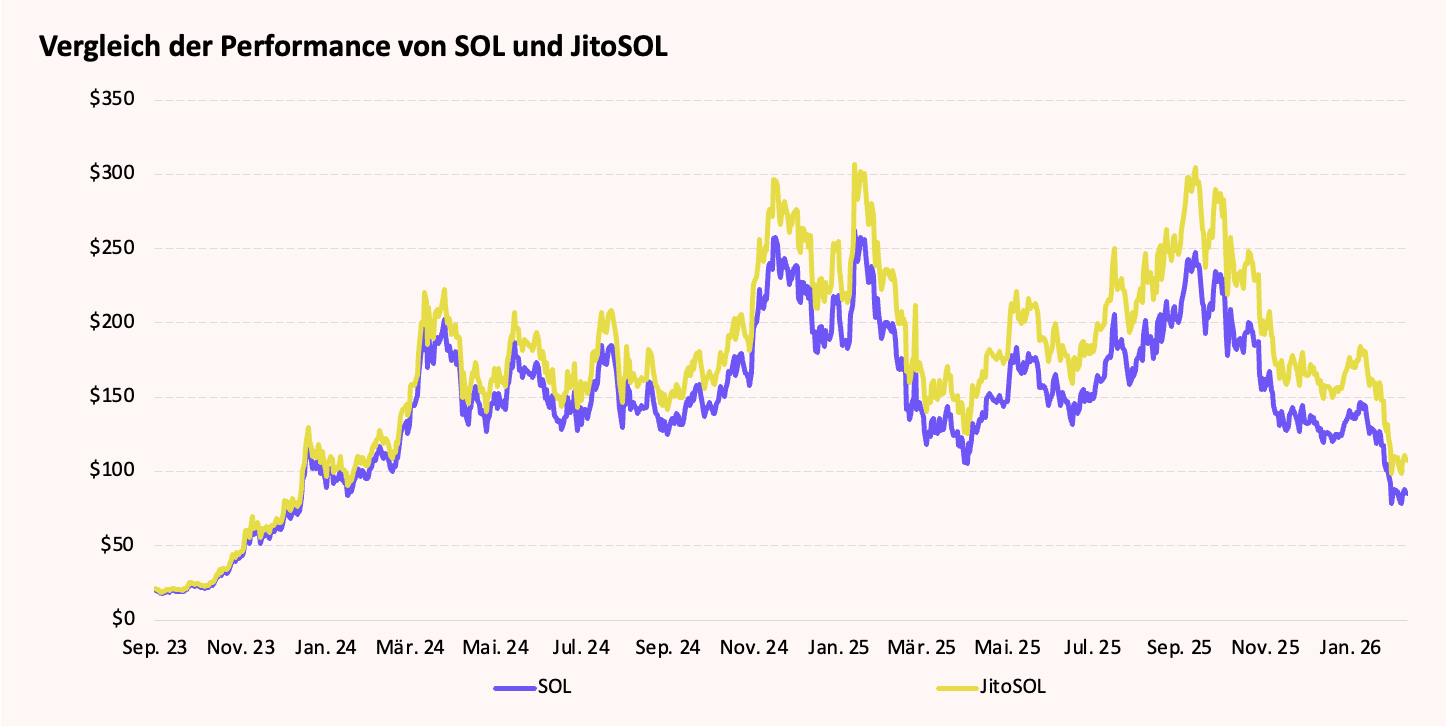
Einfach ausgedrückt: Traditionelles Staking erzielt Belohnungen auf Kosten der Liquidität, während Liquid Staking die Liquidität erhält, indem ein tokenisierter Anspruch auf die gestakte Position ausgegeben wird.
Staking vs. Liquid Staking: Zentrale Abwägungen
Der offensichtlichste Unterschied zwischen traditionellem Staking und Liquid Staking ist die Liquidität. Beim traditionellen Staking sind Vermögenswerte für einen bestimmten Zeitraum gesperrt oder gebunden. Beim Liquid Staking bleibt das wirtschaftliche Risiko über das liquide Token handlungsfähig.
Diese Struktur ermöglicht zudem eine größere Flexibilität. Das Kapital kann weiterhin Staking-Belohnungen verdienen und gleichzeitig innerhalb eines Portfolios nutzbar bleiben, selbst wenn der Investor sich entscheidet, das Token nicht aktiv an anderer Stelle einzusetzen. Auch die operative Komplexität verringert sich, da die Auswahl der Validatoren, die Delegierung und die Verwaltung der Belohnungen vom Protokoll übernommen werden und nicht vom Investor.
Liquid Staking bringt jedoch zusätzliche Risikoschichten mit sich. Neben dem Preisrisiko des zugrunde liegenden Vermögenswerts sind Investoren dem Smart-Contract-Risiko des Liquid-Staking-Protokolls, dem Risiko der Protokoll-Governance und des Systemdesigns sowie dem Liquiditäts- oder Preisrisiko auf dem Sekundärmarkt für das liquide Token ausgesetzt. Traditionelles Staking vermeidet viele dieser strukturellen Risiken, erkauft dies jedoch durch den Verzicht auf Flexibilität.
Erhöhte Rendite: Woher kommt sie?
Einige Liquid-Staking-Protokolle gehen über die Standard-Staking-Belohnungen hinaus. Auf Solana beispielsweise erfasst Jito einnahmenbezogene Erträge aus der Transaktionspriorisierung. Bestimmte Nutzer sind bereit, höhere Gebühren zu zahlen, damit ihre Transaktionen zuerst verarbeitet werden. Diese zusätzlichen Einnahmen fließen an die Validatoren und über den Staking-Pool an die Staker.
Dieser Mechanismus ändert nichts an der grundlegenden Natur des Stakings, kann aber die Gesamtrendite erhöhen. Gleichzeitig führt er zu einer größeren Variabilität der Erträge, da diese Einnahmen von der Netzwerkaktivität und der Nachfrage nach Transaktionspriorisierung abhängen.
Warum diese Unterscheidung wichtig ist
Ein nützliches Gedankenmodell ist der Unterschied zwischen einer Termineinlage bei einer Bank und einem handelbaren, renditebringenden Fonds. Beide erzielen Einkommen aus ähnlich zugrunde liegenden Quellen, aber die eine Seite opfert Liquidität für Einfachheit, während die andere die Liquidität durch eine zusätzliche Struktur erhält.
Mit der Reifung der Kryptomärkte geht es bei der Rendite nicht mehr nur um die reinen Zahlen. Liquidität, Benutzerfreundlichkeit und die Art und Weise, wie Vermögenswerte in ein breiteres Portfolio passen, sind ebenso wichtig. Liquid Staking spiegelt diesen Wandel wider, indem es Investoren ermöglicht, Staking-Erträge ohne die operativen Einschränkungen des traditionellen Stakings zu erzielen.
Dieses Verständnis hilft dabei, Produkte wie JitoSOL zu erklären und zeigt auf, wie sich Staking von einem rein technischen Prozess zu einem flexibleren Finanzinstrument entwickelt.
This report has been prepared and issued by 21Shares AG for publication globally. All information used in the publication of this report has been compiled from publicly available sources that are believed to be reliable, however, we do not guarantee the accuracy or completeness of this report. Crypto asset trading involves a high degree of risk. The crypto asset market is new to many and unproven and may have the potential not to grow as expected.Currently, there is relatively small use of crypto assets in the retail and commercial marketplace in comparison to relatively large use by speculators, thus contributing to price volatility that could adversely affect an investment in crypto assets. In order to participate in the trading of crypto assets, you should be capable of evaluating the merits and risks of the investment and be able to bear the economic risk of losing your entire investment.Nothing herein does or should be considered as an offer to buy or sell or solicitation to buy or invest in crypto assets or derivatives. This report is provided for information and research purposes only and should not be construed or presented as an offer or solicitation for any investment. The information provided does not constitute a prospectus or any offering and does not contain or constitute an offer to sell or solicit an offer to invest in any jurisdiction. The crypto assets or derivatives and/or any services contained or referred to herein may not be suitable for you and it is recommended that you consult an independent advisor. Nothing herein constitutes investment, legal, accounting or tax advice, or a representation that any investment or strategy is suitable or appropriate to your individual circumstances or otherwise constitutes a personal recommendation. Neither 21Shares AG nor any of its affiliates accept liability for loss arising from the use of the material presented or discussed herein.Readers are cautioned that any forward-looking statements are not guarantees of future performance and involve risks and uncertainties and that actual results may differ materially from those in the forward-looking statements as a result of various factors.This report may contain or refer to material that is not directed to, or intended for distribution to or use by, any person or entity who is a citizen or resident of or located in any locality, state, country or other jurisdiction where such distribution, publication, availability or use would be contrary to law or regulation or which would subject 21Shares AG or any of its affiliates to any registration, affiliation, approval or licensing requirement within such jurisdiction.










_logo.svg)
.svg.png)