Bitcoin: aktueller Stand und was man beachten sollte




Nach einem Monat der Erwartungsanpassungen zeigt sich die enge Verbindung des Bitcoin-Marktes zu makroökonomischer Politik und Liquidität deutlich. Auch wenn dies Raum für eine breitere Diskussion über Bitcoins Bewertung eröffnet (unter Verwendung von Onchain- und Offchain-Daten)1, liefert dieser Artikel zunächst eine unmittelbare Analyse des jüngsten Preisrückgangs und der Signale, die jetzt zu beobachten sind. Unser Fazit: Die momentane Marktstruktur sieht eher nach Seitwärtsphase und Konsolidierung aus, nicht nach Trendbruch, solange keine echten systemischen Risiken auftauchen.
Was ist im November bei Bitcoin passiert?
- Bitcoin hat die härtesten zwei Wochen des Jahres hinter sich, und die Stimmung im Kryptomarkt ist so gedrückt wie seit dem Mass-Liquidation-Event am 10. Oktober und dem früheren „Liberation Day Shock“ nicht mehr.
- Im letzten Monat hat der gesamte Kryptomarkt über 1 Billion Dollar an Marktkapitalisierung gegenüber dem Oktober-Hoch verloren, inklusive des Rückgangs von 6–8 % in der vergangenen Woche.
- Der Rücksetzer von Bitcoin auf ein Sieben-Monats-Tief von 81.000 US-Dollar zeigt eine breite Neubewertung im Markt, ausgelöst durch steigende Makro-Unsicherheit und enger werdende Liquidität. Verstärkt wurde die Bewegung durch 2 Mrd. US-Dollar an Zwangsliquidationen (insgesamt rund 30 Mrd. USD seit dem 10. Oktober).
Makrotreiber hinter der Marktverschiebung
Der Hauptgrund für die aktuelle Korrektur ist die deutliche Neupositionierung der Erwartungen an die Geldpolitik. Sowohl die Fed als auch die EZB haben die Hoffnung auf schnelle, aggressive Zinssenkungen gedämpft. Die Märkte mussten daraufhin auf ein restriktiveres Szenario umschwenken, was Assets, die stark von Liquidität abhängen, wie Bitcoin und Krypto insgesamt, direkt unter Druck gesetzt hat.
Neubewertung von Geldpolitik und Liquidität
- Zinssenkungserwartungen brachen ein: Der Regierungsstillstand und der daraus resultierende Daten-Blackout ließen die Wahrscheinlichkeit einer Zinssenkung in den USA von über 60 % auf etwa 25 % abstürzen – ein deutlicher Unsicherheitsimpuls. Seitdem haben sich die Markterwartungen jedoch gedreht und die Wahrscheinlichkeit einer Zinssenkung wieder auf 85 % erhöht.
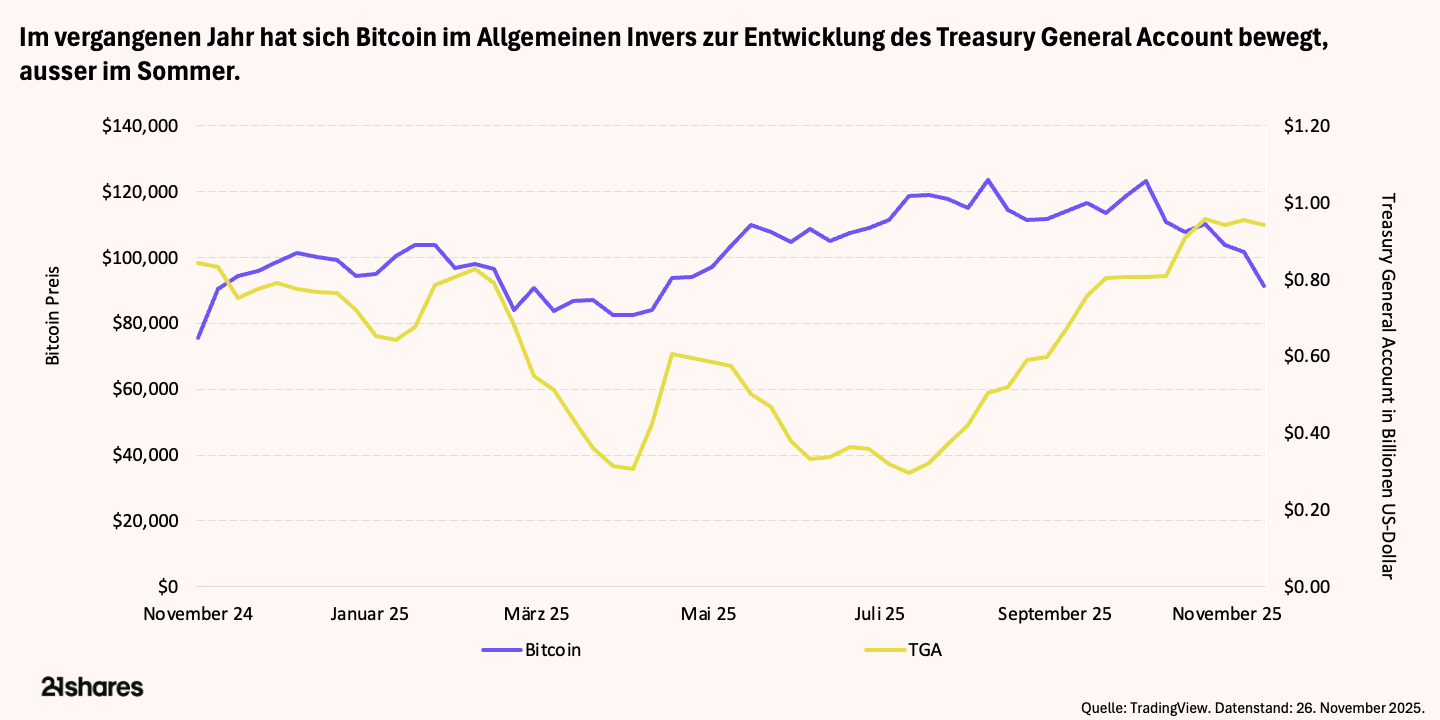
- Breitere Liquiditätsindikatoren verschlechtern sich: Die Netto-Liquidität hat sich verengt, was Druck auf den Kryptomarkt ausübt. Ein hoher Treasury General Account und die laufende Bilanzreduktion entziehen dem System Liquidität, während Reverse-Repo-Salden bereits nahe null liegen. Ein ähnliches Umfeld gab es während des TGA-Aufbaus 2023, als Liquiditätsabflüsse Bitcoin stagnieren oder tiefer driften ließen. Der aktuell erhöhte TGA schafft ein vergleichbares Umfeld, da weniger Geld für Risikoanlagen zur Verfügung steht.
- Der US-Dollar wurde stärker: Safe-Haven-Ströme führten zu einem stärkeren US-Dollar (DXY), was für gewöhnlich negativ für Bitcoin ist. Ein stärkerer Dollar zieht Kapital zurück in USD-Anlagen, dämpft globales Risikoverhalten und korrelierte 2025 zu 78 % invers mit der BTC-Performance.
Aktien, Kreditmärkte und Korrelationen
- Aktien- und Kreditmärkte haben sich verschlechtert, ein klares Zeichen für breites De-Risking: Der S&P 500 ist zurückgekommen, die Spreads im High-Yield-Bereich haben sich ausgeweitet und die Aktienvolatilität ist deutlich gestiegen, der VIX lag zwischenzeitlich über 65 % höher als zu Monatsbeginn.
- Bitcoins 30-Tage-Korrelation mit Tech ist stark angestiegen: 0,77 mit dem VGT, 0,70 mit dem QQQ. Diese enge Kopplung zeigt, dass Krypto derzeit eher wie ein gehebeltes Tech-Play gehandelt wird und weniger als klassischer makroökonomischer Hedge, für den Bitcoin häufig dargestellt wird.
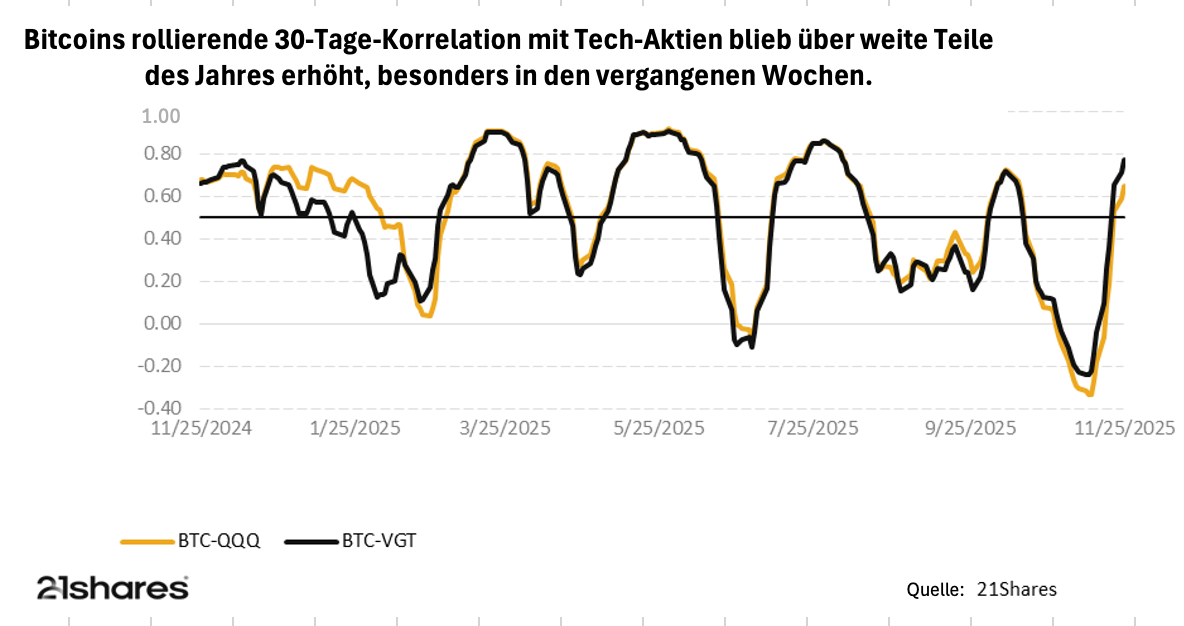
- Engere Verbindung zwischen Bitcoin und Tech/AI Aktien: Da Bitcoin sich im Jahr 2025 deutlich wie ein Tech Asset verhält, hat der jüngste Appell großer KI Unternehmenschefs nach staatlicher Unterstützung2 eine breit angelegte Korrektur im gesamten Technologiesektor ausgelöst. Diese Schwäche hat Bitcoin direkt mit nach unten gezogen. Gleichzeitig haben die großen Indizes deutlich verloren. Der S&P 500 gab über 5 Prozent ab und der Nasdaq fiel um mehr als 8 Prozent.
Positionierung und Marktstimmung
Die Stimmung im Kryptomarkt wirkt vorsichtig. Hebel ist zurückgegangen, die Risikobereitschaft hat nachgelassen und die ETF-Nachfrage ist schwächer geworden. Gleichzeitig ist der Markt jedoch nicht klar bärisch. Nutzungsdaten und einige technische Signale zeigen weiterhin eine stabile Grundlage. Insgesamt bleibt der Markt defensiv, aber keinesfalls in einer Stresssituation.
- Funding Rates und Open Interest: Die aktuellen Funding Rates liegen bei etwa 2,4 Prozent pro Jahr für Bitcoin und 4,6 Prozent pro Jahr für Ethereum. Beide bewegen sich damit auf Quartalstiefs. Das Open Interest liegt bei etwa 129 Milliarden US-Dollar. Das deutet darauf hin, dass überschüssiger Hebel aus dem Markt gespült wurde, statt sich weiter aufzubauen. Die Positionierung wirkt leicht defensiv, jedoch nicht aggressiv short.
- Long Short Verhältnis: Der Markt zeigt derzeit Vorsicht, aber keine Kapitulation. Das aktuelle Verhältnis liegt bei ungefähr 48 Prozent Long zu 52 Prozent Short3. Das Handelsvolumen tendiert leicht zugunsten der Shortseite.
- ETF Flows: Die Nettozuflüsse in US Spot Bitcoin ETFs liegen im laufenden Monat bei rund 3,5 Milliarden US-Dollar4 und damit deutlich unter den Monaten zuvor. Gleichzeitig zeigen die kumulierten Zuflüsse von etwa 22 Milliarden US-Dollar seit Jahresbeginn eine weiterhin starke langfristige Nachfrage. Im Vergleich zu anderen Assetklassen liegt Bitcoin damit im Mittelfeld. Die Summen bleiben klar unter den hunderten Milliarden in Aktien und Anleihen, aber über vielen anderen alternativen Anlagekategorien. Ein relevanter Anteil der rund 90 Milliarden US-Dollar, die dieses Jahr in alternative Anlagen und Rohstoffe fließen, entfällt auf Bitcoin. Die verhaltenen Novemberströme wirken eher zyklisch als strukturell. Institutionelle Investoren bleiben aktiv5.
- Fear and Greed Index: Der Index ist nach einem kurzen Tief bei 10 wieder etwas auf 15 bis 16 gestiegen6, liegt aber weiterhin unter dem Niveau der FTX-Krise im November 2022.
- Makrokommentar zu Fed und Datenlage: Obwohl sich die Vertreter der US-Notenbank uneinig zeigen7, deutet vieles auf eine Zinssenkung im Dezember hin. Aufgrund der Unsicherheit durch den Daten-Blackout zögern die Märkte jedoch, aggressive Lockerungen einzupreisen. Dadurch bleibt der Kryptomarkt insgesamt gedämpft.
- AI Dynamik stabilisiert den Tech-Ausblick: Die Stimmung im Technologiesektor bleibt robust, unterstützt durch starke Quartalszahlen von Nvidia8 und die US-Initiative Genesis Mission9 im Bereich künstliche Intelligenz, die bereits als Manhattan Project für AI bezeichnet wird. Dieser neue Optimismus hat die Angst vor einer AI-Blase gemindert. Auch wenn eine leichte Abkühlung möglich ist, bleibt AI ein zentraler Wachstumsmotor. Investitionen in Rechenzentren und der Vermögenseffekt aus steigenden AI-Aktien unterstützen weiterhin den Konsum. Anders als in der Dotcom-Phase der Jahre 2000 bis 2001 bricht die Nachfrage nicht ein.
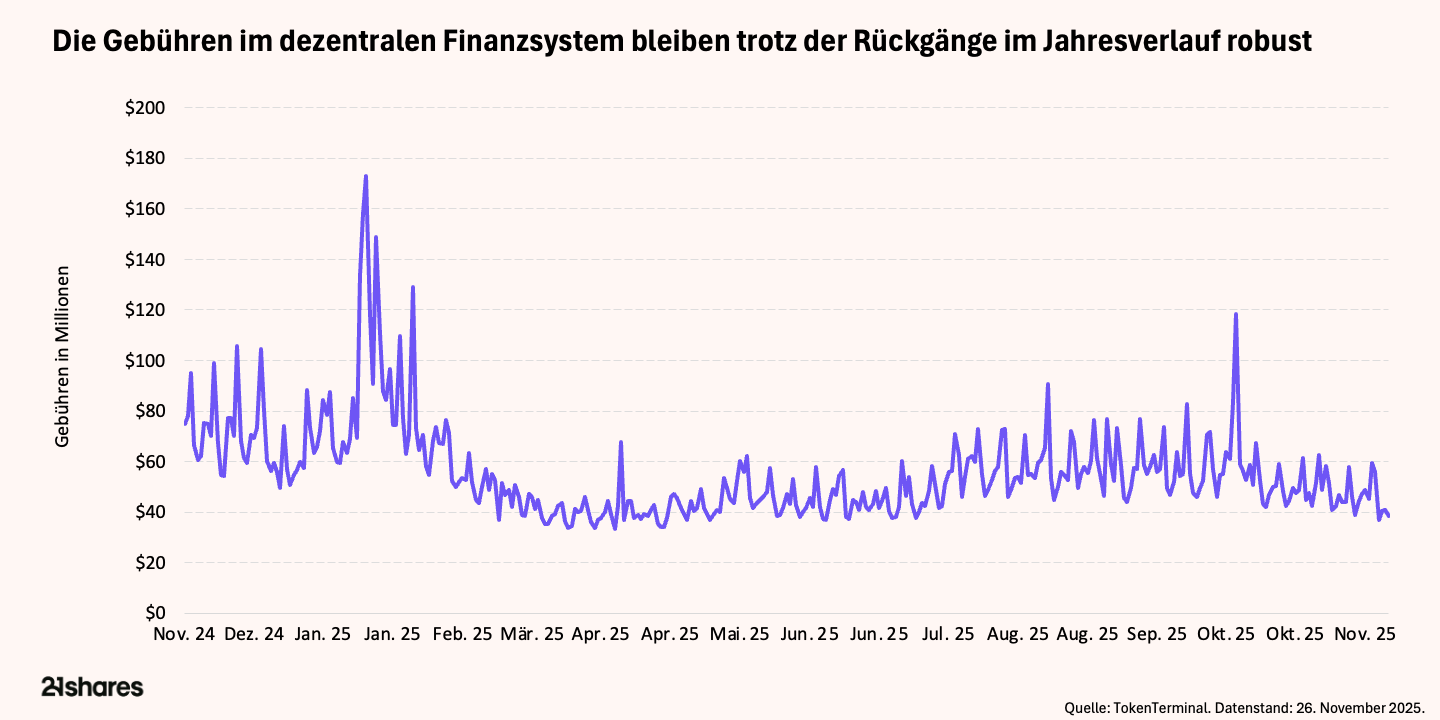
- Krypto Nutzung und Anwendungsmetriken: Die Nutzung führender Protokolle zeigt sich stabil. Plattformen wie Hyperliquid, Aave und Jupiter10 erwirtschaften weiterhin wöchentlich Erlöse auf dem Niveau des Jahresdurchschnitts. Das spricht dafür, dass die zugrunde liegende Aktivität trotz schwächerer Kurse stabil bleibt. Die Fundamentaldaten haben sich nicht spürbar verschlechtert.
Was sollten wir jetzt im Blick behalten?
Da Krypto weiterhin als High-Beta-Proxy für globale Liquidität und Risikobereitschaft gehandelt wird, wird die kurzfristige Preisentwicklung von mehreren Faktoren bestimmt. Die folgenden makro-, regulatorischen und marktstrukturellen Signale sind besonders relevant:
Makrodruck und Katalysatoren
- Stärkerer USD (DXY): Ein starker Dollar strafft die globale Liquidität und belastet High-Beta-Anlagen wie Krypto.
- FOMC-Protokolle und Zinserwartungen: Krypto reagiert empfindlich auf Änderungen in den Erwartungen zu Zinsen und Liquidität. Die Märkte bewerten die Wahrscheinlichkeit einer 25-Basispunkte-Senkung derzeit mit fast 85 %.
- Bevorstehende Datenveröffentlichungen: BIP, CPI, PPI und Arbeitsmarktdaten prägen die Einschätzung der wirtschaftlichen Stärke und des Inflationspfads.
- Liquiditätssignale: Schon subtile Liquiditätsspritzen oder Bilanzanpassungen können marginale Risikobereitschaft beeinflussen.
- Geopolitisches Risiko: Trumps 26-Punkte-Ukraine-Vorschlag könnte bei einer Lösung theoretisch disinflationäre Effekte bringen, etwa durch Entspannung bei Nahrungsmittel-, Energie- und Transportkosten, doch aufgrund der hohen Anforderungen ist kurzfristiger Fortschritt unwahrscheinlich. Ein echter Durchbruch könnte die Headline-Inflation senken und Zentralbanken mehr Spielraum für eine dovishe Wende geben, mit positiven Impulsen für die globale Liquidität.
Regulatorische Faktoren
- Möglicher Ausschluss von MicroStrategy aus den MSCI Indizes: MSCI prüft aktuell erneut, ob MicroStrategy überhaupt noch in seine Indizes gehört, da das Unternehmen immer stärker einem Bitcoin Fonds ähnelt und weniger einem klassischen Aktienunternehmen. Ein Ausschluss würde zwangsweise Verkäufe durch passive Fonds auslösen, die diese Indizes abbilden. Das würde zusätzlichen Abwärtsdruck auf die MSTR Aktie erzeugen und die Volatilität erhöhen. Diese Volatilität kann sich durch Korrelationen, Absicherungsströme und Deleveraging Effekte teilweise auf Bitcoin übertragen, auch wenn die langfristigen Auswirkungen auf die fundamentale Lage von BTC begrenzt bleiben. Eine endgültige Entscheidung wird im Januar erwartet.
- Mögliche gesetzliche Initiativen: Vorschläge wie die Möglichkeit, Bitcoin zur Begleichung von Steuern zu akzeptieren und die Einnahmen in strategische Reserven umzuleiten, sind noch früh in der Entwicklung, könnten aber langfristig Rückenwind bieten. Zusätzlich gewinnt der CLARITY Act an Bedeutung. Dieser Gesetzesentwurf bewegt sich aktuell durch die Ausschüsse des Senats und könnte Ende 2025 oder Anfang 2026 zur Abstimmung kommen. Er zählt zu den wichtigsten regulatorischen Projekten und könnte sowohl Bitcoin als auch den gesamten Kryptomarkt beeinflussen. Ein klar definiertes Marktstrukturregelwerk für digitale Assets würde regulierten Finanzinstituten erlauben, direkt im DeFi Bereich zu agieren. Dadurch könnten Milliarden an institutioneller Liquidität freigesetzt und die Einführung tokenisierter Vermögenswerte erheblich beschleunigt werden.
Struktur und Positionierung im Kryptomarkt
- Wichtige Unterstützungszonen: 81.000 US-Dollar und 85.000 US-Dollar gelten als zentrale technische Unterstützungsbereiche.
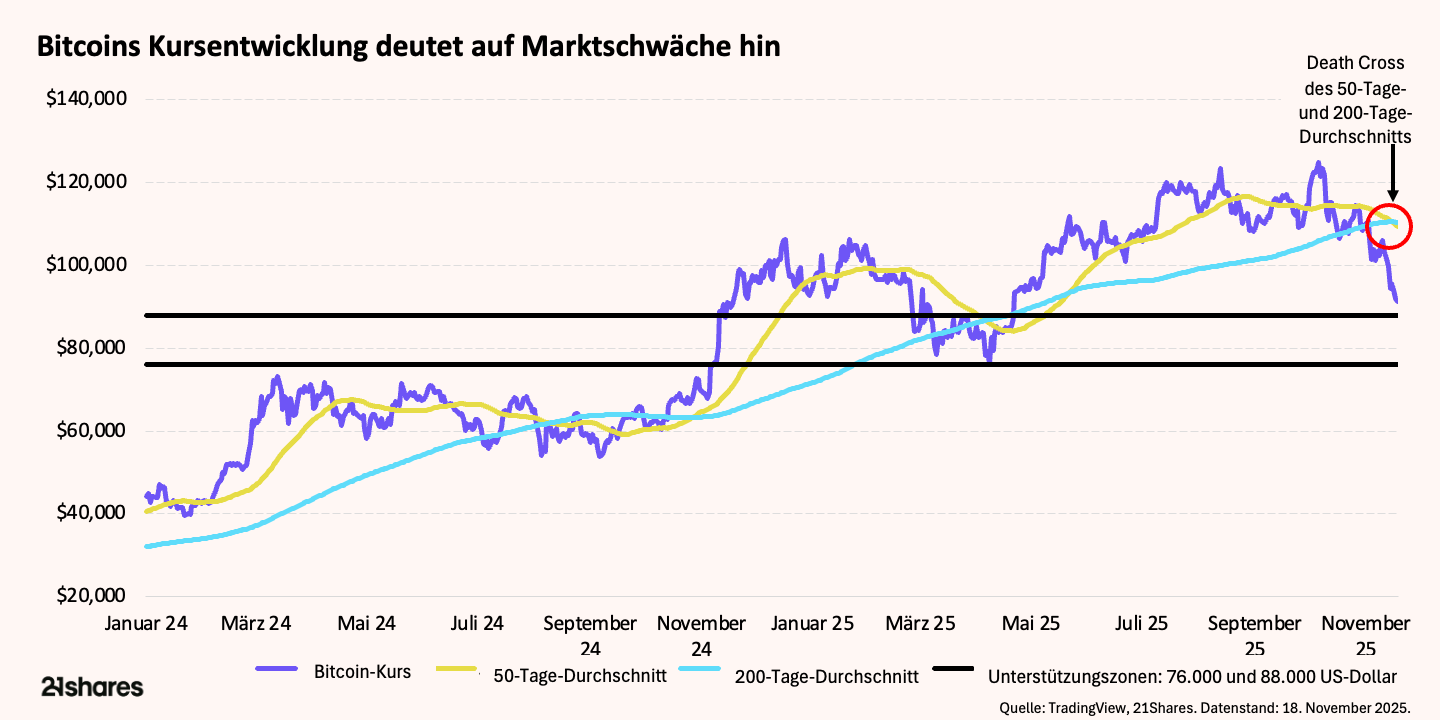
- ETF Käufer Kostenbasis: Der durchschnittliche Einstiegskurs der US Spot Bitcoin ETF Investoren liegt bei ungefähr 82.000 US-Dollar.
- MicroStrategys geschätzte Kostenbasis: Der geschätzte Durchschnittskaufpreis von MicroStrategy liegt bei rund 74.000 US-Dollar. Dieser Wert kann bei stärkeren Rücksetzern die Stimmung beeinflussen, ist jedoch in erster Linie ein psychologischer Bezugspunkt. Er stellt kein technisches Niveau dar, das zu nennenswerten Zwangsliquidationen führen würde.
Holder Positionierung und Stimmung
- Break-even Verkaufsrisiko: Etwa 35 Prozent der Bitcoin Halter, 38 Prozent der Ethereum Halter und rund 70 Prozent der Solana11 Halter sitzen derzeit auf Verlusten. Wenn ein großer Teil des Marktes im Minus ist, nutzen viele Anleger Kursanstiege, um Positionen abzubauen. Das erzeugt zusätzlichen Verkaufsdruck und kann die Stärke einer Erholung begrenzen.
Was das für die kommenden Monate bedeutet
Nach einem Monat voller Erwartungsanpassungen hängt die nächste größere Bewegung im Kryptomarkt stark davon ab, wie sich die makroökonomischen Rahmenbedingungen entwickeln. Da Bitcoin weiterhin eng an globale Liquidität und Zinserwartungen gekoppelt ist, bleiben die Entwicklung der Anleiherenditen und die Kommunikation der US-Notenbank die wichtigsten Einflussfaktoren. Falls sich die finanziellen Bedingungen im Verlauf des Jahres 2026 lockern, entsteht mit der Kombination aus abgebautem Hebel, gesünderer Positionierung und robuster Onchain Aktivität ein solides Fundament für eine nachhaltige Erholung.
Fußnoten:
- 21shares, “The two eras of Bitcoin valuation: pre- and post-ETFs.” https://www.21shares.com/en-row/research/the-two-eras-of-bitcoin-valuation-pre--and-post--etfs
- Reuters, “OpenAI discussed government loan guarantees for chip plants, not data centers, Altman says.” https://www.reuters.com/business/openai-doe
- Coinglass, “Long/Short Ratio dashboard.” https://www.coinglass.com/LongShortRatio
- Glassnode, “US Spot ETF flows (institutions) chart - Bitcoin.” https://studio.glassnode.com/charts/institutions.UsSpotEtfFlowsNet?a=BTC&c=usd&category=
- FT Portfolios, “Asset Flows Monitor — November 2025 edition.” https://www.ftportfolios.com/Commentary/Insights/2025/11/10/asset-flows-monitor-november-2025-edition
- Alternative.me, “Crypto Fear & Greed Index.” https://alternative.me/crypto/fear-and-greed-index/
- Yahoo Finance, “Fed members strongly differ on December rate outlook.” https://finance.yahoo.com/news/fed-members-strongly-differ-december-193724594.html
- Yahoo Finance, “Nvidia Q3 earnings trounce expectations.” https://finance.yahoo.com/news/nvidia-q3-earnings-trounced-expectations-183033084.html#:~:text=Quick%20Read,over%2Dyear%20to%20%2451.2B.
- The White House, “Launching the GENESIS Mission - presidential action, Nov 2025.” https://www.whitehouse.gov/presidential-actions/2025/11/launching-the-genesis-mission/
- DeFiLlama, “DeFiLlama revenue dashboard.” https://defillama.com/revenue
- Glassnode, “Relative profit supply chart - SOL.” https://studio.glassnode.com/charts/supply.ProfitRelative?a=SOL&s=1636130670&u=1764028800&zoom=
This report has been prepared and issued by 21Shares AG for publication globally. All information used in the publication of this report has been compiled from publicly available sources that are believed to be reliable, however, we do not guarantee the accuracy or completeness of this report. Crypto asset trading involves a high degree of risk. The crypto asset market is new to many and unproven and may have the potential not to grow as expected.Currently, there is relatively small use of crypto assets in the retail and commercial marketplace in comparison to relatively large use by speculators, thus contributing to price volatility that could adversely affect an investment in crypto assets. In order to participate in the trading of crypto assets, you should be capable of evaluating the merits and risks of the investment and be able to bear the economic risk of losing your entire investment.Nothing herein does or should be considered as an offer to buy or sell or solicitation to buy or invest in crypto assets or derivatives. This report is provided for information and research purposes only and should not be construed or presented as an offer or solicitation for any investment. The information provided does not constitute a prospectus or any offering and does not contain or constitute an offer to sell or solicit an offer to invest in any jurisdiction. The crypto assets or derivatives and/or any services contained or referred to herein may not be suitable for you and it is recommended that you consult an independent advisor. Nothing herein constitutes investment, legal, accounting or tax advice, or a representation that any investment or strategy is suitable or appropriate to your individual circumstances or otherwise constitutes a personal recommendation. Neither 21Shares AG nor any of its affiliates accept liability for loss arising from the use of the material presented or discussed herein.Readers are cautioned that any forward-looking statements are not guarantees of future performance and involve risks and uncertainties and that actual results may differ materially from those in the forward-looking statements as a result of various factors.This report may contain or refer to material that is not directed to, or intended for distribution to or use by, any person or entity who is a citizen or resident of or located in any locality, state, country or other jurisdiction where such distribution, publication, availability or use would be contrary to law or regulation or which would subject 21Shares AG or any of its affiliates to any registration, affiliation, approval or licensing requirement within such jurisdiction.
.png)








_logo.svg)

.svg.png)