
.jpg)
If you’re slightly familiar with crypto, you’ve probably heard of Uniswap. It’s one of the most important projects in the crypto space that made it possible to trade tokens directly with each other, without needing a centralized exchange like Binance. This innovation helped spark the growth of decentralized exchanges (DEXs).
Uniswap v4, the latest version of the popular decentralized exchange, is making waves with major milestones. Here’s what’s happening.
A new milestone for Uniswap
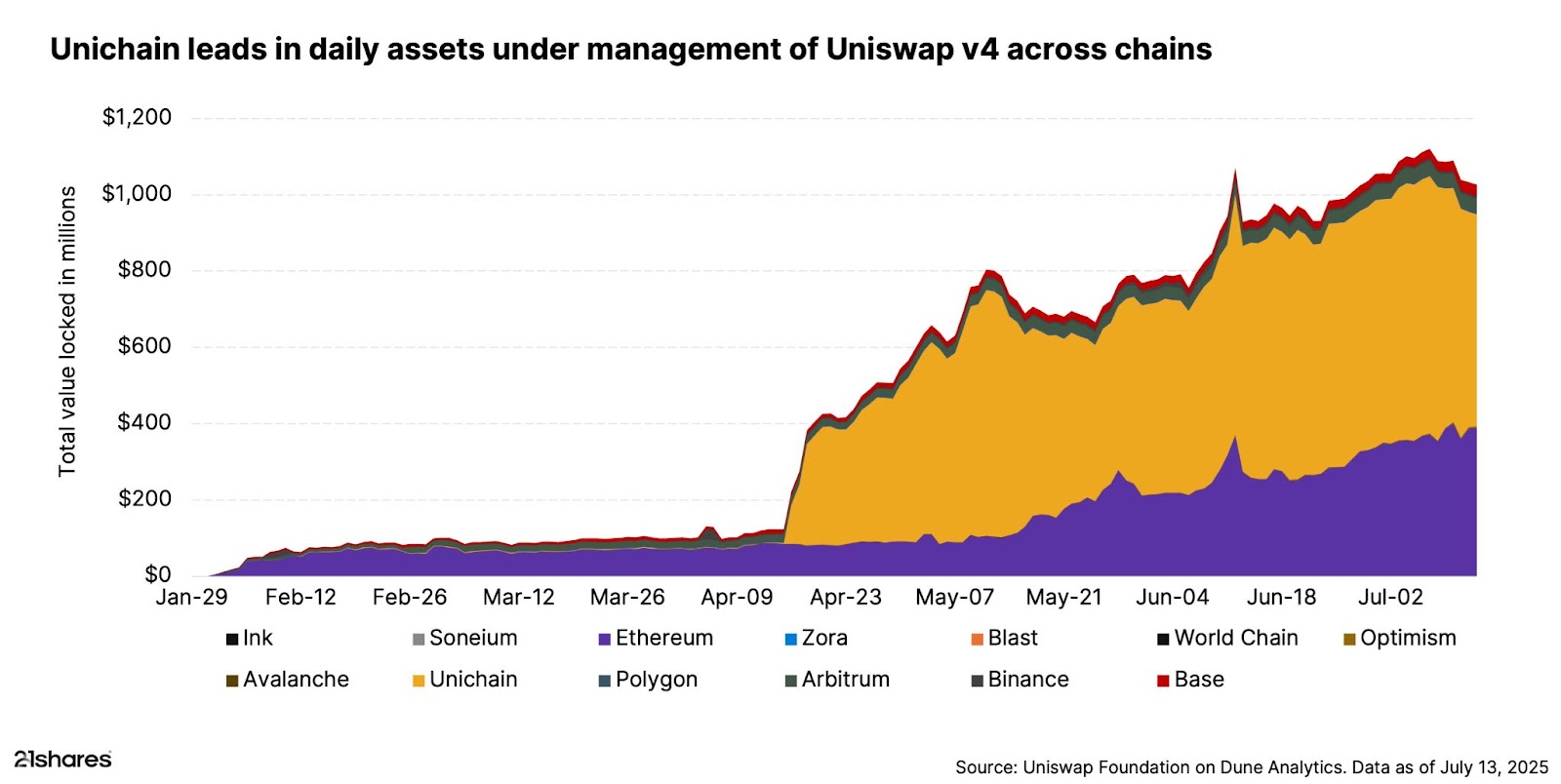
As of July 2025, Uniswap v4 has already processed over $100 billion in total trading volume and holds more than $1 billion in total value locked (TVL). TVL measures how much money people have put into decentralized finance (DeFi) apps.

Right now, Uniswap v3 still sees the most activity, handling about 60% of all Uniswap trades. But v4 is gaining ground quickly, already processing around 30% of trades. For anyone interested in the long-term potential of DeFi, this rapid growth is an important trend to watch.

How is Uniswap v4 different?
What makes v4 stand out from its predecessors is its programmable and modular infrastructure.
1. Unichain: Unichain is an Ethereum layer two blockchain (a secondary system built on top of a main blockchain that helps make transactions faster and cheaper) built for Uniswap. This new chain has already overtaken Ethereum in terms of Uniswap v4 transaction volume, now accounting for nearly 50% of v4 activity.
This is important because lower fees and faster transactions make Uniswap more attractive to traders. If you’re a UNI (Uniswap’s native token) investor, this is good news. More usage means more fees for the protocol and stronger growth.
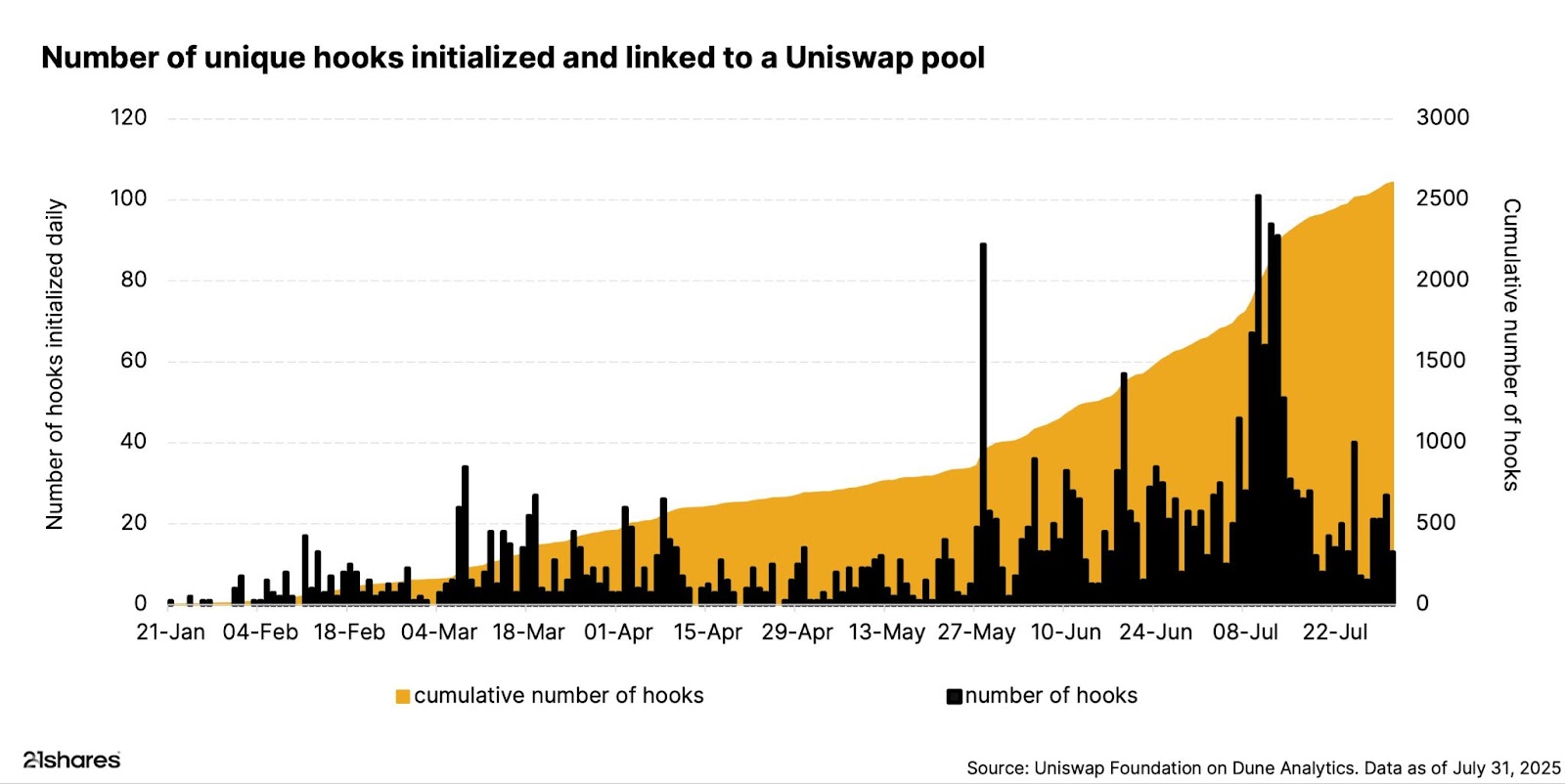
2. Hooks: Uniswap v4 introduces something called Hooks, special pieces of code that let developers customize how trading works on the platform. In July alone, over 100 new Hooks were added each day, showing that developers are really excited and actively experimenting with what’s possible.
With Hooks, developers can build advanced features like:
- Dynamic fees that change based on market conditions
- Automated actions that run directly on the blockchain
- Smarter trading strategies built right into the system
3. Growth: Uniswap v4 is currently seeing an average daily trading volume of $643 million, and the protocol has already generated over $44.7 million in cumulative swap fees since its launch.
Swap fees are small fees users pay when they trade one crypto token for another on Uniswap. These fees usually go to people who provide the liquidity (the tokens) for others to trade with.
Uniswap v4’s customizable swap fees can contribute to protocol revenue only if governance activates the protocol fee on a per-pool basis using Hooks.
Why does this matter for UNI holders? Strong usage and real revenue can help support the long-term value of the UNI token, giving it more strength and purpose in the growing DeFi world.
Uniswap v4 brings faster trading, lower costs, and new ways to generate revenue, including future options like sharing fees with token holders. This upgrade isn’t just keeping Uniswap competitive; it’s pushing DeFi forward.










_logo.svg)

.svg.png)