XRP-Ausblick 2026: Regulatorische Klarheit, institutionelle Infrastrukturen und grenzüberschreitende Abwicklung




Preisprognosen gehören zu den dauerhaften Faszinationen der Finanzwelt und im Krypto-Markt ist dieses Interesse noch ausgeprägter, angesichts der bekannten Volatilität und schnellen Stimmungswechsel. Auch wenn absolute Sicherheit unmöglich ist, stützen sich aussagekräftige Einschätzungen sowohl auf datenbasierte Modelle als auch auf qualitative Einblicke.
In den ersten Wochen des Jahres veröffentlichen wir eine Reihe von Preis-Ausblicken für die fünf wichtigsten Krypto-Assets. Letzte Woche haben wir mit Bitcoin und Ethereum begonnen, diese Woche richten wir den Fokus auf Solana, XRP und Aave. In diesem Jahr hängt die Kursentwicklung von XRP von drei zusammenwirkenden Säulen ab:
- Regulatorische Klarheit und besserer Zugang zu Kapital.
- Starke Investorennachfrage nach US-XRP-Spot-ETFs sowie eine engagierte Community.
- Reale Nutzung von Stablecoins und Real-World-Assets (RWAs) in Kombination mit einem wachsenden DeFi-Ökosystem.
XRP ist ein digitales Asset, das für schnelle und kostengünstige grenzüberschreitende Zahlungen entwickelt wurde, vor allem über den XRP Ledger (XRPL). Es wird von Finanzinstituten wie SBI Holdings in Japan und Zahlungsanbietern wie Tranglo in Malaysia genutzt, um Währungen zu überbrücken und Transaktionen innerhalb von Sekunden abzuwickeln.
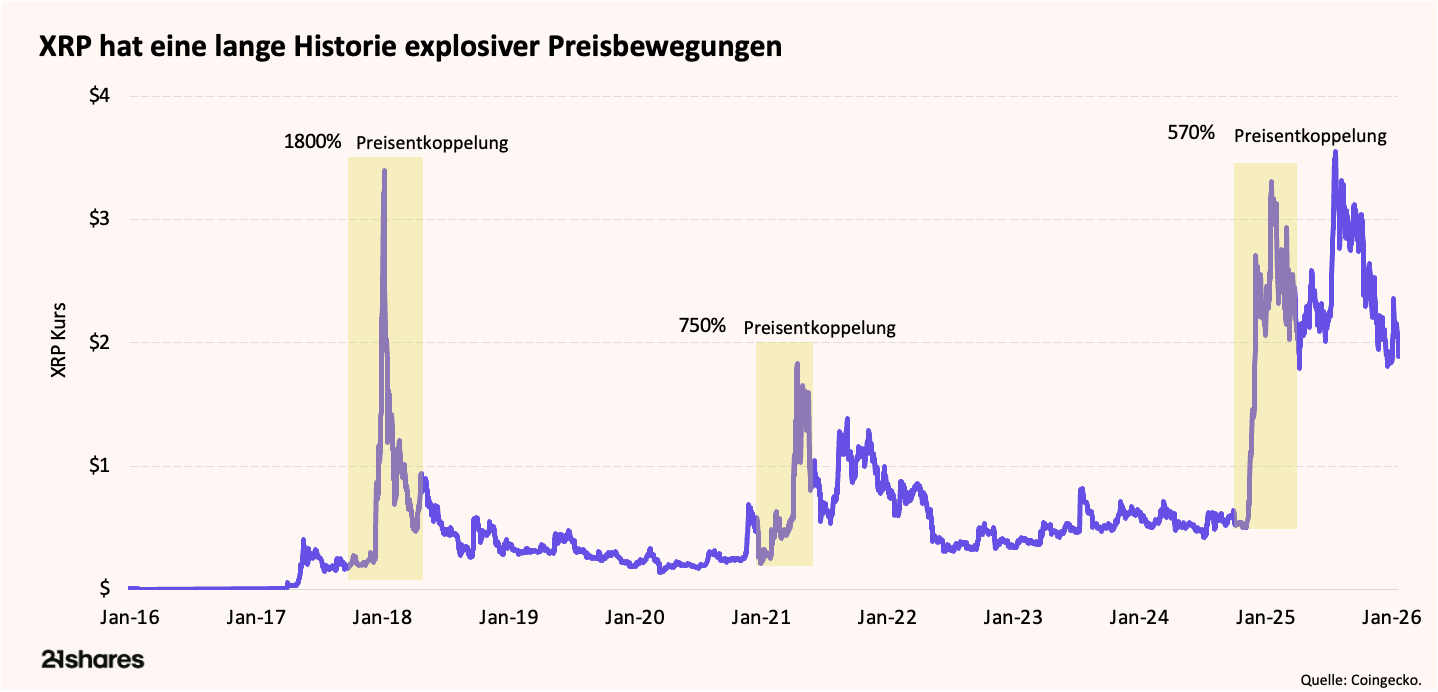
Zu Beginn des Jahres 2026 befindet sich XRP an einem entscheidenden Wendepunkt: Der Übergang von spekulativer Volatilität hin zu einer Bewertung, die auf institutionellen Fundamentaldaten basiert. Die Beilegung des langjährigen SEC-Verfahrens im August 2025 hat den strukturellen Gegenwind beseitigt, der den XRP-Kurs jahrelang unabhängig von seinem tatsächlichen Nutzen begrenzt hatte.
Während des Bullenmarkts 2021 hielt diese XRP unter 2.00 US-Dollar. Nach ihrer Aufhebung wurde der Markt schnell neu bewertet und trieb XRP auf ein neues Allzeithoch von 3.66 US-Dollar, bevor eine Konsolidierung einsetzte. Das frühere Widerstandsniveau bei 2.00 US-Dollar fungiert nun als stabile Unterstützungszone.
Dieses Muster erinnert an Ethereums Entwicklung in den Jahren 2017 bis 2018, als abstrakte Versprechen während des „DeFi Summer“ 2020 durch nachweisbaren Nutzen ersetzt wurden. XRP scheint in eine ähnliche Phase einzutreten. Mit einer starken Investorengemeinschaft und einer beschleunigten institutionellen Nutzung des XRP Ledgers deutet vieles darauf hin, dass 2026 ein Durchbruchsjahr für XRP und sein Ökosystem wird.
Was treibt unseren Ausblick für 2026?
1. Regulatorische Klärung und institutionelle Rückkehr
Ein zentraler Treiber für 2026 ist die regulatorische Klarheit. Nach dem Abschluss des mehrjährigen SEC-Verfahrens im August 2025, der in einem endgültigen Vergleich endete, hat sich der rechtliche Schatten über XRP aufgelöst. Damit wurde eine strukturelle Kursbremse entfernt und das Asset ist wieder zugänglich für:
- US-basierte Institutionen
- Regulierte Fonds und ETP-Emittenten
- Banken und Zahlungsdienstleister
Diese Akteure waren zuvor aufgrund regulatorischer und Compliance-Risiken weitgehend ausgeschlossen.
Mit dem Wegfall dieses rechtlichen Ankers ist XRP in eine Phase marktorientierter Preisfindung eingetreten. 2026 kann sich der Token nicht mehr auf Schlagzeilen oder regulatorische Unsicherheit stützen, um seine Bewertung zu erklären oder schwache Performance zu rechtfertigen.
Dieser Übergang bringt ein klares „Sell-the-News“-Risiko mit sich: Bleiben messbarer Nutzen und eine breite Bank-Adoption aus, droht eine Neubewertung auf Basis realer Nutzung statt juristischer Fantasie.
2. ETF-Zuflüsse und starke Investorennachfrage
Die Einführung von US-XRP-Spot-ETFs hat das Nachfrageprofil des Assets grundlegend verändert. Mit über 1,3 Milliarden US-Dollar verwaltetem Vermögen im ersten Monat verzeichneten diese Produkte eine historische Serie von 55 Tagen mit durchgehend positiven Zuflüssen, ein Rekord über alle Assetklassen hinweg. Diese anhaltende Nachfrage deutet auf einen Wandel hin: Aufgestaute Investoreninteressen fliessen nun unabhängig von kurzfristigen Kursschwankungen in den Markt.
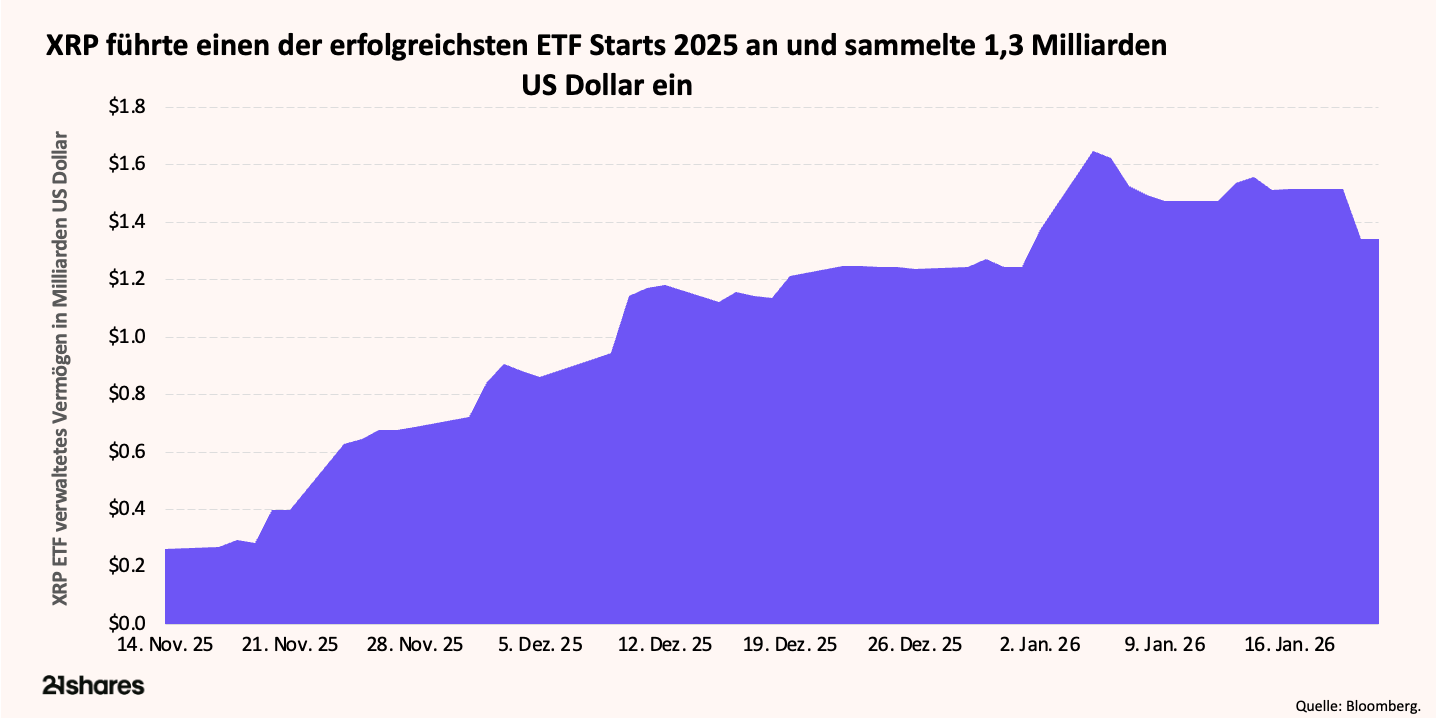
- Der Supply-Shock-Mechanismus: Ähnlich wie bei der GameStop-Bewegung, die auf Reddit begann, sorgt die „XRP Army“ für einen stabilen sozialen Rückhalt. Da die Börsenreserven mit 1,7 Milliarden XRP auf ein Siebenjahrestief gefallen sind, trifft die institutionelle Nachfrage über ETFs auf eine Community, die nicht verkaufen will. Diese Kombination aus Skalierung und Knappheit ist der zentrale Motor für eine nichtlineare Neubewertung im Laufe von 2026.
- Investoren-Nachfrage: XRP-Spot-ETFs ziehen selbst in Phasen schwächerer Märkte Nettozuflüsse an. Das deutet auf eine strukturelle, nicht rein spekulative Nachfrage hin.
- Preis-Reflexivität: Die Entwicklung der Bitcoin-Spot-ETFs dient als Blaupause für diesen Effekt. In ihrem ersten Jahr verzeichneten die US-Bitcoin-Spot-ETFs fast 38 Milliarden US-Dollar Nettozuflüsse und wirkten als Hauptkatalysator, der den Bitcoin-Preis in weniger als zwölf Monaten von rund 40.000 auf 100.000 US-Dollar mehr als verdoppelte.
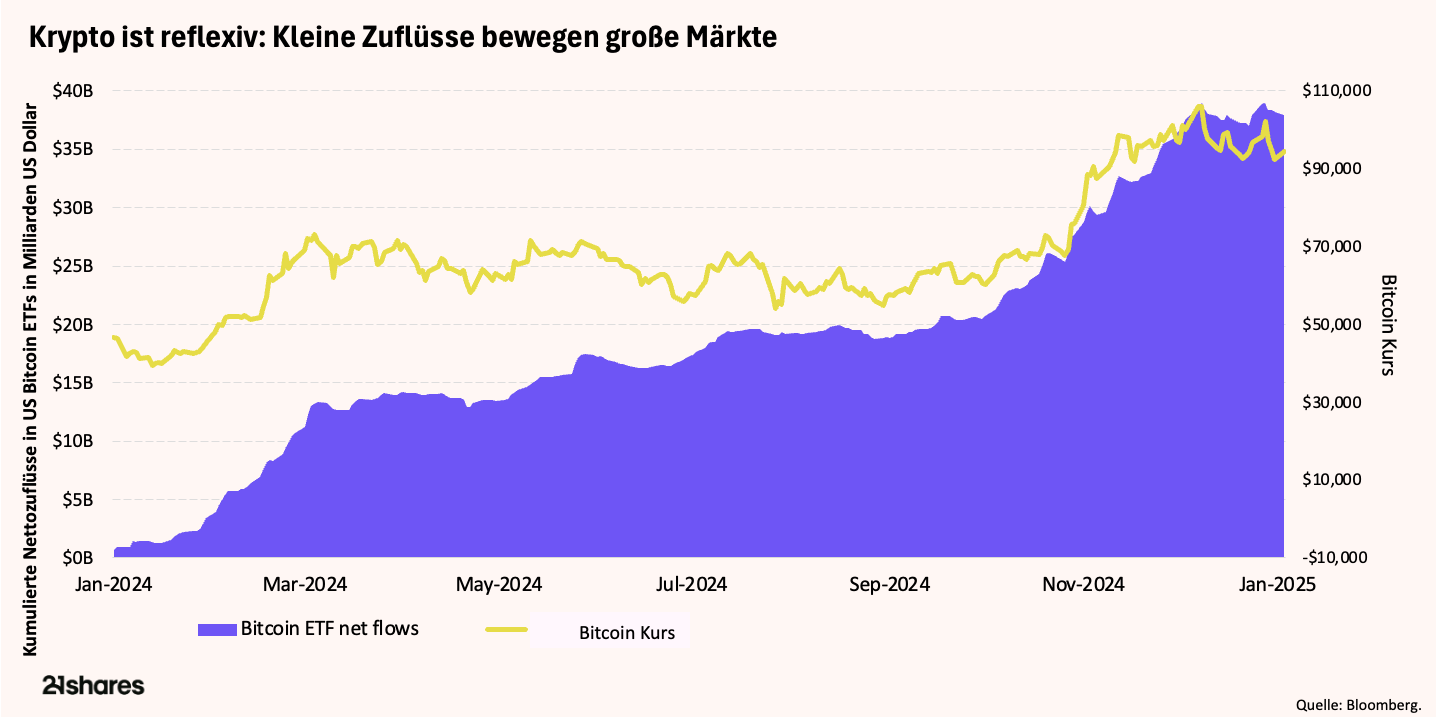
XRP weist jedoch eine noch höhere Kapital-Dynamik auf: Zum Start lag die Marktkapitalisierung von XRP (rund 113 Milliarden US-Dollar) bei etwa einem Achtel der Bewertung von Bitcoin (845 Milliarden US-Dollar) zum Zeitpunkt dessen ETF-Debüts. Während Bitcoin in seinem ersten Monat etwa 3 Milliarden US-Dollar benötigte, um seine Aufwärtsbewegung zu starten, erreichte XRP in einem vergleichbaren Zeitraum bereits 1,3 Milliarden US-Dollar. Aufgrund dieser geringeren Liquiditätsbasis haben Kapitalzuflüsse bei XRP einen deutlich stärkeren Einfluss auf die Preisfindung. Das aktuelle Niveau von 1,37 Milliarden US-Dollar ist daher ein starkes Signal für eine strukturelle Neubewertung im Jahr 2026. Entscheidend ist jedoch, dass dieser Rückkopplungseffekt davon abhängt, ob die ETFs diese Zuflussraten halten und auch 2026 hinweg konstante Nettozuflüsse verzeichnen können, denn Reflexivität wirkt nach unten genauso wie nach oben.
3. Der institutionelle Wendepunkt: Tokenisierung, Stablecoins und das DeFi-Flywheel
Einer der am meisten unterschätzten Katalysatoren für XRP ist seine Rolle als finanzielle Infrastruktur einer tokenisierten Weltwirtschaft. Bis 2030 wird erwartet, dass das globale Finanzsystem auf hybriden Rails basiert, die nahtlos kombinieren:
- Tokenisierte Bankeinlagen und Vermögenswerte
- Regulierte, fiat-gestützte Stablecoins
- Interoperable Settlement-Layer
In diesem Umfeld fungiert der XRPL als neutrale Brücke, in der Liquidität, Geschwindigkeit und regulatorische Konformität im Vordergrund stehen.
Der Übergang zur Nutzung im Produktionsmassstab zeigt sich deutlich in den Kernkennzahlen des Ledgers für 2025 bis 2026:
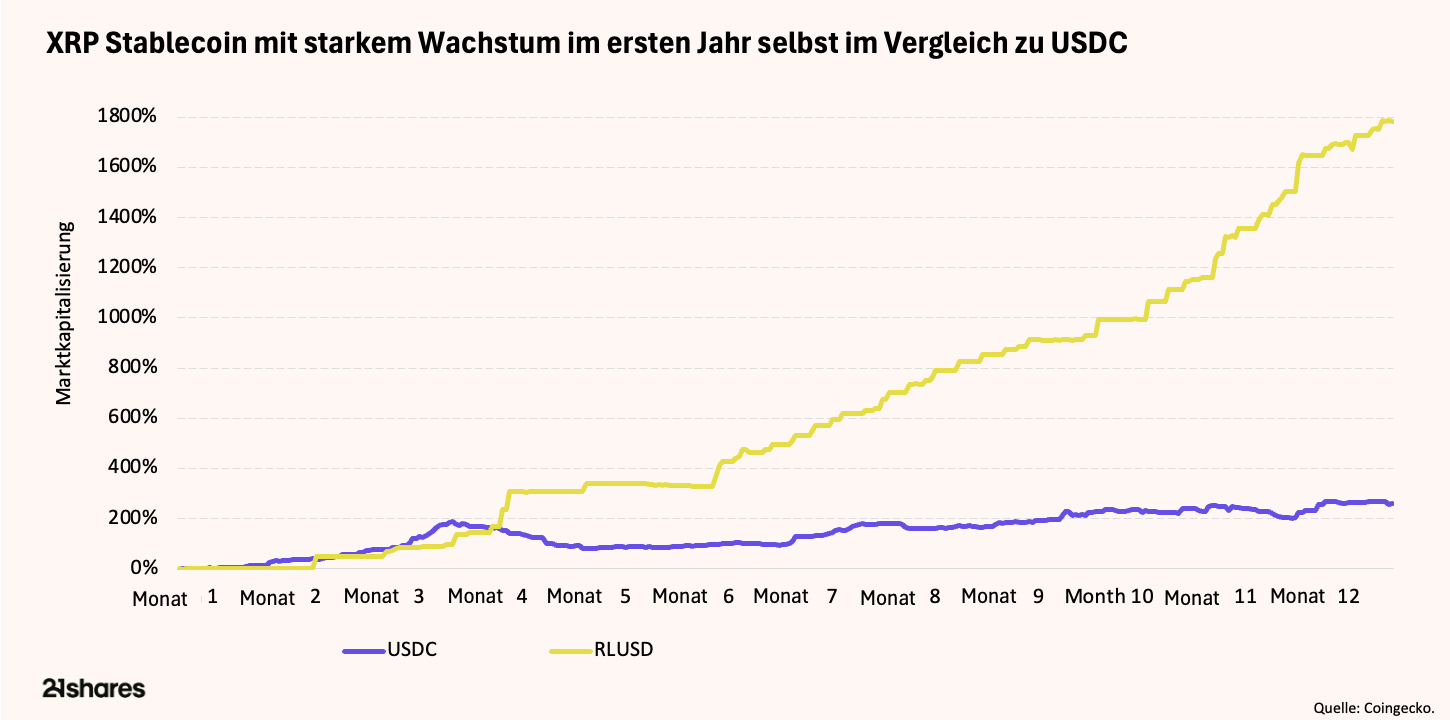
- Explosives Stablecoin-Wachstum: Der XRP-Stablecoin RLUSD hat sich zu einem zentralen Liquiditätsvehikel für institutionelle Marktteilnehmer entwickelt. Mit über 37.000 Haltern ist seine Marktkapitalisierung in weniger als einem Jahr um mehr als 1.800 Prozent von 72 Millionen auf 1,38 Milliarden US-Dollar gestiegen und stellt damit hochwertiges Collateral für professionelle Finanzanwendungen bereit. Zum Vergleich: USDC von Circle, der weltweit zweitgrösste Stablecoin mit über 74 Milliarden US-Dollar Volumen, wuchs in seinem ersten Jahr um 269 Prozent. So beachtlich das ist, wirkt es im Vergleich zum ersten Jahr von RLUSD deutlich verhaltener und unterstreicht die Stärke des Vertriebs- und Netzwerkmodells von RLUSD.
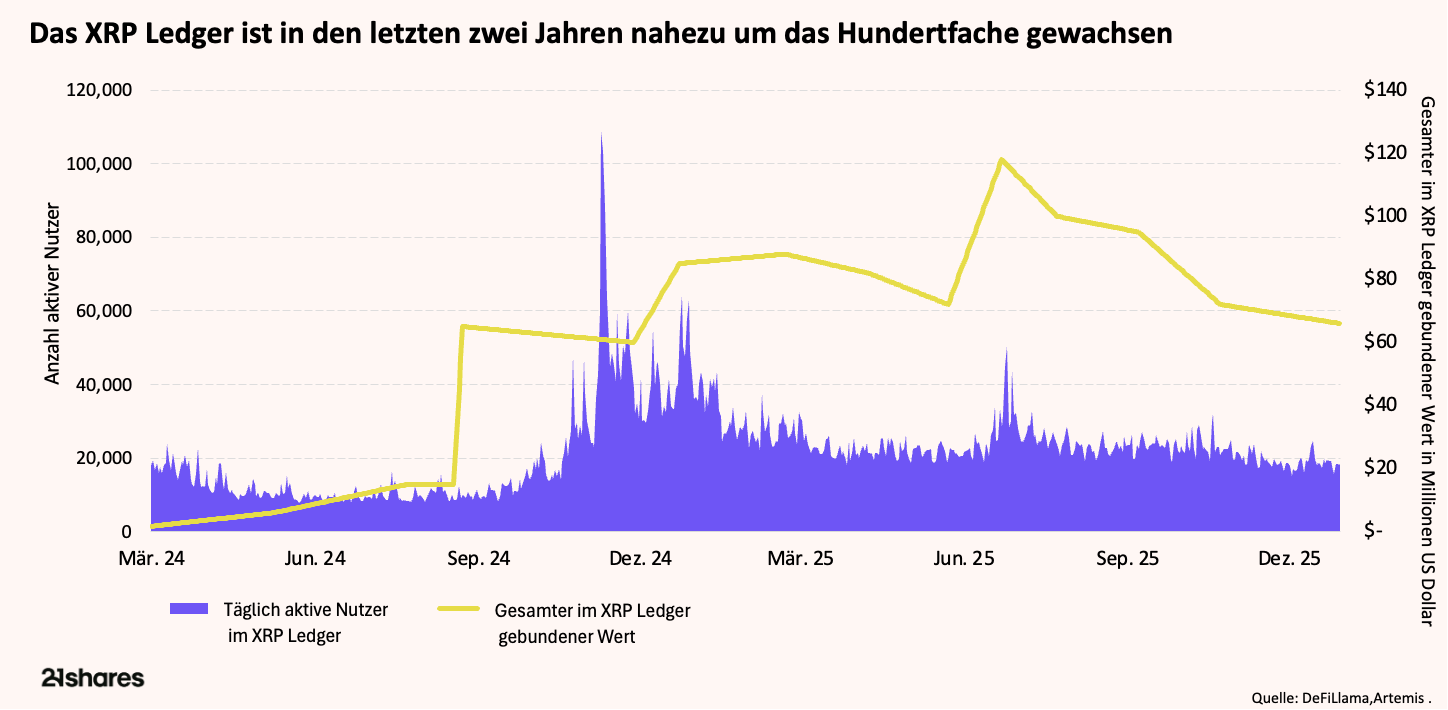
- Schnell wachsendes DeFi-Ökosystem: Die DeFi-Landschaft auf dem XRPL entwickelt sich zu einem immer robusteren Ökosystem. Auch wenn sie im Vergleich zur Reife und Grösse des gesamten XRP-Ökosystems noch relativ klein ist, zeigt sie eine starke Dynamik. Der Total Value Locked (TVL) auf dem XRPL ist in den letzten zwei Jahren um nahezu das 100-Fache gewachsen und hat kürzlich die Marke von 100 Millionen US-Dollar überschritten.
- Programmierbare Infrastruktur mit RWAs: Der Multi-Purpose-Tokens-(MPT)-Standard ermöglicht es Institutionen, komplexe Real-World-Assets wie Anleihen und Aktien direkt auf dem XRPL auszugeben und zu verwalten. Dabei können Metadaten und Compliance-Regeln direkt auf Protokoll-Ebene in den Token eingebettet werden, was die Emission deutlich vereinfacht.
Dennoch bleibt der Fortschritt eher evolutionär als explosionsartig. Der XRPL liegt bei Entwickler- und Nutzeraktivität weiterhin hinter konkurrierenden Netzwerken zurück. Der langfristige Erfolg als Utility-Layer hängt davon ab, ob diese zentralen Infrastruktur-Updates echten Product-Market-Fit erreichen und eine nachhaltige institutionelle Nutzung sichern können.
Unsere Szenarien für 2026
Preisprognosen sind keine Punktvorhersagen, sondern szenariobasierte Einschätzungen, die sowohl auf quantitativen Daten als auch auf qualitativen Annahmen beruhen. Durch die Modellierung unterschiedlicher Entwicklungen bei Adoption, Makroökonomie und Marktstruktur schätzen wir mögliche Bewertungsbereiche für die jeweiligen Jahreshöchststände.
- Base Case – $2.45 (50%): Regulatorische Stabilität sorgt für stetige ETF-Zuflüsse und einen schrittweisen Ausbau der realen Nutzung.
- Bull Case – $2.69 (30%): Die Skalierung institutioneller RWAs und eine Verknappung des Angebots lösen eine strukturelle Neubewertung aus.
- Bear Case – $1.60 (-16%): Stagnierende Adoption und Kapitalumschichtungen neutralisieren die positiven Effekte der rechtlichen Klärung.
Was sind die zentralen Risiken?
- Nachlassende Nachfrage: Anhaltende ETF-Zuflüsse könnten ihren Höhepunkt erreichen oder sich umkehren, wenn sich die Anlegerstimmung ändert. Damit würde der wichtigste reflexive Preistreiber geschwächt.
- Stagnation bei der Tokenisierung: Gelingt es nicht, signifikante RWA-Volumina auf den XRPL zu ziehen, bleibt das Netzwerk als Settlement-Layer unterausgelastet. Da RWAs 2025 ein zentrales Narrativ waren und auch 2026 bleiben, steht der XRPL in zunehmender Konkurrenz zu Netzwerken wie Canton, Solana und anderen Ökosystemen.
- Scheitern der RLUSD-Adoption: Kann sich der Stablecoin nicht bei institutionellen Nutzern durchsetzen, würde dies die Verfügbarkeit von hochwertigem Collateral stark einschränken.
XRP startet 2026 mit dem Fundament für einen institutionellen Durchbruch
Der langfristige Wert von XRP hängt nun von der tiefen Integration tokenisierter Infrastruktur und der anhaltenden Investorennachfrage ab. Gelingt es, diese Kapitalströme weiter zu binden und auszubauen, könnte 2026 ein vielversprechendes Jahr für XRP werden. Angesichts der historischen Phasen jahrelanger Seitwärtsbewegung, gefolgt von abrupten „Entspannungs“-Bewegungen, deutet die aktuelle Kombination aus regulatorischer Klarheit und institutionellen Zahlungsrails darauf hin, dass das Netzwerk für weiteres Kurspotenzial gut positioniert ist.
This report has been prepared and issued by 21Shares AG for publication globally. All information used in the publication of this report has been compiled from publicly available sources that are believed to be reliable, however, we do not guarantee the accuracy or completeness of this report. Crypto asset trading involves a high degree of risk. The crypto asset market is new to many and unproven and may have the potential not to grow as expected.Currently, there is relatively small use of crypto assets in the retail and commercial marketplace in comparison to relatively large use by speculators, thus contributing to price volatility that could adversely affect an investment in crypto assets. In order to participate in the trading of crypto assets, you should be capable of evaluating the merits and risks of the investment and be able to bear the economic risk of losing your entire investment.Nothing herein does or should be considered as an offer to buy or sell or solicitation to buy or invest in crypto assets or derivatives. This report is provided for information and research purposes only and should not be construed or presented as an offer or solicitation for any investment. The information provided does not constitute a prospectus or any offering and does not contain or constitute an offer to sell or solicit an offer to invest in any jurisdiction. The crypto assets or derivatives and/or any services contained or referred to herein may not be suitable for you and it is recommended that you consult an independent advisor. Nothing herein constitutes investment, legal, accounting or tax advice, or a representation that any investment or strategy is suitable or appropriate to your individual circumstances or otherwise constitutes a personal recommendation. Neither 21Shares AG nor any of its affiliates accept liability for loss arising from the use of the material presented or discussed herein.Readers are cautioned that any forward-looking statements are not guarantees of future performance and involve risks and uncertainties and that actual results may differ materially from those in the forward-looking statements as a result of various factors.This report may contain or refer to material that is not directed to, or intended for distribution to or use by, any person or entity who is a citizen or resident of or located in any locality, state, country or other jurisdiction where such distribution, publication, availability or use would be contrary to law or regulation or which would subject 21Shares AG or any of its affiliates to any registration, affiliation, approval or licensing requirement within such jurisdiction.









_logo.svg)
.svg.png)