

Solana is a high-performance blockchain long reputed to be the perfect network for retail use cases. Its high transaction speed, coupled with low transaction fees, has lured in companies like Shopify and PayPal, which is a practical step toward mainstream blockchain integration.
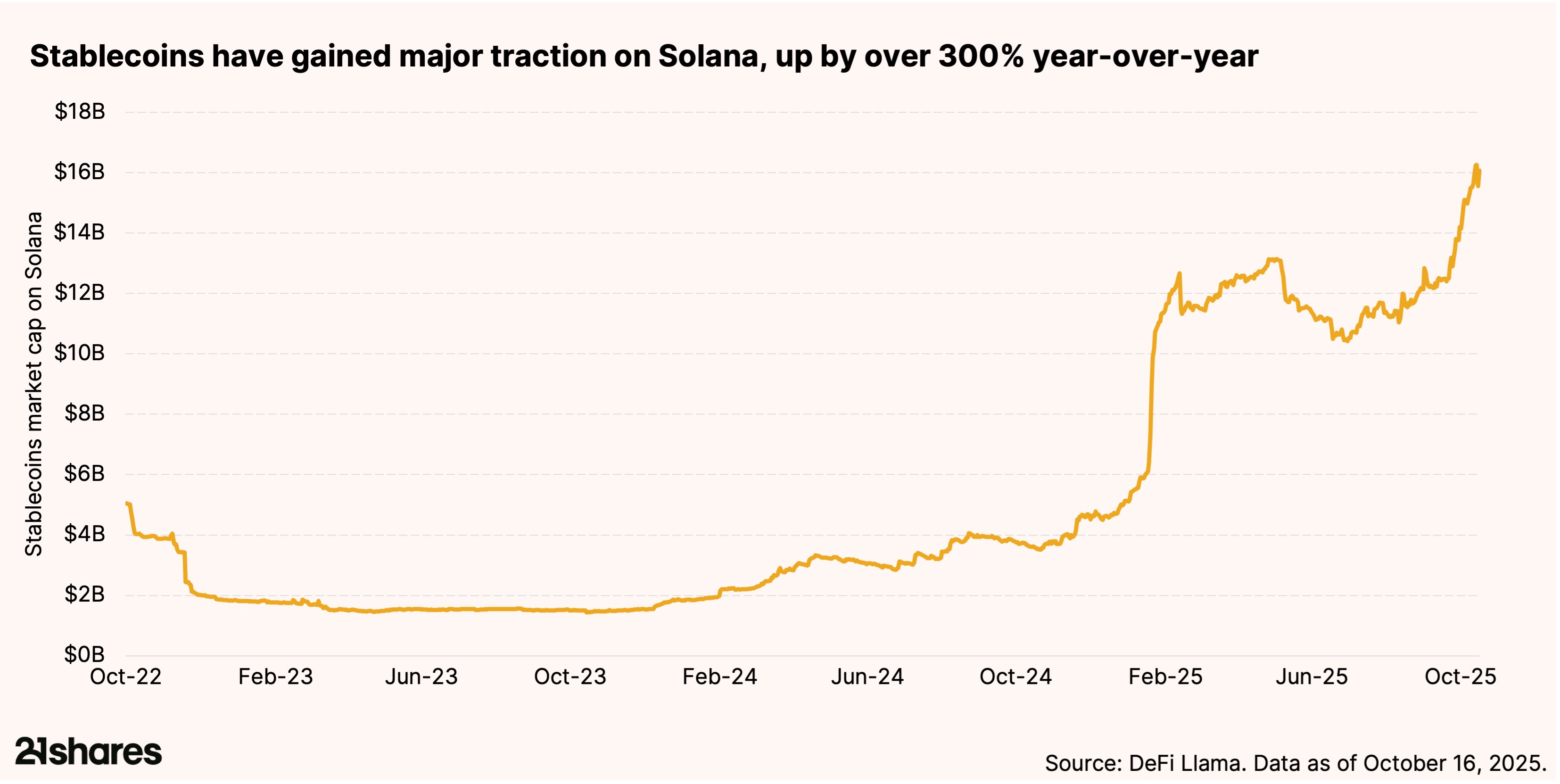
One proxy often used to measure retail adoption is stablecoin growth. Solana already hosts over $16 billion worth of stablecoins, boasting over 300% annual growth and underscoring its rising role as a settlement layer for digital dollars.
Together, these platforms are creating a tangible bridge between crypto rails and everyday financial activity, powering real transactions for checkout, refunds, and payouts. Importantly, these integrations abstract away the blockchain layer, allowing merchants and consumers to benefit from Solana’s speed and efficiency without needing to understand its underlying infrastructure.
This surge in stablecoin liquidity is now translating into real commerce, with Shopify offering one of the clearest examples of how Solana’s speed and low fees can improve merchant payments.
Shopify: a merchant-first onramp to stablecoin payments
Shopify merchants can add Solana Pay at checkout via an approved integration, letting stores accept USDC with a familiar Shopify flow for order management, refunds, and fulfillment. The onboarding mirrors a typical Shopify app flow, abstracting away the crypto rails and letting merchants accept stablecoins as easily as card payments.
The strongest real-world proof comes from Helio’s Solana Pay plugin on Shopify. During Solana Mobile’s Chapter 2 launch, the plugin processed roughly $35 million in sales at a fraction of the time of traditional rails. It helped avoid an estimated $1 million in card-processing fees as buyers opted to pay in USDC on Solana. Over 200 Shopify stores adopted the plugin, signaling early merchant willingness to test cheaper, faster settlement rails alongside cards.
For merchants, the value proposition is straightforward: near-instant settlement, fewer intermediaries, and materially lower acceptance costs compared to the 1.5-3% card-fee stack. Even in hybrid setups where cards remain an option, every stablecoin transaction that clears over Solana reduces blended payment costs and accelerates cash availability for inventory, marketing, and payroll cycles.
Legacy networks like Visa and Mastercard typically charge 1.5-3.5% per transaction and settle funds within 1-3 business days. Meanwhile, Solana processes payments in under one second at a cost of roughly $0.00025-$0.0028 per transaction, making it over 1,000x cheaper and thousands of times faster.
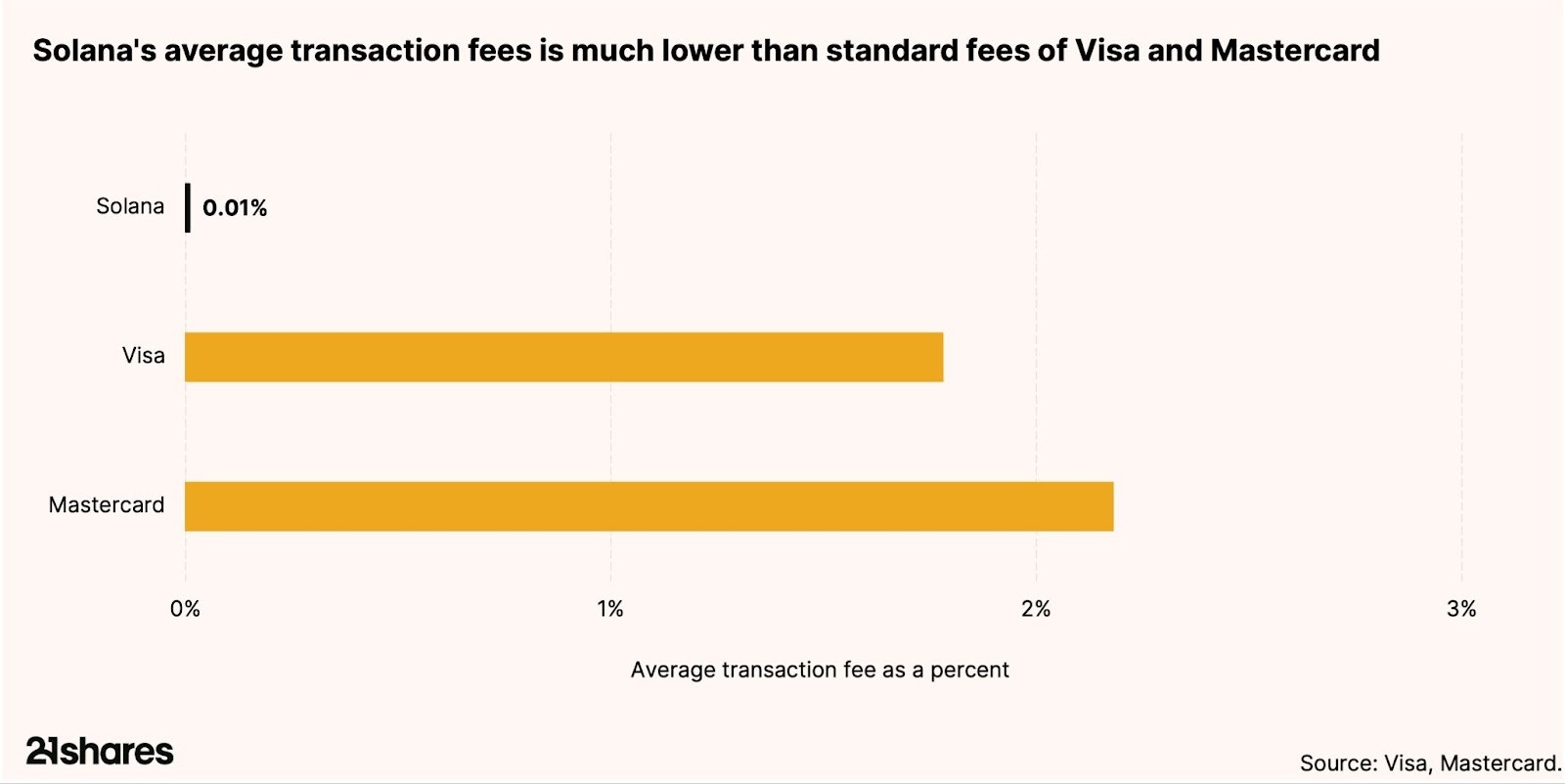
Fees on Solana are also fixed and predictable, with half burned and half distributed to validators, enhancing both network sustainability and scalability. Consumers benefit through instant refunds, lower prices driven by reduced merchant costs, and fewer failed or held transactions. Shopify’s case study quantifies these savings and demonstrates that the Solana network can seamlessly coexist with traditional checkout rails rather than replace them.
PayPal: bringing a consumer wallet and compliance-grade tooling
PayPal integrated its dollar-backed stablecoin, PYUSD, directly into its core payments ecosystem, allowing users to buy, sell, send, and receive the token within both PayPal and its subsidiary, Venmo, one of the most popular peer-to-peer payment apps in the US. PYUSD functions like a native balance inside these apps, meaning users can fund transactions, pay peers, or make purchases without ever leaving PayPal’s interface or interacting with a separate crypto wallet. This integration effectively transforms PYUSD into a compliant, crypto-native settlement layer that operates underneath PayPal’s familiar consumer and merchant experience.
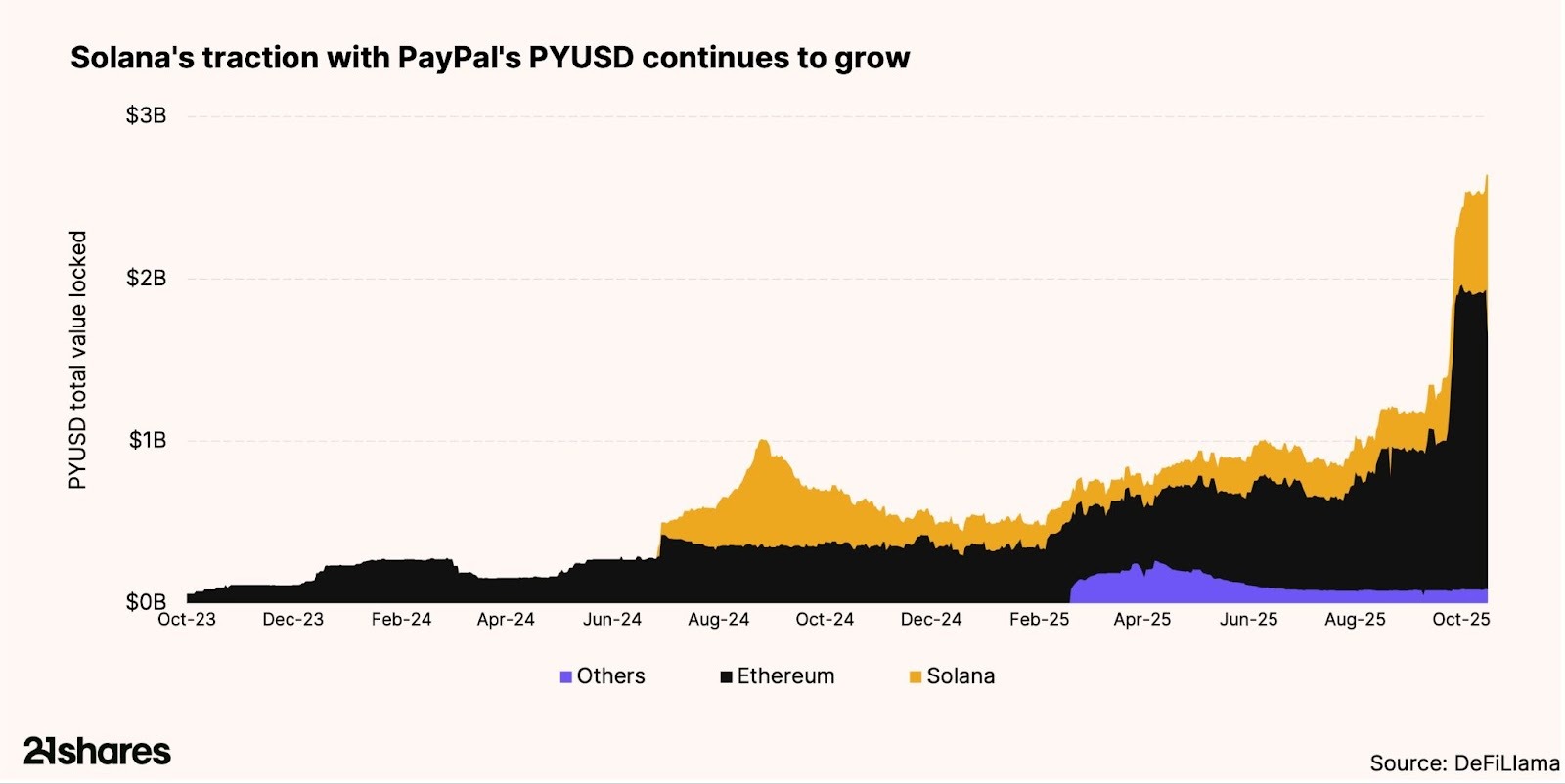
Expanding PYUSD to Solana in May 2024 highlights the network’s advantages for retail-grade payments, near-instant settlement and low fees. Solana’s token extensions enable confidential transfers, transfer hooks, and memo fields, embedding compliance and business logic directly at the protocol level. That means large, regulated companies like PayPal can implement policies such as selective visibility, programmable receipts, or loyalty-based payouts without relying on external middleware. While Ethereum still captures over 56% of total value locked across DeFi, Solana is making meaningful headway on the consumer and retail side. PYUSD’s supply now shows roughly a 40%/60% split between Solana and Ethereum, respectively, out of $2.65 billion in circulation. PayPal’s massive consumer reach and Solana’s enterprise-ready infrastructure position PYUSD for broader use in merchant settlement, refunds, and high-frequency retail payments over time.
Shopify and PayPal now bridge both sides of the retail loop. Shopify normalizes stablecoin payments through one-click Solana integrations for merchants, while PayPal reduces consumer friction by enabling a dollar-stable balance that moves over Solana when speed and cost matter. The result is lower fees, faster settlement, and fewer cross-border frictions than traditional rails. Solana’s retail-finance adoption is taking hold within companies and merchants consumers already trust, underscoring its position as one of the most cost-efficient payment rails in the market.