

Hyperliquid, one of the fastest-growing decentralized exchanges, is gearing up to enter the stablecoin market, and with that, the race for stablecoin dominance is on.
As competition heats up, the battle for stablecoin supremacy intensifies: will Hyperliquid’s innovative USDH outpace Circle’s industry-leading USDC?
Stablecoins are essentially the “dollars of crypto,” and whoever controls them gets to steer transaction flows and capture billions in yield. By launching USDH, Hyperliquid aims to take control of its liquidity and reduce its reliance on existing stablecoins, such as USDC or USDT.
Here’s how the stablecoin competition has begun and why it matters for investors.
Hyperliquid bets big on stablecoin
Earlier this month, Hyperliquid ran a competitive bidding process to select who would issue stablecoin USDH. For the first time, validators, not the core team, chose the winner, ultimately selecting Native Markets over established names like Paxos and Frax.
Native Markets is a new startup led by Max Feige, an early Hyperliquid investor, Mary-Catherine Lader, the former president of Uniswap Labs, and Anish Agnihotri, a blockchain researcher. Together, they bring both institutional credibility and deep crypto-native expertise.
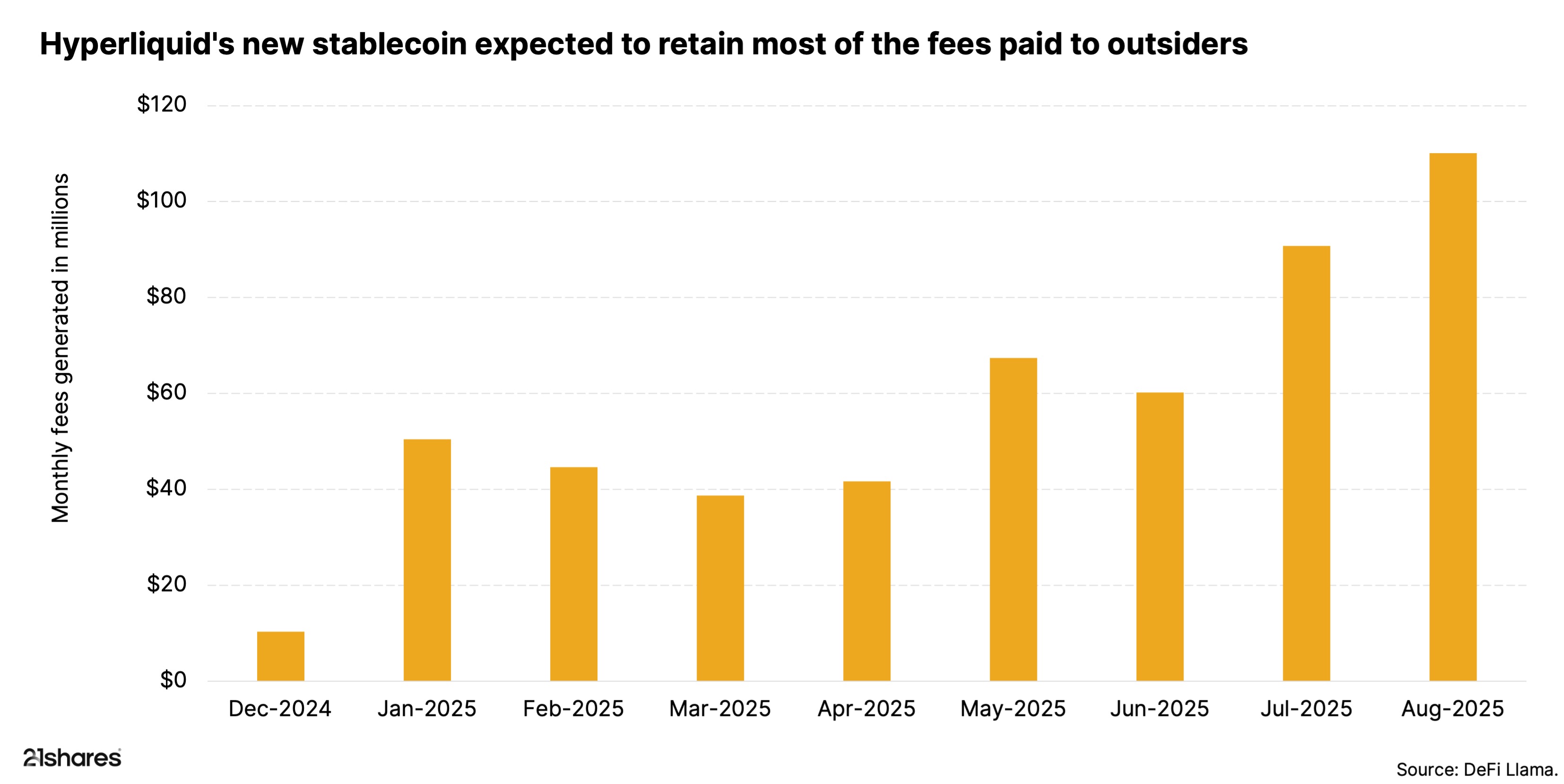
Why is Hyperliquid launching USDH?
The vision behind USDH is clear: keep liquidity in-house. Instead of letting stablecoin issuers like Circle or Tether capture the yield from the billions held in reserves, Hyperliquid can now directly govern transaction flow, trading fees, and reserve yield. The result is a powerful feedback loop: some of the yield can be reinvested into the ecosystem via token buybacks and growth initiatives, creating long-term value for the platform and its users. If USDH succeeds, it could shift billions in stablecoin dominance away from incumbents like USDC.
The competition heats up
Just two days after the vote, Circle announced that USDC would launch natively on Hyperliquid. Using its upgraded Cross-Chain Transfer Protocol, USDC can now move easily across 20+ networks, making it simpler for users to trade and use across platforms. Circle also took a direct stake in the native token HYPE and is exploring validator roles and incentive programs to defend its position.
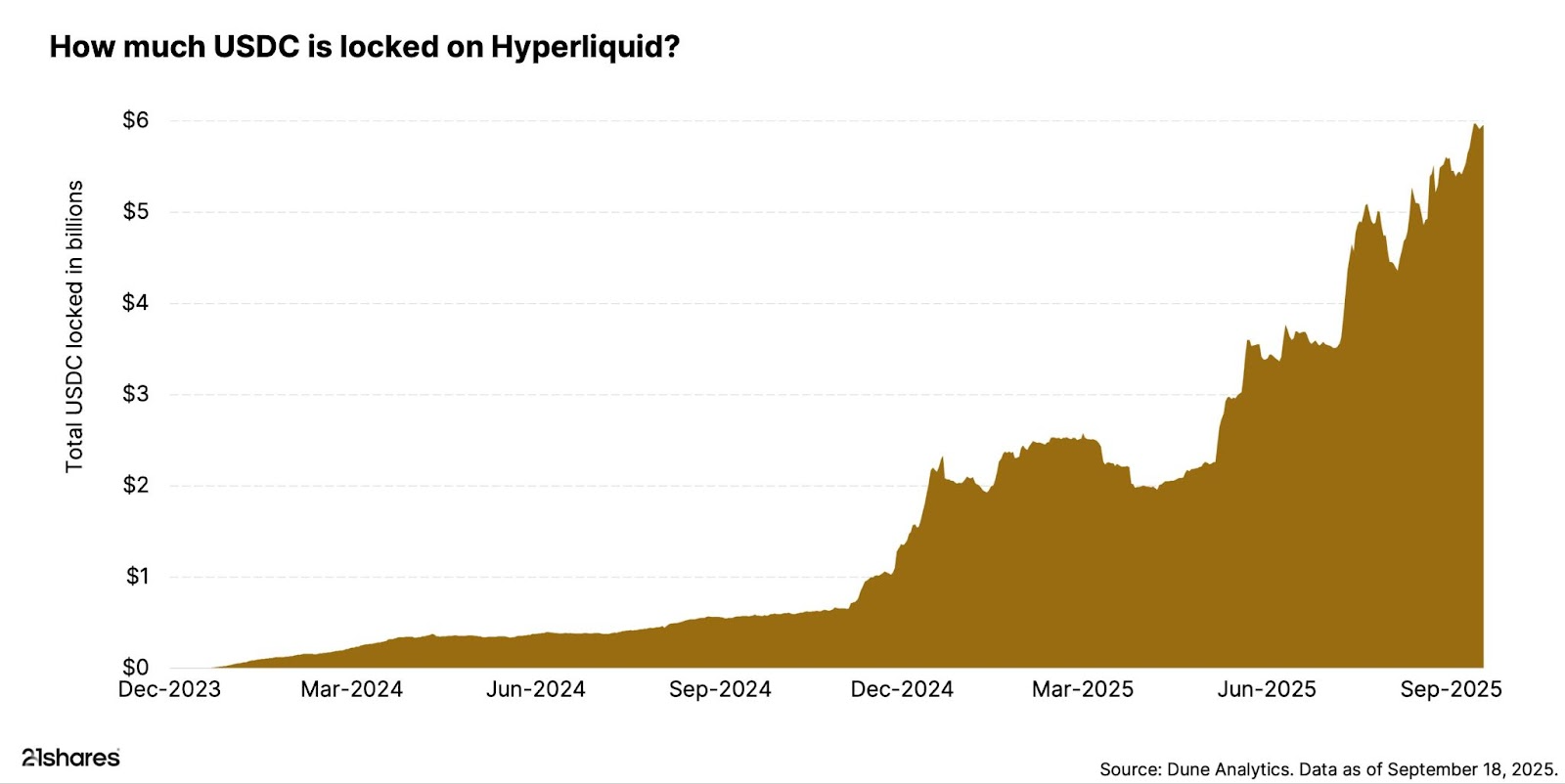
That sets up a fascinating dynamic:
- USDH: validator-approved, Hyperliquid-native, designed to recycle yield into the ecosystem.
- USDC: global, battle-tested, liquid across nearly every major chain, and still holding nearly all of Hyperliquid’s existing stablecoin reserves.
This gives traders the flexibility to use multiple stablecoins directly on Hyperliquid, with smooth cross-chain access, while the USDH vs. USDC rivalry drives innovation, better services, and new features for all users.
The bottom line
The stablecoin race on Hyperliquid is only just beginning, and it’s already turning the exchange into one of the most dynamic platforms in crypto.
While USDC remains the dominant stablecoin in crypto, USDH offers a different kind of value for Hyperliquid users. Since it is native to the exchange, USDH is tightly integrated into the ecosystem and designed to keep liquidity and the yield it generates within Hyperliquid rather than flowing out to external issuers like Circle. That means reserve profits can be reinvested into token buybacks, user rewards, and growth initiatives, directly benefiting the community. On top of that, Hyperliquid could offer incentives such as lower fees or special rewards for those who transact in USDH, giving traders a tangible reason to use it.
In short, USDH isn’t just another stablecoin; it’s a tool that strengthens the Hyperliquid flywheel, aligning user benefits with the platform’s long-term growth.