
Imagine owning a slice of a Manhattan skyscraper or a Picasso with just a few clicks, no paperwork and no high minimums. Tokenization is making this possible by converting real-world assets (RWAs), such as real estate, bonds, commodities, and even fine art, into digital tokens on the blockchain. This unlocks fractional ownership, 24/7 trading, and instant settlement, lowering barriers to high-value markets and improving transparency, efficiency, and access.
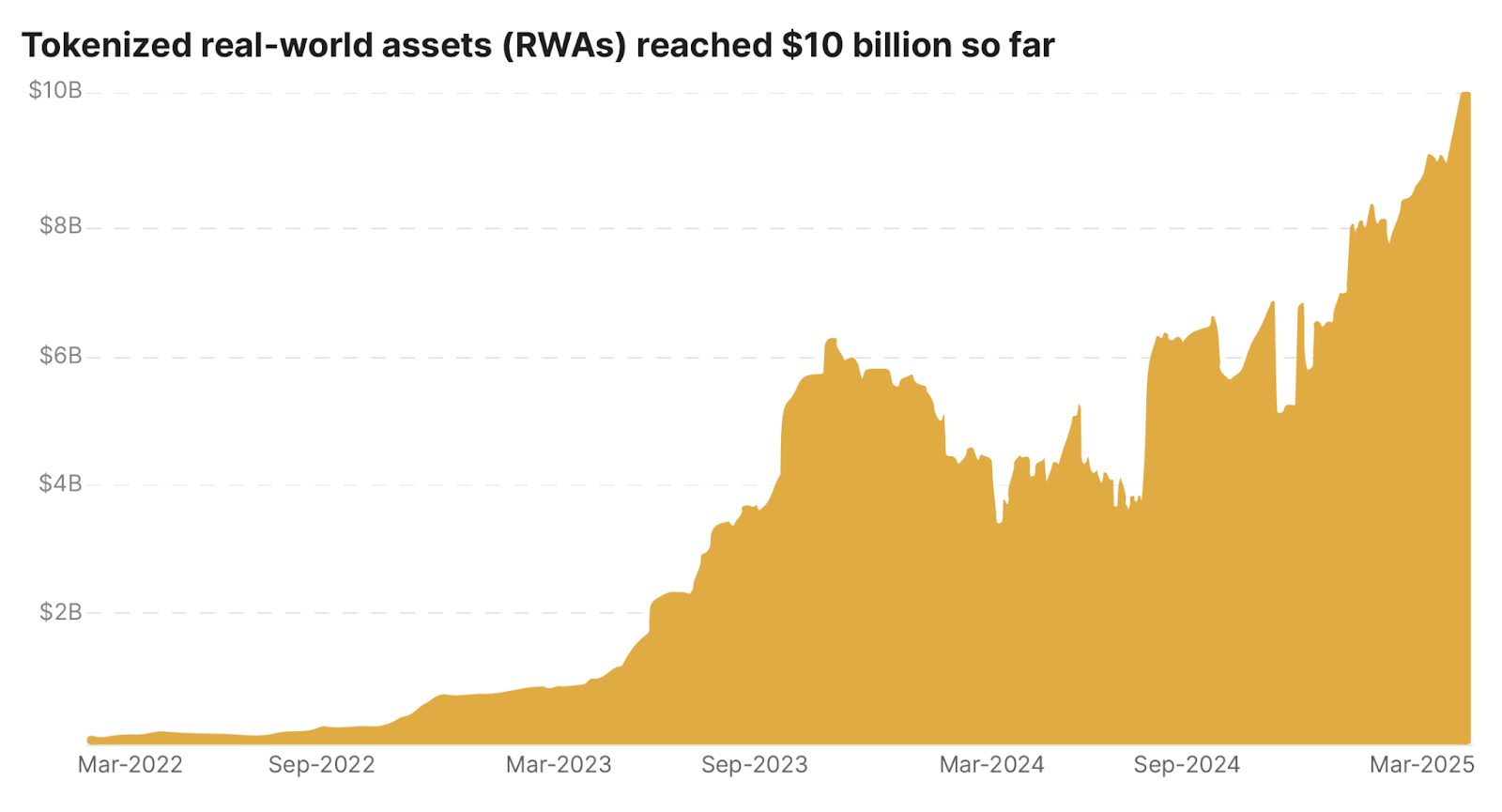
Tokenized RWAs in decentralized finance (DeFi) have surpassed $10 billion in the total value of assets locked on the blockchain. With projections suggesting a $5 trillion market by 2030, 2025 is poised to be a breakout year for tokenization, ushering traditionally exclusive markets into the digital era.
How does tokenization work?
At its core, tokenization involves converting a real-world asset (stocks, real estate, bonds, commodities, fine art, etc.) into a digital token and issuing it on a blockchain such as Ethereum or Solana. Here’s how the process works:
- First, the asset is appraised, and legal ownership is confirmed.
- Legal frameworks are established to ensure that the tokenized asset complies with relevant local and global financial regulations. This includes defining the rights each token represents and who can hold them.
- Once compliance is in place, the asset is tokenized on the blockchain. Tokens can be fungible or divisible, identical units representing equal ownership (similar to company shares), or non-fungible, where each token is unique and represents a distinct asset, such as a digital certificate for a one-of-a-kind painting.
- Finally, smart contracts—self-executing programs on the blockchain—are used to automate the rules for ownership transfer, trading, and income distribution. For example, in a tokenized apartment building, rental income can be distributed monthly to token holders according to their share of ownership.
Blockchain ensures that all transactions are recorded immutably and transparently, with 24/7 availability and instant settlement–something traditional finance can’t match. Most importantly, tokenized assets can be accessed globally without the friction of intermediaries or geographic limitations.
What are the benefits of RWAs?
- Liquidity and fractionalization: Assets like real estate, art, or private equity are traditionally illiquid. Tokenization allows fractional trading of these assets on marketplaces, unlocking liquidity.
- 24/7 markets and instant settlement: Unlike traditional markets that close after hours, on weekends, or during holidays, blockchain-based assets are accessible 24/7, year-round. Settlements occur instantly through smart contracts, eliminating the need for banking hours or middlemen.
- Transparency and trust: Blockchain records are immutable and visible to all participants. Investors can track asset performance, income distributions, and transfers in real time, which reduces fraud and builds trust.
- Efficiency and cost savings: Smart contracts automate tasks such as dividend distribution, settlements, and ownership transfers, reducing administrative overhead and cutting operational costs.
- Integration with DeFi: Tokenized assets can be integrated into decentralized finance (DeFi) applications, allowing investors to lend, borrow, or trade while still earning predictable income streams, such as monthly yields from tokenized bonds or real estate. This enables liquidity without sacrificing the benefits of traditional assets, like steady income, principal protection, and defined maturity.






.svg)



_logo.svg)

.svg.png)