

“Uptober” hasn’t lived up to its name so far. Bitcoin has traded down, though it is now almost flat for the month, raising concerns it could snap its six-year streak of positive October performance.
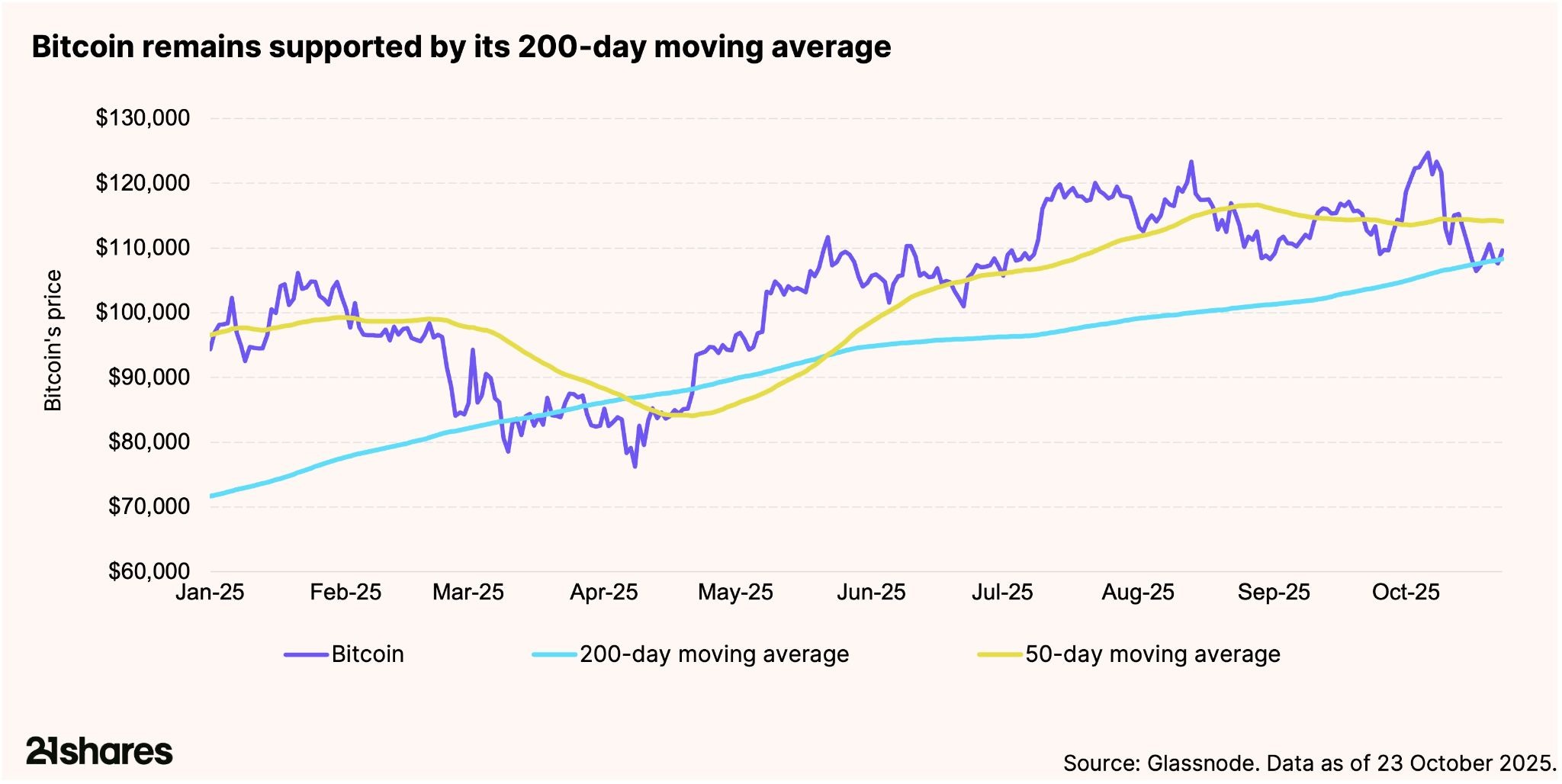
Technically, Bitcoin remains stuck in no-man’s land, trading below its 50-day moving average near $114,000 but clinging to its 200-day support around $108,000. The bounce from the recent CME futures gap closure has lacked conviction, with fading volume signaling market fatigue. A failure to move higher soon could invite a deeper retest of the $102,000 Binance wick recorded on October 10 or even the psychological $100,000 mark.
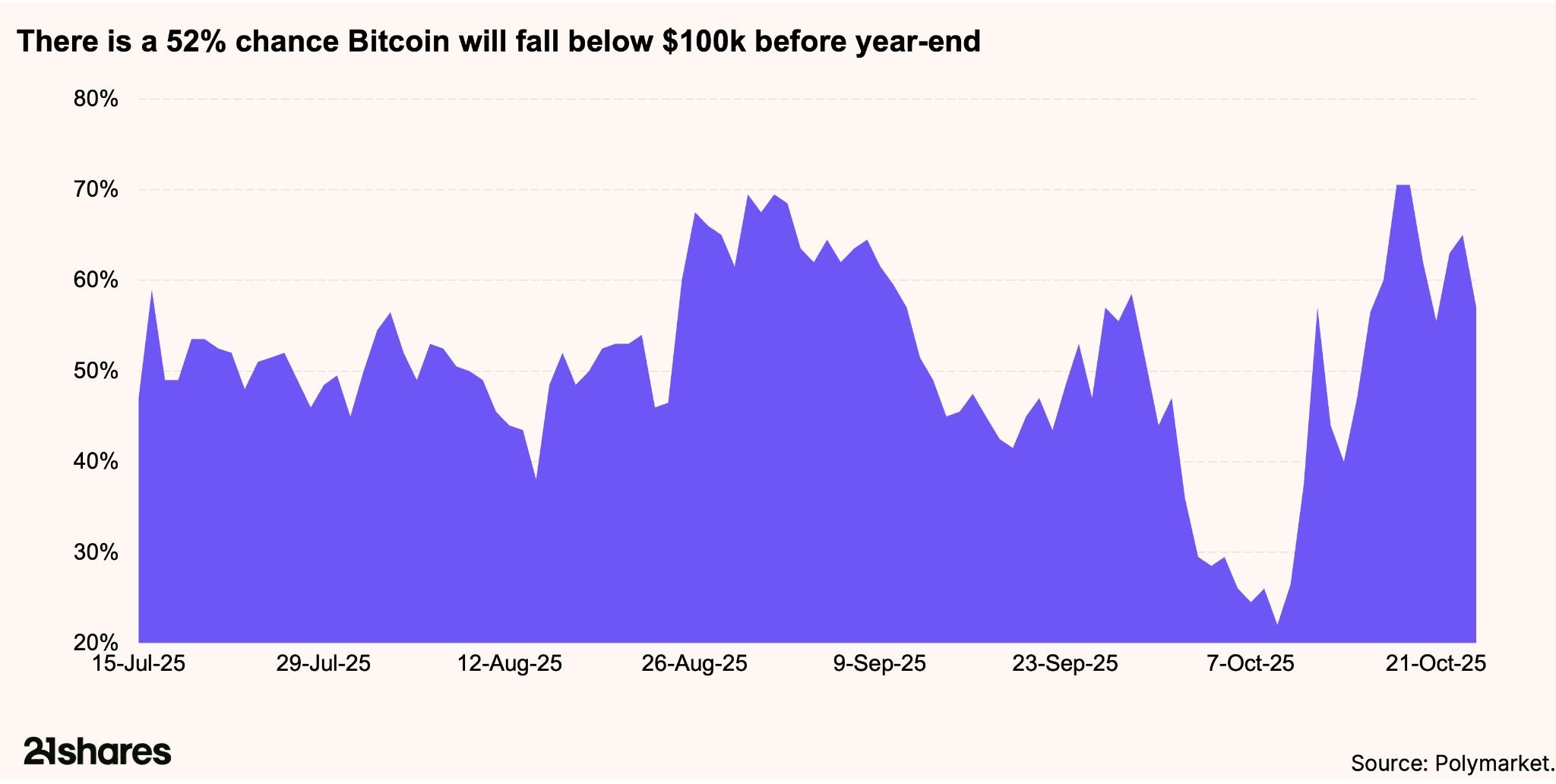
This market malaise has also left participants divided on Polymarket, the largest blockchain-based prediction market. Odds of Bitcoin dipping below $100,000 before year-end have risen to 52%, up significantly in the past two weeks. Yet, despite short-term uncertainty, valuations appear attractive, and we expect the rally to resume into the year-end.
From lagging to leading: Why could Bitcoin flip the script?
That recent market crash was triggered by President Trump's proposed 100% tariffs on Chinese imports, which reignited trade-war fears and drove Bitcoin’s correlation with the S&P 500 above 60%.

However, signs suggest this rhetoric is more negotiation than policy. Trump has hinted at de-escalation, and talks point toward a milder resolution. Digital assets have already responded, with this week’s mini-rally hinting at a broader recovery if tensions continue to ease, much like the post-Liberation Day rebound, when the total crypto market cap surged over 50% in just six weeks.
The duality of Bitcoin
Bitcoin remains both a risk-on growth asset and a systemic hedge. It has trailed gold by nearly threefold this year, with gold up over 50% after reaching new highs last week, leaving room for Bitcoin to regain favor for the debasement trade as year-end approaches.
Its price also tends to lag shifts in global liquidity by two to three months. With the Federal Reserve signaling an end to quantitative tightening, improving liquidity could be a key tailwind. Since 2020, Bitcoin has gained 10-20% in the 15-30 days following major global disruptions, underscoring its evolving role as both growth proxy and defensive asset.
Q4 catalysts to watch
Crypto-native drivers have been scarce, but several catalysts may soon arrive.
- The expected US government reopening in November could accelerate regulatory and ETF approvals.
- Institutional funds: 155 ETF filings across 35 different digital assets are already in the pipeline, and that number could surpass 200 within a year, signaling a rush toward broader market access.
- Regulatory advancements: The pending CLARITY Act, 401(k) Bitcoin allocation proposals, and other legislative efforts could boost further confidence in the industry.
- Global momentum: The UK, Hong Kong, South Korea, and Japan are unlocking fresh institutional flows into Bitcoin ETPs and further legitimizing institutional adoption.
Together, these intersecting catalysts point to a potential regime shift. While short-term volatility persists, long-term investors may find this consolidation phase less of a warning and more of an opportunity.





.svg)



_logo.svg)

.svg.png)