

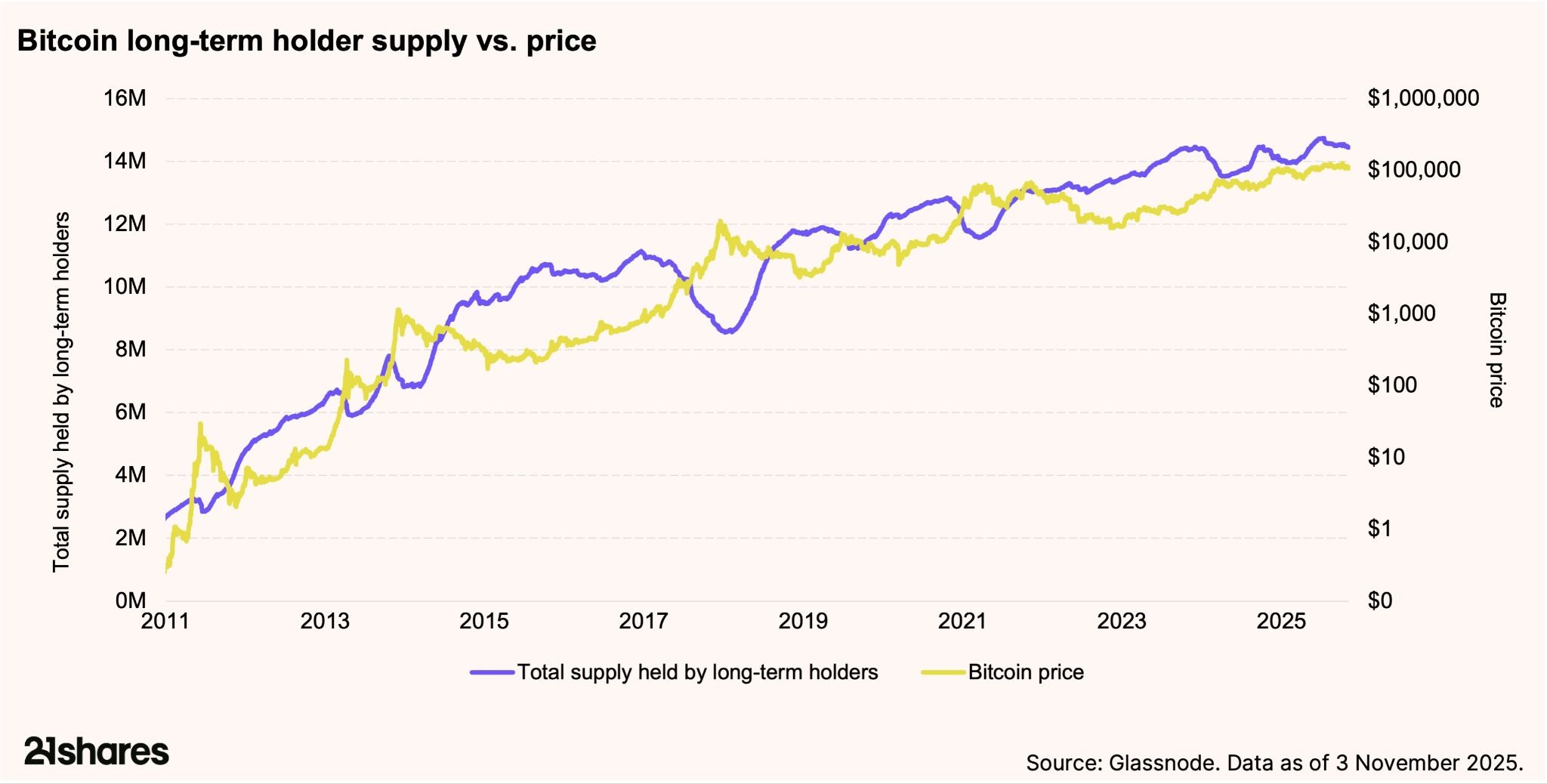
Bitcoin and Ethereum remain range-bound amid a mid-cycle reset. Bitcoin trades between $100,000 and $105,000, while Ethereum sits around $3,300 within the $3,100-$3,500 range. The pullback follows profit-taking by long-term holders, roughly 405,000 BTC (~$40 billion) sold in the past month, and a sharp reduction in leverage, which has softened upside momentum.
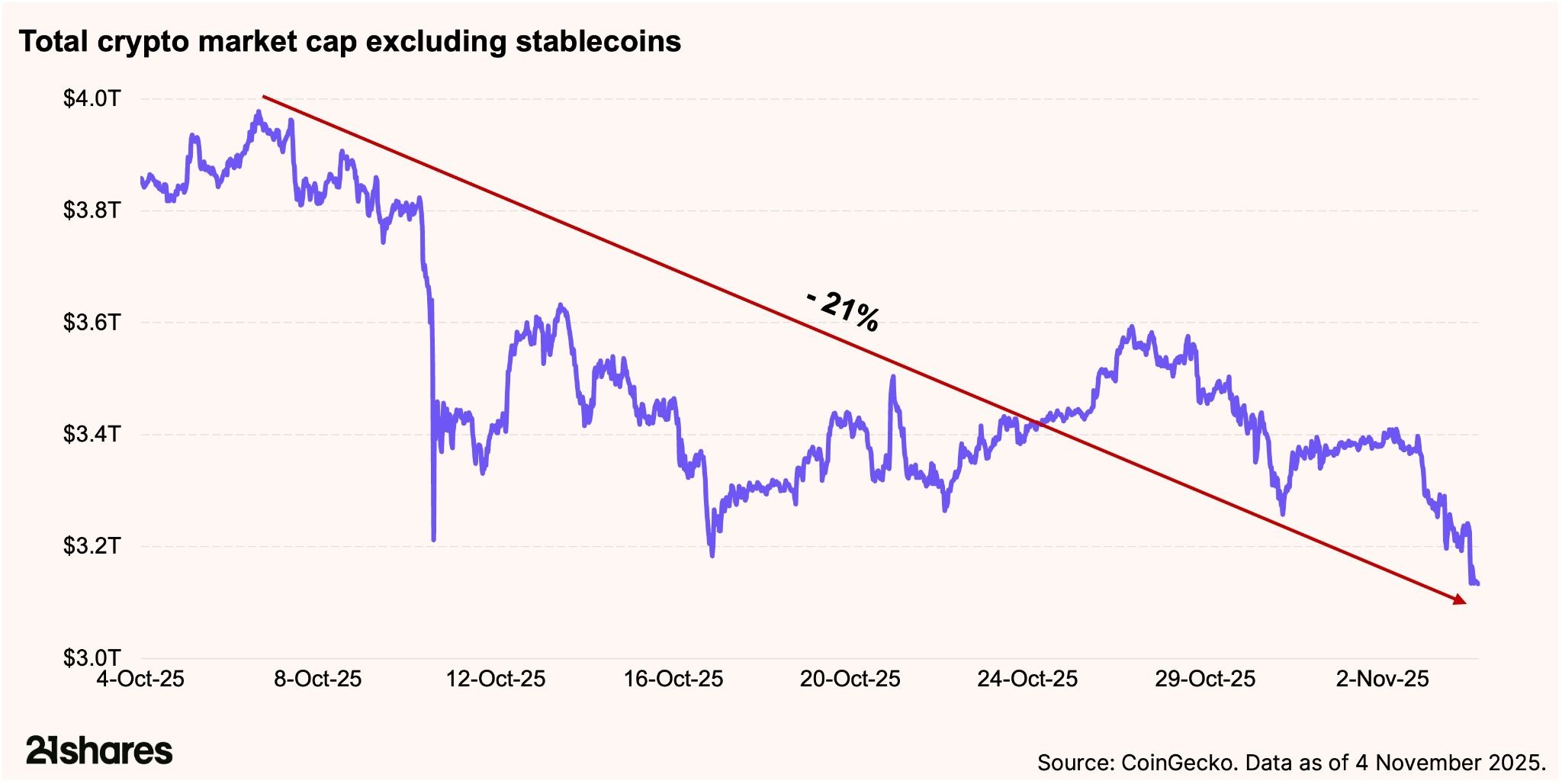
The total crypto market cap has fallen about 21% since early October, from $3.9 trillion to $3.1 trillion, in what appears to be an orderly consolidation rather than a panic sell-off. Capital has rotated into Bitcoin and stablecoins, with the latter hitting an all-time high of $300 billion in supply. Altcoins have underperformed, but valuations have reset, creating potential “buy-the-dip” opportunities.
Historically, similar 20% drawdowns during mid-cycle pauses have preceded major rallies as liquidity and confidence return.
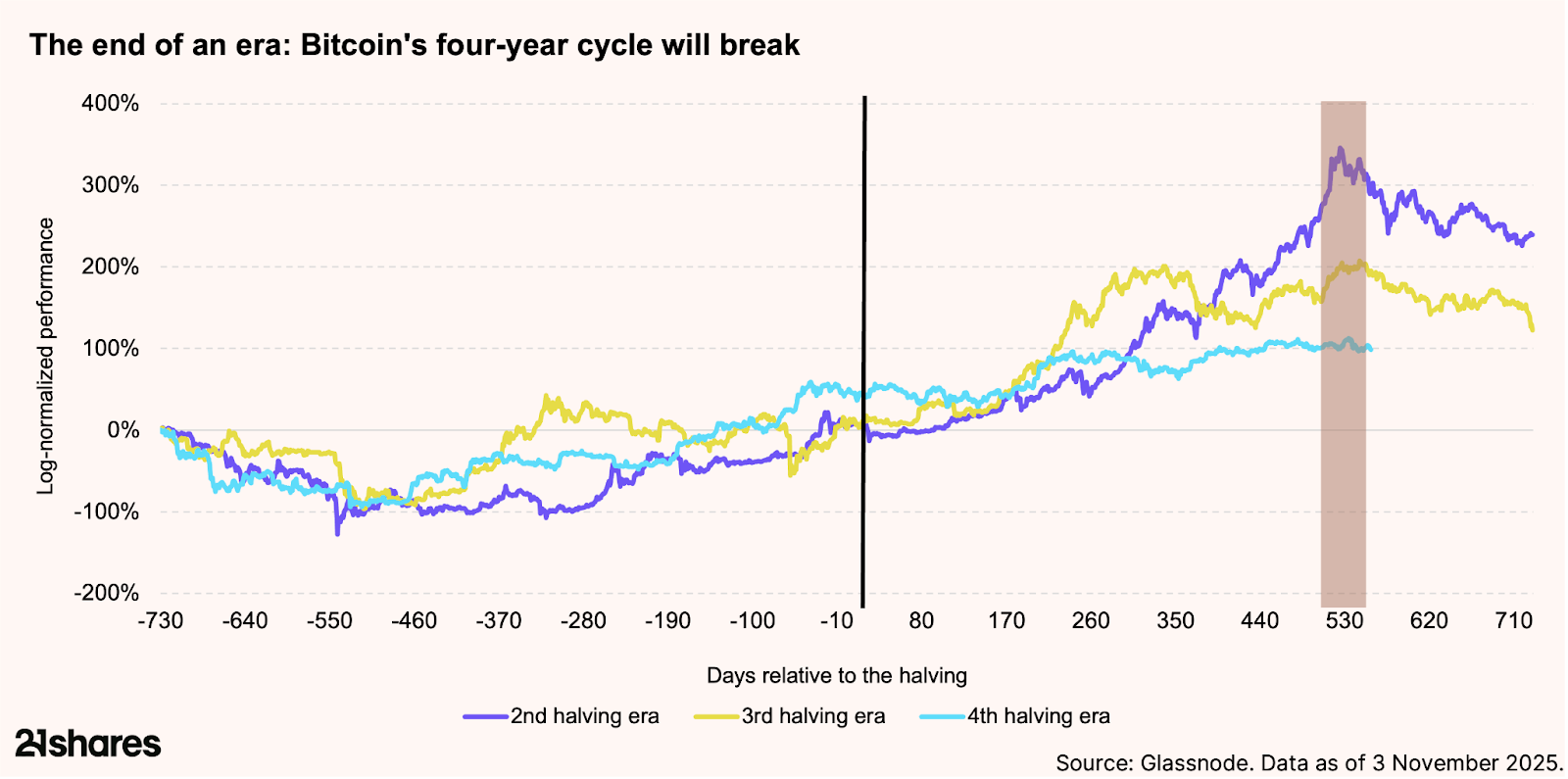
Breaking the four-year cycle
This cycle is showing early signs of breaking from the traditional four-year halving pattern. Previous cycles were largely retail-driven and tied to halving-induced supply shocks, but institutional adoption, ETF inflows, and sovereign accumulation have begun to decouple Bitcoin’s performance from that rigid schedule.
- As shown below, Bitcoin’s post-halving behavior in 2024-2025 (light blue line) has diverged sharply from past eras, maintaining a steadier trajectory despite smaller corrections.
- This structural shift highlights Bitcoin’s maturation into a macro asset, influenced less by miner supply and more by policy, liquidity, and institutional balance sheets.
Near-term risks
The 50-week moving average (~$102,900) remains the key level to watch. A sustained close below it could trigger a retest of the $90,000-$95,000 range, marking a short “crypto winter” lasting months, not years. Over $1.7 billion in leveraged positions were liquidated in the past 24 hours, showing how thin speculative depth has become.
Still, today’s market structure is stronger, supported by institutional demand, regulatory progress, and improving macro conditions. Any further dip would likely be corrective, not structural.
Catalysts for the next upswing
Several tailwinds could reignite momentum heading into 2026:
1. Regulatory clarity as US policy resumes post-shutdown.
2. ETF pipeline: Over 100 crypto ETFs await SEC approval.
3. Sovereign accumulation: The US BITCOIN Act proposes purchasing 1 million BTC, signaling strategic alignment.
4. Liquidity expansion: With quantitative tightening ending in December, nearly $9 trillion parked in money markets could rotate into risk assets.
5. The Gold catch-up trade: Gold’s 50% year-to-date rally could foreshadow a similar Bitcoin breakout, as in 2020.
Sentiment and positioning
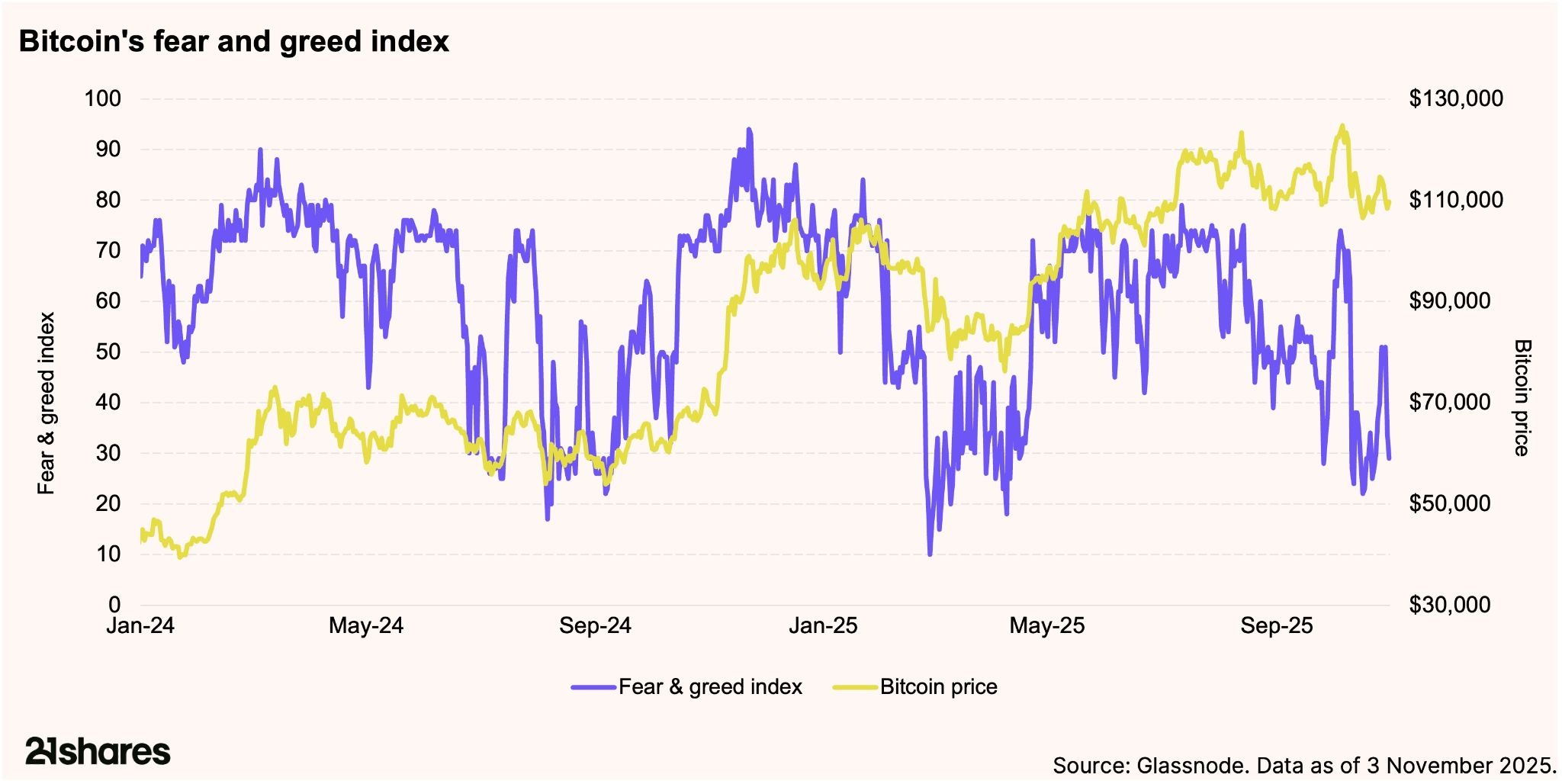
Investor sentiment sits in “Fear” at 27 on the Crypto Fear & Greed Index, a level historically marking accumulation zones. Derivatives data show shorts now outnumber longs (54:46), conditions often seen near cycle bottoms.
With profit-taking easing and liquidity tailwinds building, we see potential for Bitcoin to reclaim $110,000+ by year-end. As long as it holds above $100,000, the long-term uptrend remains intact.






.svg)



_logo.svg)

.svg.png)