

Key takeaways:
- Gold has been primarily driven by financial flows in China. These flows result from massive trade surpluses, currency interventions, and a political desire to diversify away from US treasuries. They are not driven by fears of US dollar currency debasement.
- In markets that have experienced genuine currency debasement and where cryptocurrency trading is legal, crypto adoption rates have surged. In these economies, blockchain payment rails have established themselves as an important part of the local payments infrastructure.
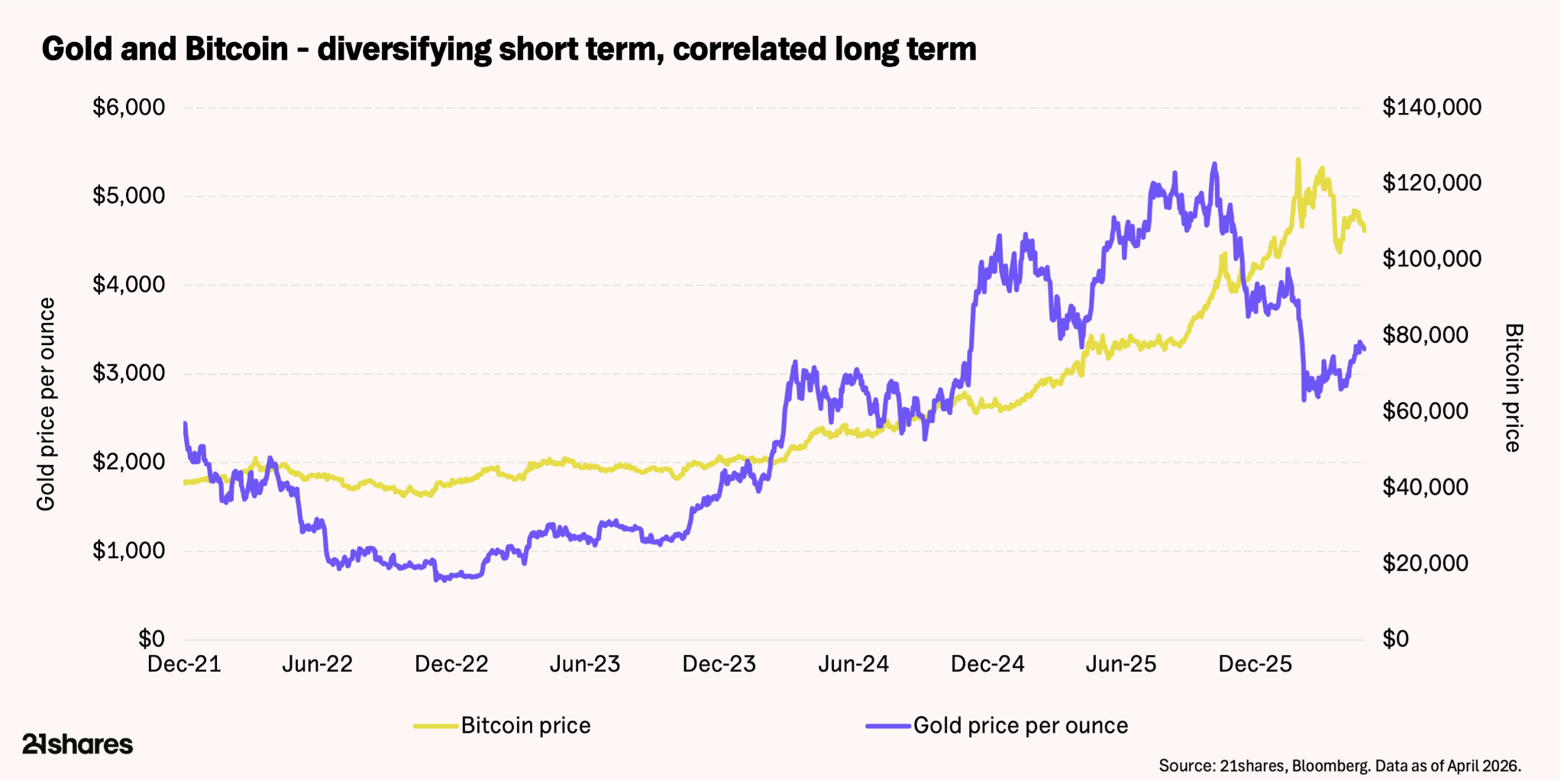
- Bitcoin and gold share similar properties over the longer term, but are traded by different investor types in the short term, providing diversification benefits to investors who allocate to both.
Precious metals and crypto both allow investors to reduce counterparty risk, but they differ in utility. Gold is primarily influenced by geopolitics and the reserve management decisions of sovereign central banks. In contrast, cryptocurrencies offer a more practical way for individuals to transact and preserve financial independence when national currencies are debased, capital controls are enforced, or – in the worst case – assets are subject to confiscation.
The US outlook: narrative vs. market reality
This distinction in utility is particularly relevant in the United States, where there is significant discussion of the “debasement” trade and how an unsustainable fiscal trajectory drives demand for precious metals. However, this narrative is not yet consistent with broader market price action. While the current fiscal path suggests an eventual sovereign debt crisis if left unaddressed, the US has not yet reached that threshold.
The pattern by which countries fall into a debasement spiral is well understood and has been observed worldwide regularly. The currency goes into a persistent, accelerating decline against its peers; inflation rises faster than the central bank is able – or willing – to raise interest rates; capital flight takes hold; and the government announces capital controls and “official” exchange rates that differ wildly from the parallel rates found in local black markets.
In the United States, we see none of these things.
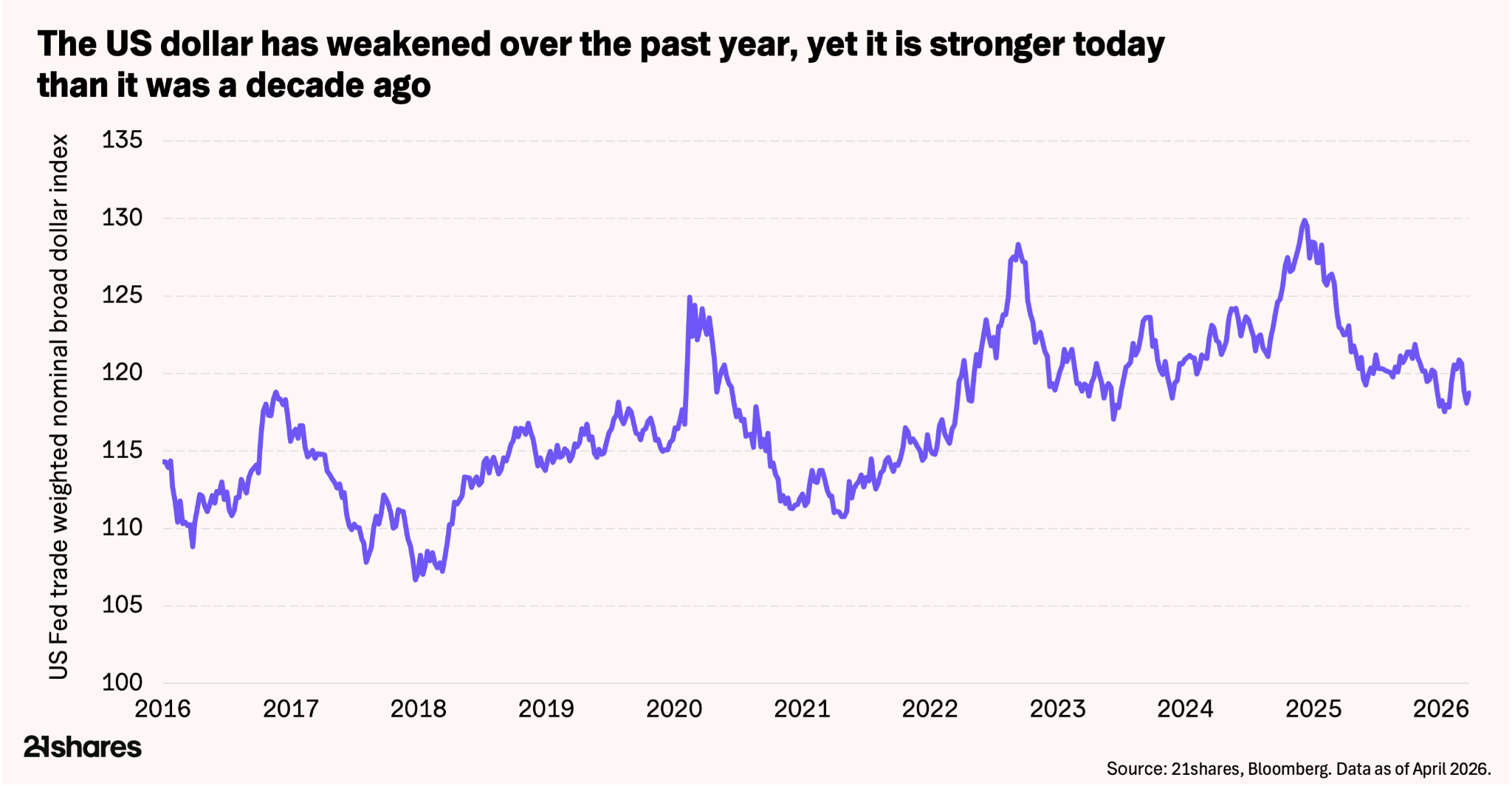
While the US dollar has weakened over the past year, it remains within its five-year range and is stronger today than it was a decade ago.
This lack of systemic stress is also evident in inflation data. While consumer prices rose sharply following the pandemic, and despite the recent surge in oil prices because of the Iran war, underlying inflation has been on a steady downward trend. Even for those skeptical of official data, the trend in broader USD commodity prices – excluding precious metals – shows a decline in absolute terms over the past three years, even taking into account the recent spike in energy prices.

Market indicators for borrowing costs and future inflation expectations reflect a similar stability. US 10-year treasury yields have remained within a narrow range around 4% for three years, while long-term inflation expectations have not budged from the 2.4-2.6% range, again indicating the recent war-induced rise in oil prices has not affected the longer-term inflation outlook.

What, then, has driven the surge in US-dollar-denominated precious metals?
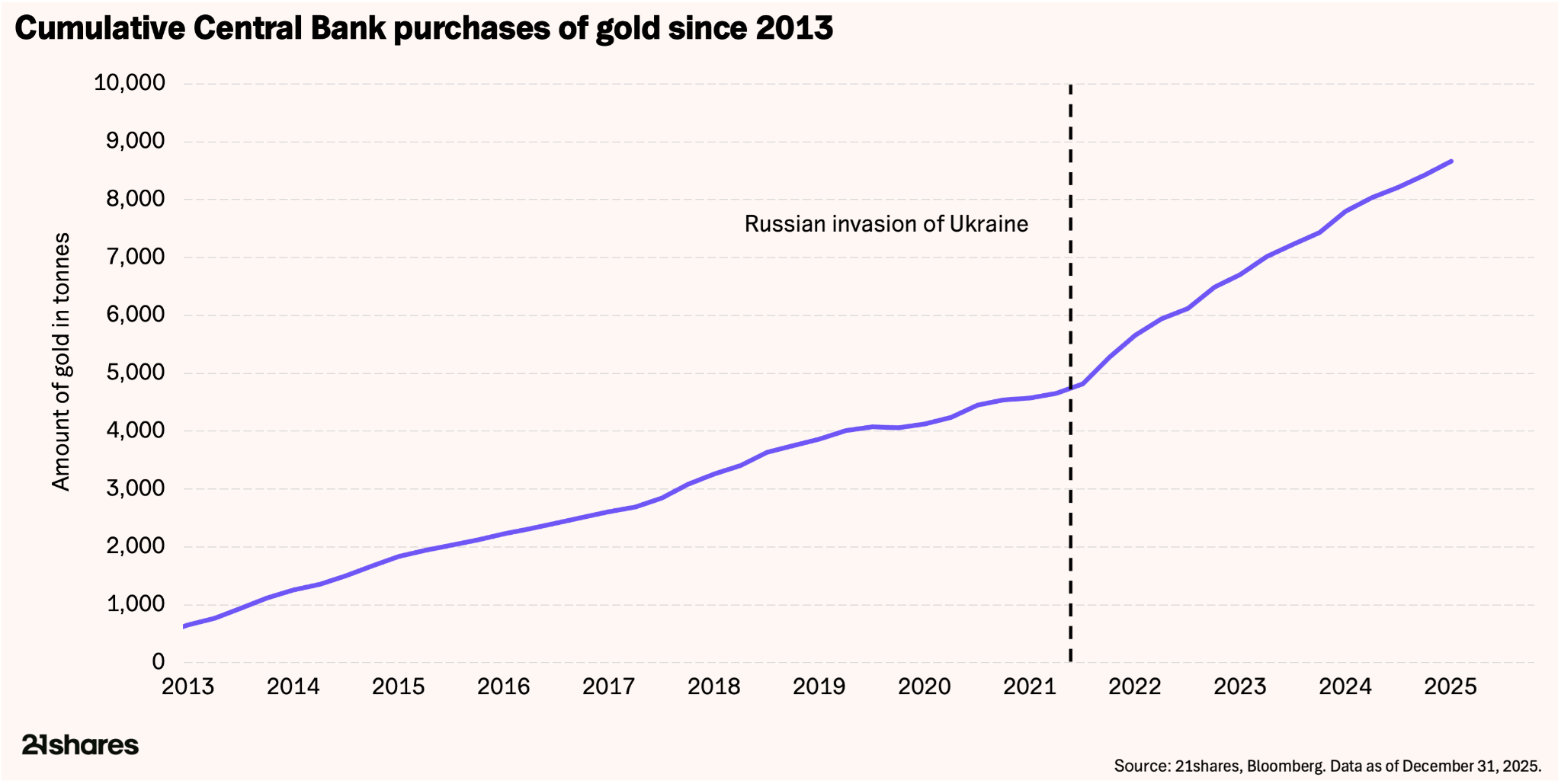
The behavior of the gold market shifted fundamentally in 2022. Historically, there was a predictable inverse relationship between inflation-adjusted US interest rates in the US and gold prices. However, this correlation broke down following the Russian invasion of Ukraine and the G7’s subsequent freeze of Russia’s foreign currency reserves. Despite the aggressive tightening of US monetary policy throughout 2022 and 2023, gold prices held firm before beginning an aggressive rally.
This decoupling suggests that gold is no longer trading simply as a hedge against US inflation, but as a strategic response to new geopolitical realities.
Official data confirms a global increase in central bank gold buying following the freeze of Russia’s foreign reserves, though there is skepticism that these numbers tell the full story. Notably, the Financial Times estimates that China’s actual gold purchases may be 10 times higher than its officially reported figures1.
The China discrepancy: why gold inflows likely exceed official data
China’s trade surplus and its persistent currency market interventions to weaken the yuan are key points of political tension with the United States. While China’s official trade surplus is already highly problematic – running at more than $1 trillion per year – analysts such as Brad Setser at the Council on Foreign Relations believe the true figure is far higher due to discrepancies in national accounts data2.
Regardless, this surplus puts tremendous upwards pressure on the yuan as exporters try to convert their USD earnings back into local currency. To counter this, China’s banking system effectively prints yuan to buy US dollars, preventing the yuan from strengthening (the State Administration of Foreign Exchange reported USD purchases of $100 billion in December alone). This liquidity boom in the Chinese banking system appears to be stoking demand for precious metals.
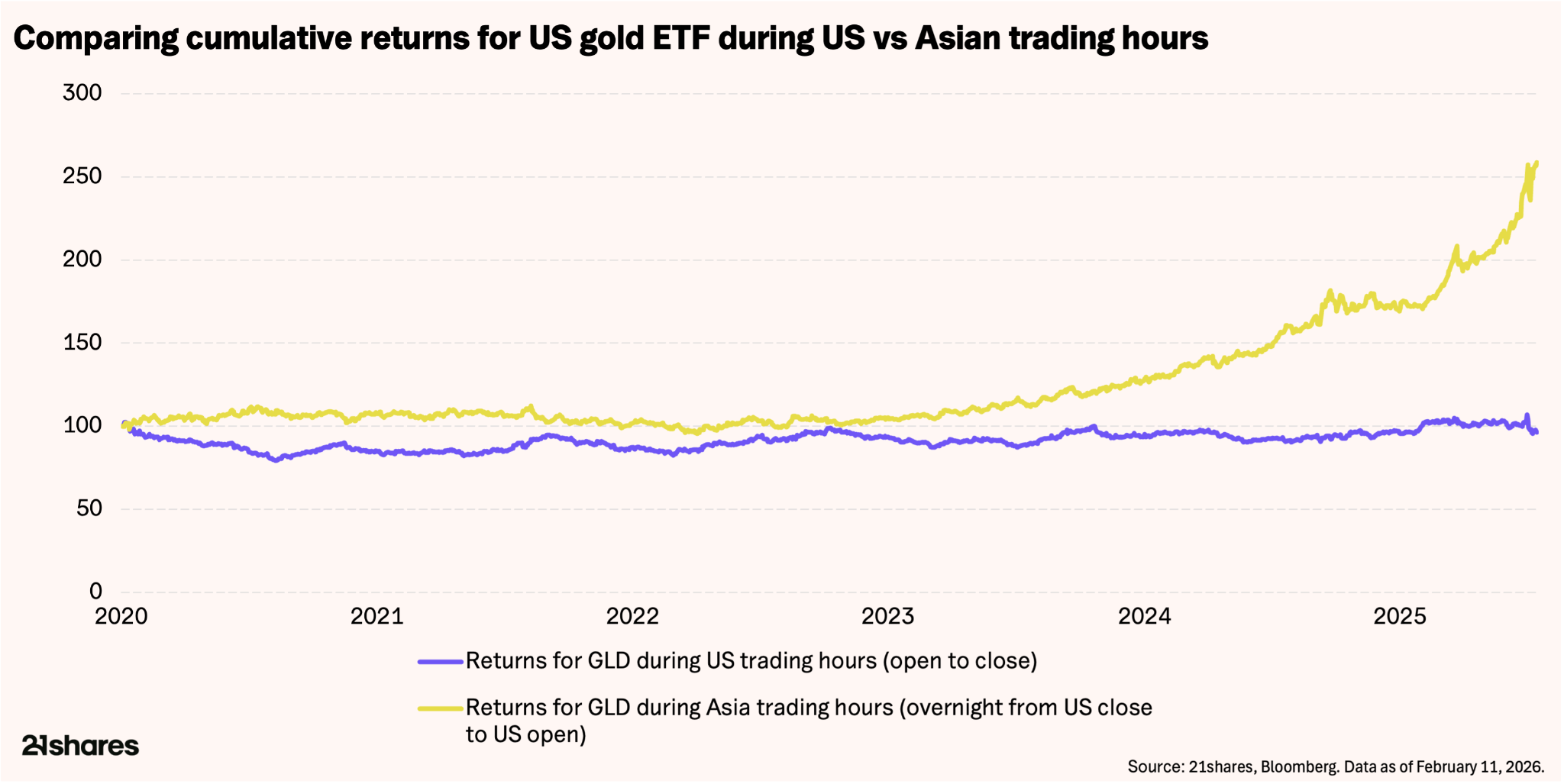
To see the footprint of this demand, one can compare gold ETF flows in the US versus China and analyze price behavior across trading hours.
In terms of ETF divergence: GLD (largest US listed Gold ETF) shares outstanding are at similar levels as 2020, but shares of the largest China-listed gold ETF are up fivefold.

And in regards to trading sessions: All of gold’s gains since 2019 have occurred during the Asian trading session; cumulative returns during US hours have remained flat. Silver tells a similar story.
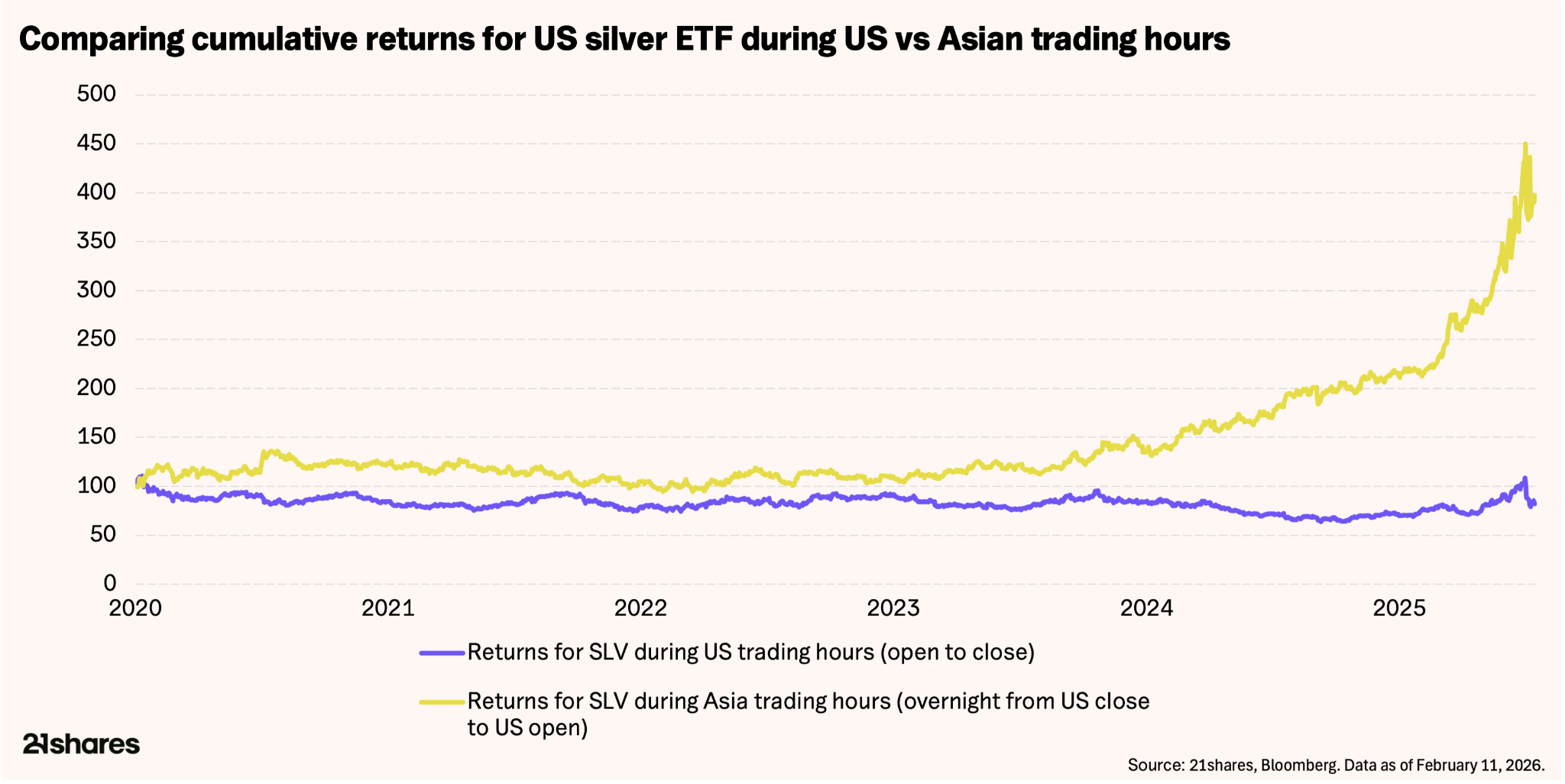
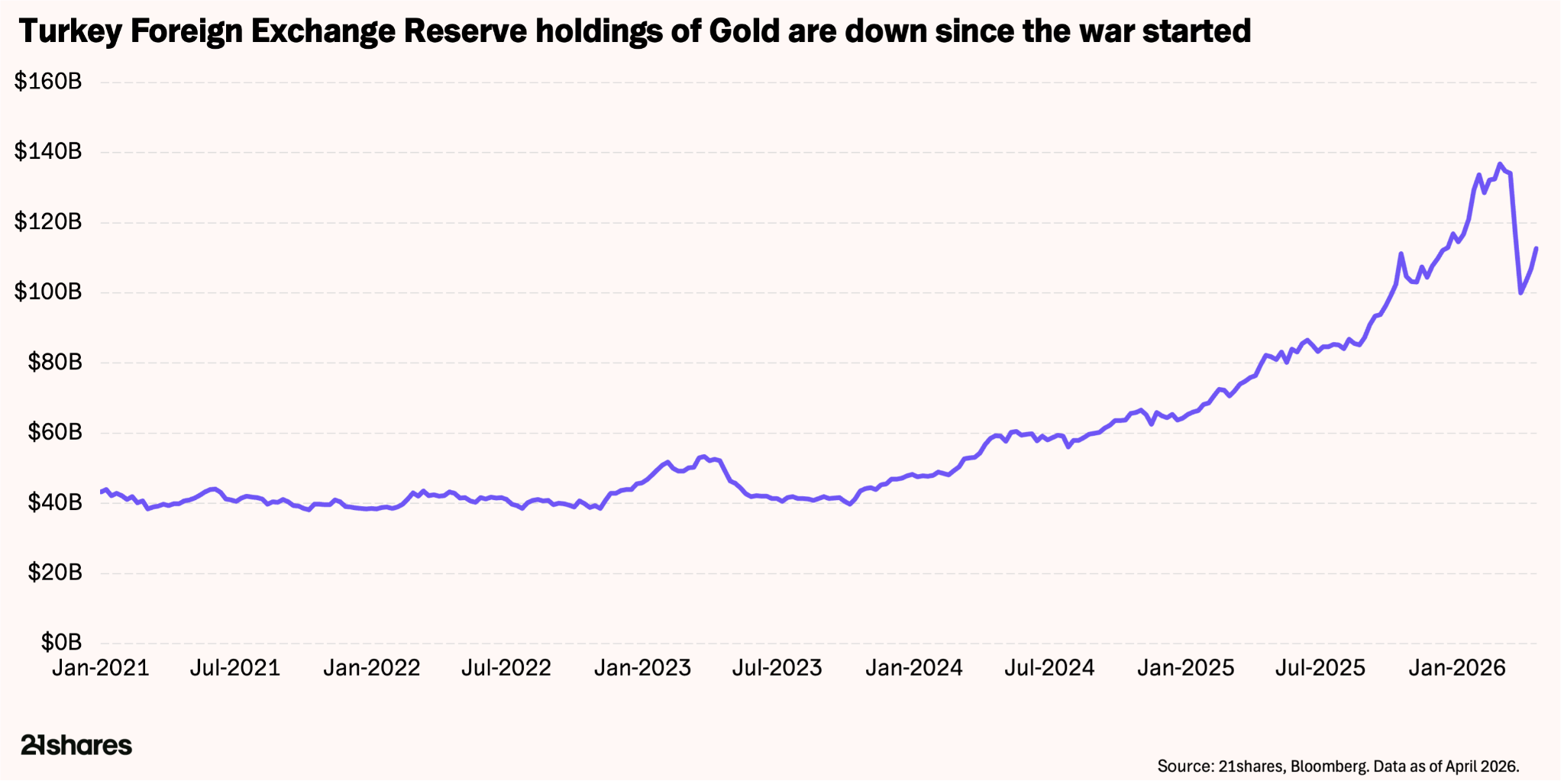
While the Chinese banking system is flush with liquidity, these funds are not reaching digital assets. Cryptocurrency trading is banned in China. Citizens caught trading crypto risk frozen bank accounts and social credit blacklisting. Consequently, the Chinese “debasement” narrative is actually a story of liquidity flooding the banking system as a result of trade surpluses and currency interventions. More recently, since the start of the Iran war, we have seen gold price weakness based on a reversal of these currency intervention flows. Economies reliant on energy imports, such as Turkey, have seen capital flight and a drastic tightening of domestic liquidity, leading them to sell down their gold holdings to defend their currencies.
Digital lifelines: the utility shift driving real-world crypto adoption
Unsurprisingly, the highest crypto adoption rates among ordinary citizens occur in countries suffering from persistent devaluation and unstable banking systems, provided they maintain a legal framework that allows the trading of digital assets.
According to the Chainalysis 2025 Global Crypto Adoption Index, the top twenty countries include Argentina, Venezuela, Turkey, Ethiopia, Russia, Ukraine, Nigeria, and Pakistan3. While these are markets with limited data, a 2025 survey4 in Nigeria found that more than 40% of those with regular internet access are active cryptocurrency users.
In these regions, use cases range from inflation protection and wealth building to commerce and cross-border payments. Increasingly, employees of foreign firms prefer receiving payment in cryptocurrency to avoid the fees and delays of the traditional banking system. In Argentina, for example, only 2% of tech service workers are estimated to receive their salaries in local currency5; the majority choose to receive digital assets – primarily stablecoins but also bitcoin – via blockchain. For those who understand the reality of debasement, cryptocurrencies offer a vital lifeline for maintaining financial independence in chaotic and volatile environments.
A dual-asset defense: why one hedge is no longer enough
Gold and cryptocurrencies are both essential tools for maintaining financial independence, as neither depends on a trusted third party. While both serve as hedges against debasement, their near-term drivers differ – particularly given the drivers of gold have been somewhat idiosyncratic since 2022, as outlined above.
The United States has not suffered “debasement” in recent years, but fiscal projections suggest it is firmly on that path, along with many other developed economies. Current forecasts indicate that growing segments of hitherto “developed” markets will begin to exhibit “emerging” market characteristics, such as heightened currency volatility and funding-market stresses. The 2022 collapse of the British pound and the concurrent surge in gilt yields serve as primary examples of this shift.
For those building diversified portfolios designed to be robust across a variety of market regimes, an allocation to both gold and cryptocurrencies provides a more resilient defense against the coming fiscal environment.
______
Footnotes:
- FT, “China’s secretive gold purchases help fuel record rally”, November 2025. https://www.ft.com/content/b77a95b0-ee74-4bde-b11f-32ee0fe03cd8.
- Council on Foreign Relations, “The PBOC, The State Banks, and Backdoor Intervention”, February 2026. https://www.cfr.org/articles/the-pboc-the-state-banks-and-backdoor-intervention.
- Chainalysis, “The 2025 Global Adoption Index”, September 2025. https://www.chainalysis.com/blog/2025-global-crypto-adoption-index/.
- Quidax , “The State of Crypto Adoption in Nigeria”, August 2025. https://business.quidax.io/sectorial-report#hero-section.
- Perfil, Solo el 2% de los profesionales que exportan servicios digitales cobran en pesos, December 2025. https://www.perfil.com/noticias/economia/solo-el-2-de-los-profesionales-argentinos-que-exportan-servicios-digitales-cobran-en-pesos.phtml.






.svg)



_logo.svg)

.svg.png)