
.jpg)
The US is stepping up its game in crypto regulation. Last week, the Commodity Futures Trading Commission (CFTC) and the Securities and Exchange Commission (SEC) began implementing key recommendations from “Strengthening American Leadership in Digital Financial Technology,” a 166-page report by the President’s Working Group on Digital Assets.
Let’s take a look at it.
What the report recommends
- Protect the right to use blockchain technology: The report affirms the right of Americans to own digital assets and use blockchain technologies legally. It urges Congress to pass laws protecting self-custody and peer-to-peer transactions.
- Unleash US crypto markets: The report recommends giving the CFTC clear authority over spot markets for non-security digital assets and allowing flexible licensing for market participants.
- Aim to benefit banks: Regulators are encouraged to adopt a tech-neutral approach and support lawful crypto-related banking activities. They should restart crypto guidance efforts and clearly define approval processes for bank charters and Reserve Bank accounts.
- Back stablecoins, not CBDCs: The report recommends that agencies should implement the GENIUS Act, support responsible private-sector innovation in cross-border payments, and promote international standards aligned with US values. The report recommends banning Central Bank Digital Currencies (CBDCs).
- Crack down on bad actors: To combat illicit use of digital assets, the report calls for clarifying the Bank Secrecy Act’s (BSA) reach over foreign actors, enhancing public-private data sharing, and issuing clear AML/CFT guidance for digital asset services.
- Tax clarity: Treasury and the IRS should issue guidance on staking, mining, asset classification, and taxable events. Congress should update tax laws to address digital assets as a distinct category, apply wash sale rules, and ensure fair treatment of transactions involving wrapping and unwrapping.
A win for retail investors
Regulatory clarity matters as it influences how well crypto performs and how long the industry lasts.

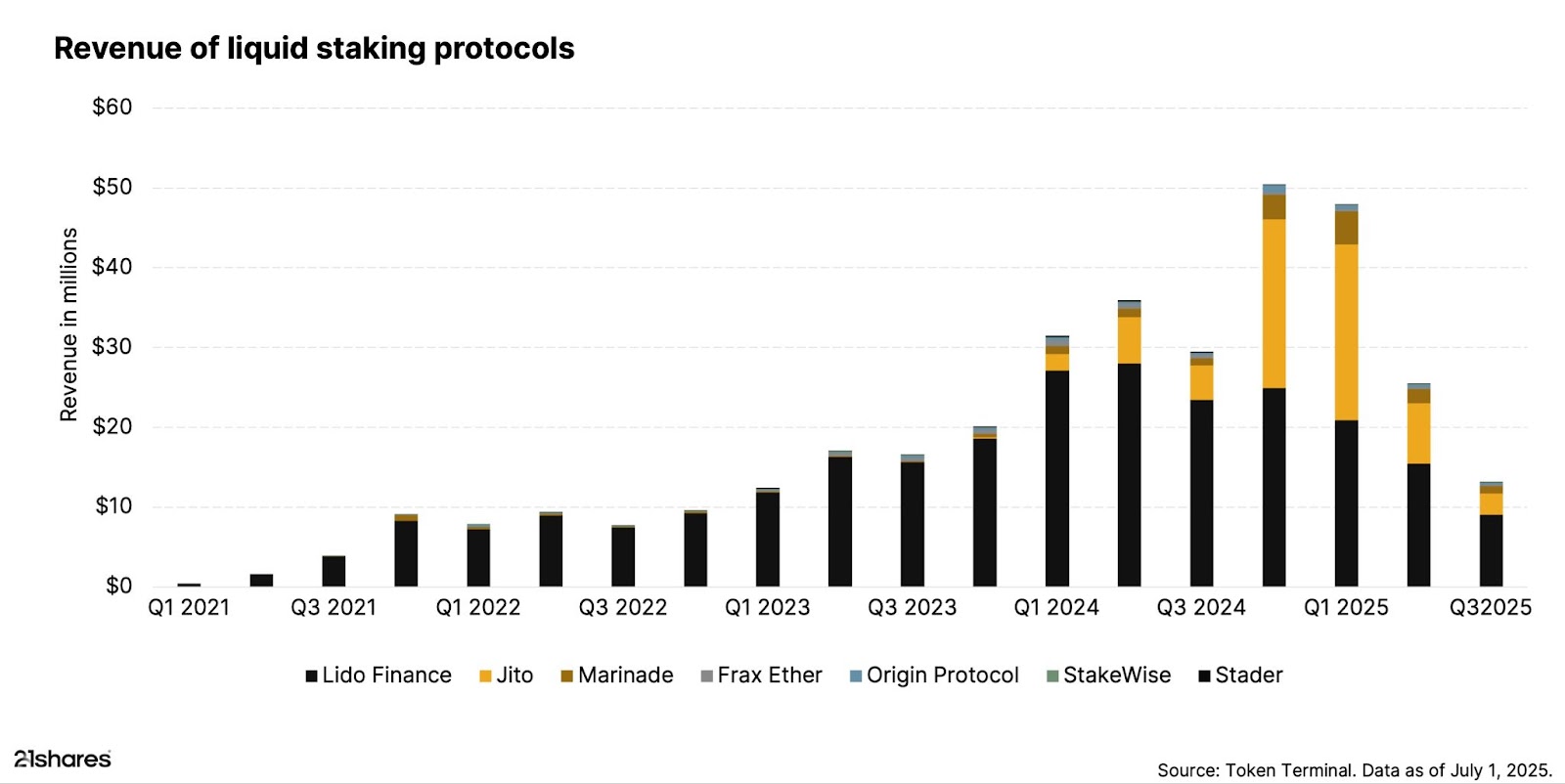
A recent example is of August 5, when the SEC said that certain “liquid staking” activities may not be securities under the Securities Act of 1933 or the Exchange Act of 1934. The agency made clear that whether an activity is a security depends on the specific facts and circumstances, which gives much-needed guidance.
Put simply, the SEC effectively said that some liquid-staking services (including those run by projects like Lido on Ethereum and Jito on Solana) are not automatically treated as securities, relieving them from certain securities-law requirements.
That’s great news for retail investors as regulators are bringing more clarity to the rules.
What remains to be done?
The US still lacks a market structure bill to establish clear regulatory authority over crypto. The House has passed the CLARITY Act; however, its future lies in the Senate. The goal of this bill is to clarify when a digital asset should be treated as a security (regulated by the SEC) or a commodity (regulated by the CFTC).
Lawmakers will revisit the issue after their August break. With other proposals, like the Senate’s Responsible Financial Innovation (RFI) Act, also on the table, the next steps depend on agreeing on which agency should be in charge and creating straightforward rules for crypto.






.svg)



_logo.svg)

.svg.png)