

As US Big Tech earnings are out, Bitcoin is back in the spotlight. Sometimes it moves like tech stocks, other times it goes its own way. That’s why many debate whether Bitcoin is a “high-beta Nasdaq proxy,” a kind of leveraged play on tech sentiment.
The chart below shows why this idea persists: Bitcoin has significantly outperformed both the Nasdaq and even a 2x leveraged Nasdaq index (designed to double the daily returns or losses of the Nasdaq) over the past three years.
But Bitcoin isn’t just a “tech stock in disguise.”
Bitcoin is an asset shaped by multiple narratives. Designed as a tool for monetary resilience, Bitcoin was never meant to mirror corporate earnings cycles or tech multiples. It behaves like a growth asset in some macro regimes, and like a hedge in others. That duality is at the core of Bitcoin’s strength.
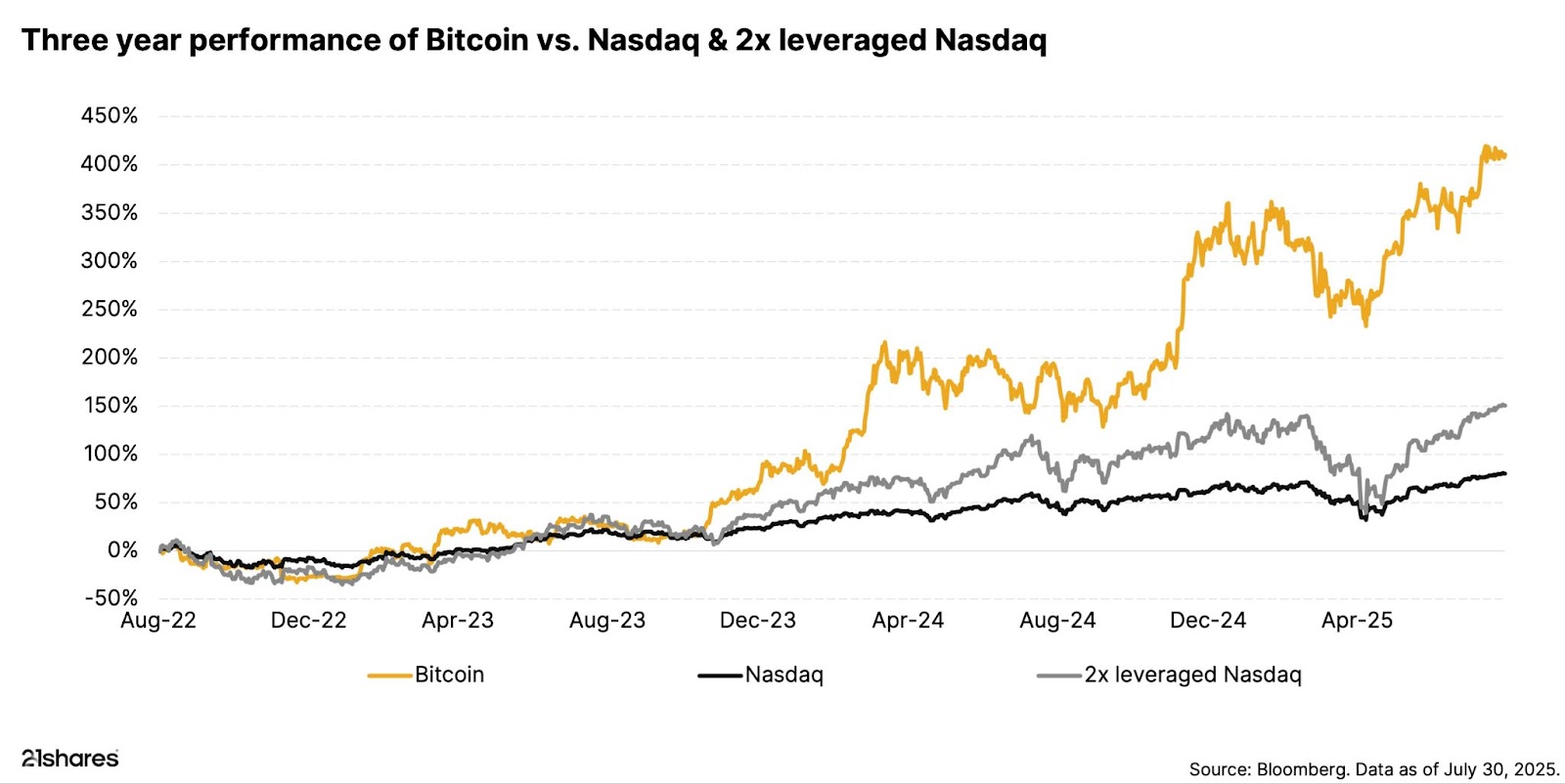
Bitcoin vs. Nasdaq vs. 2x Leveraged Nasdaq
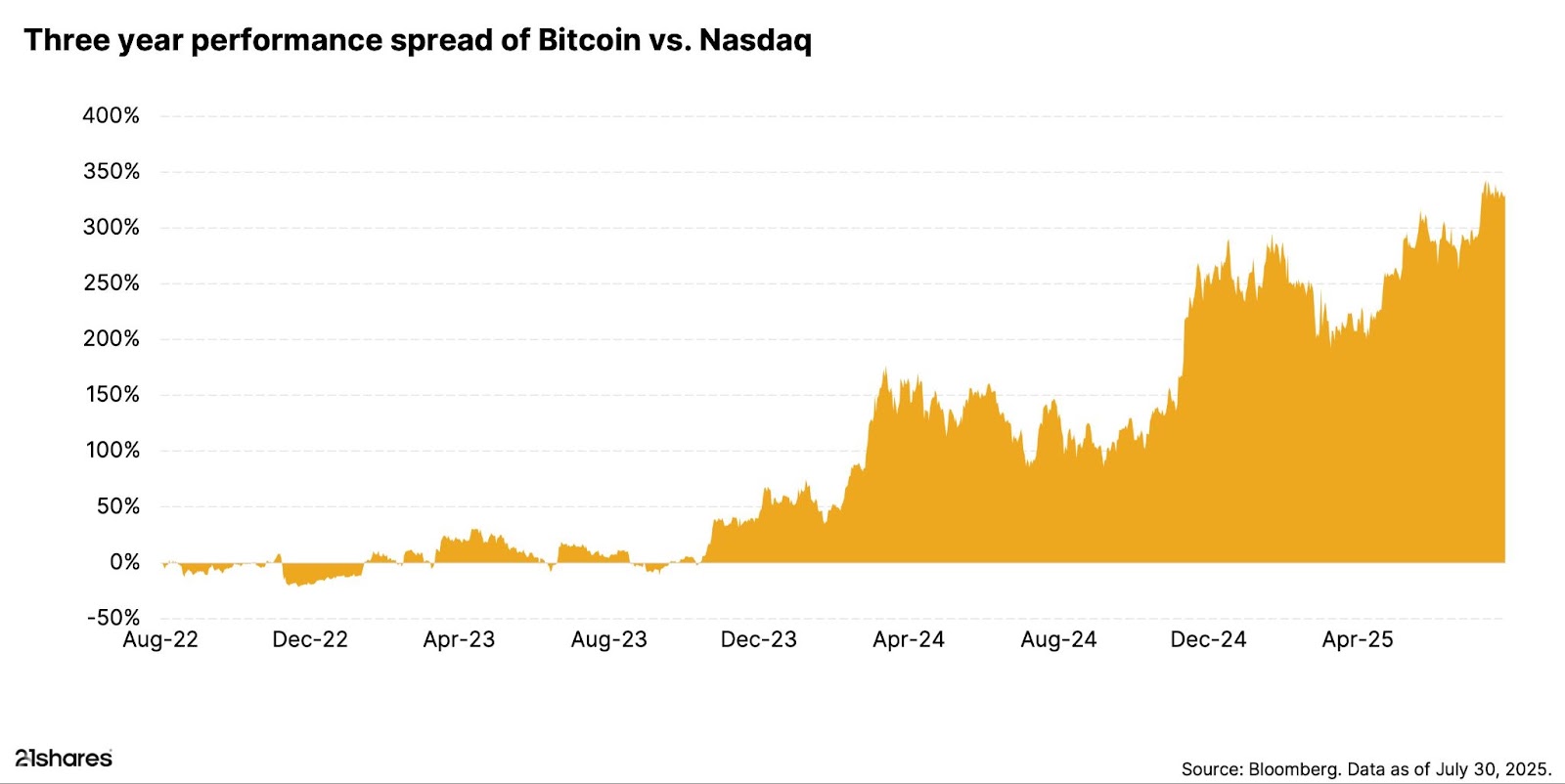
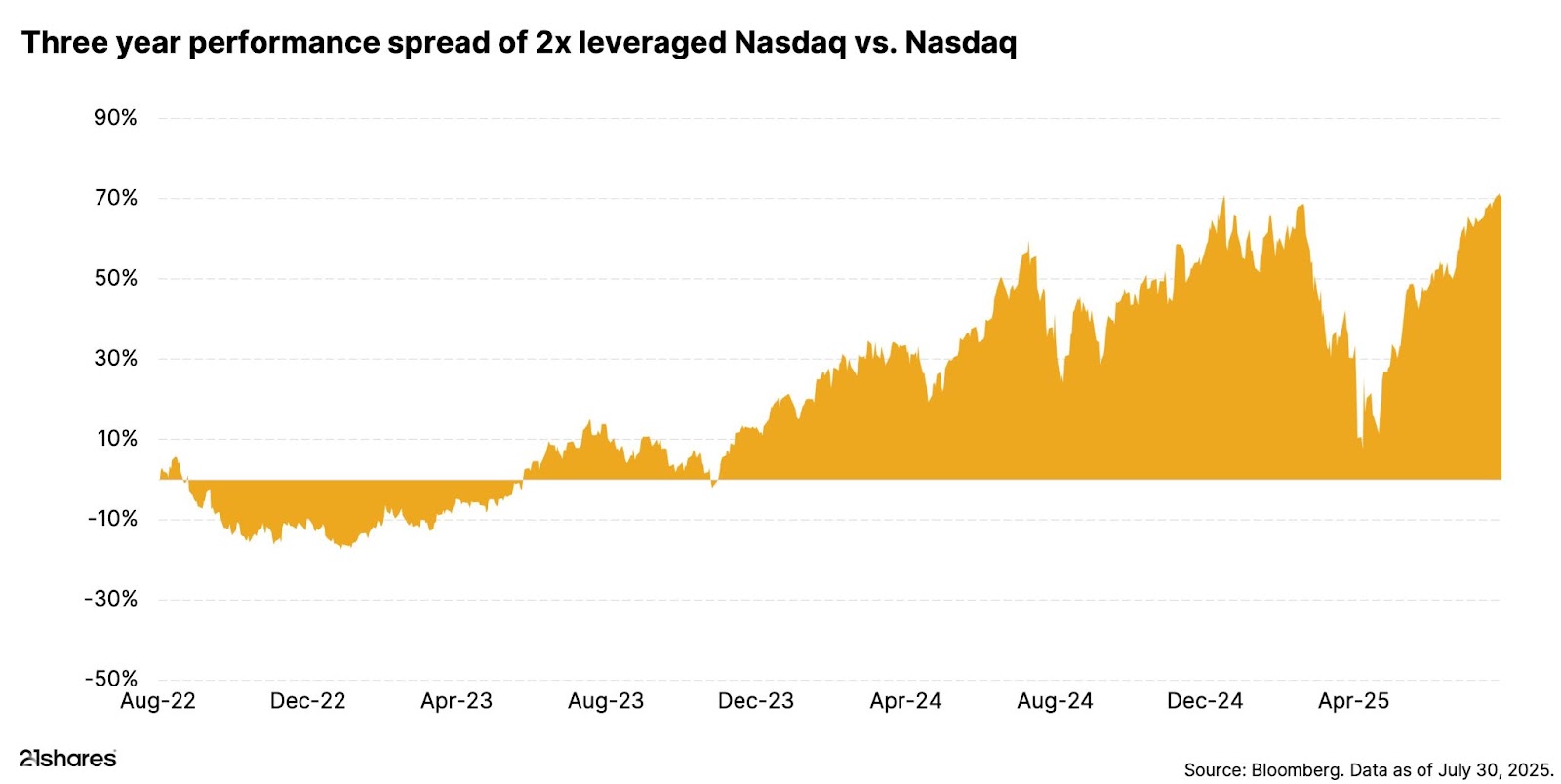
To better understand this divergence, we turn to performance spreads, comparing Bitcoin to the Nasdaq, and separately, the 2x leveraged Nasdaq to its underlying vanilla index.
The divergence becomes clear in late 2024, after Trump’s election win, seen as a turning point for crypto regulation. While the Nasdaq stayed flat, Bitcoin started to break away.
By mid-2025, tech stocks fell on renewed trade worries, and the 2x leveraged Nasdaq dropped even more. But Bitcoin held up better, showing signs of acting as a macro hedge during uncertainty.
This contrast shows how the leveraged Nasdaq simply magnifies tech stock moves. Bitcoin is different as unique factors outside the tech world drive its price moves.
That pattern also holds in scatter analysis. A regression of cumulative returns shows that Bitcoin has a beta of around 0.7 to the Nasdaq, which is below the expectations of a leveraged asset. But more telling is the variance in Bitcoin’s performance: its returns deviate significantly from the regression line, especially during outlier events.
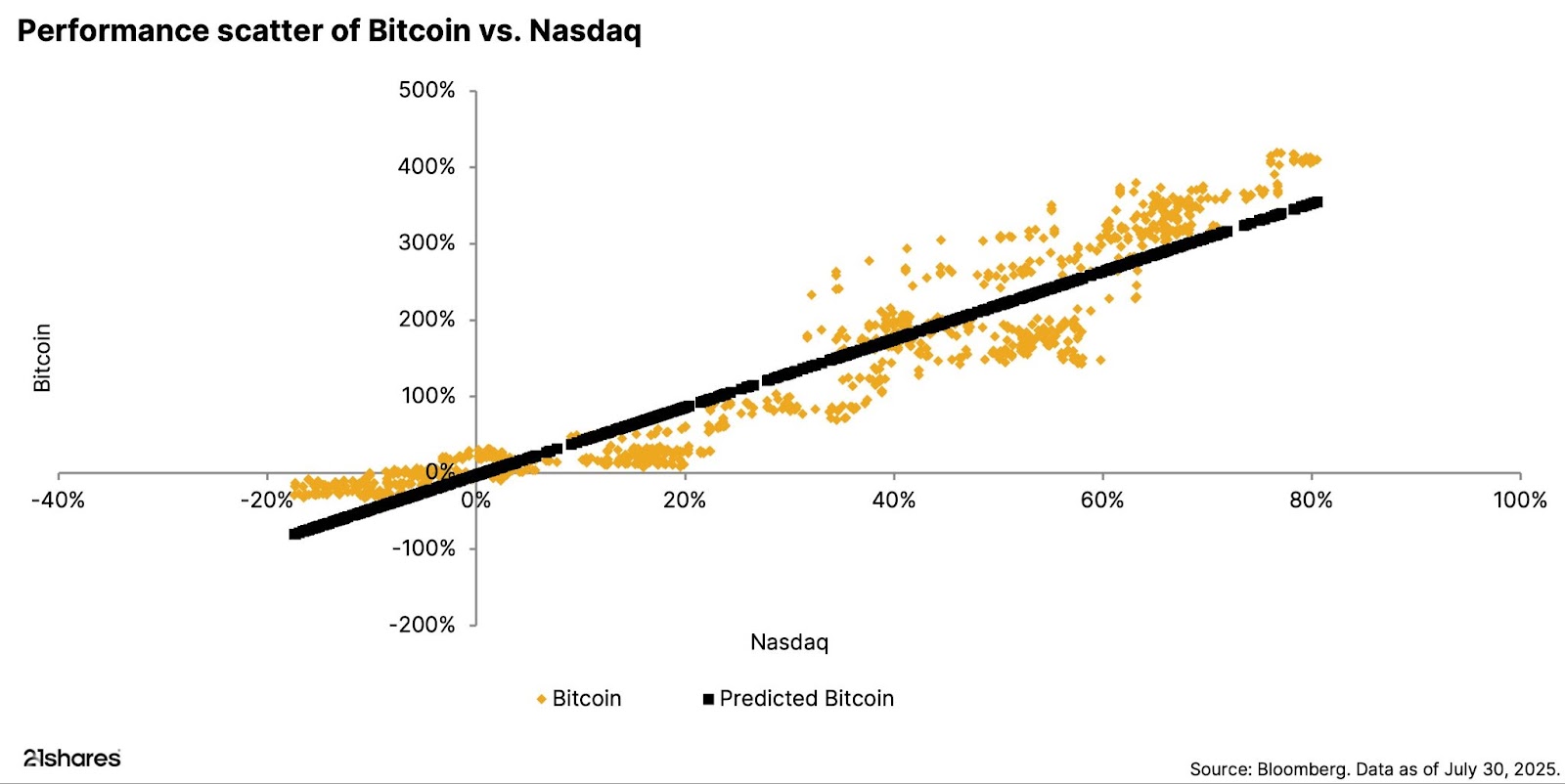
Now compare that with the 2x Leveraged Nasdaq. Here, the relationship is much tighter with a beta that aligns closely with expectations of 2.0. The data hugs the trendline, with drawdowns and rallies largely mirroring the Nasdaq directionality, just scaled up.

Bitcoin’s correlation with the Nasdaq is low
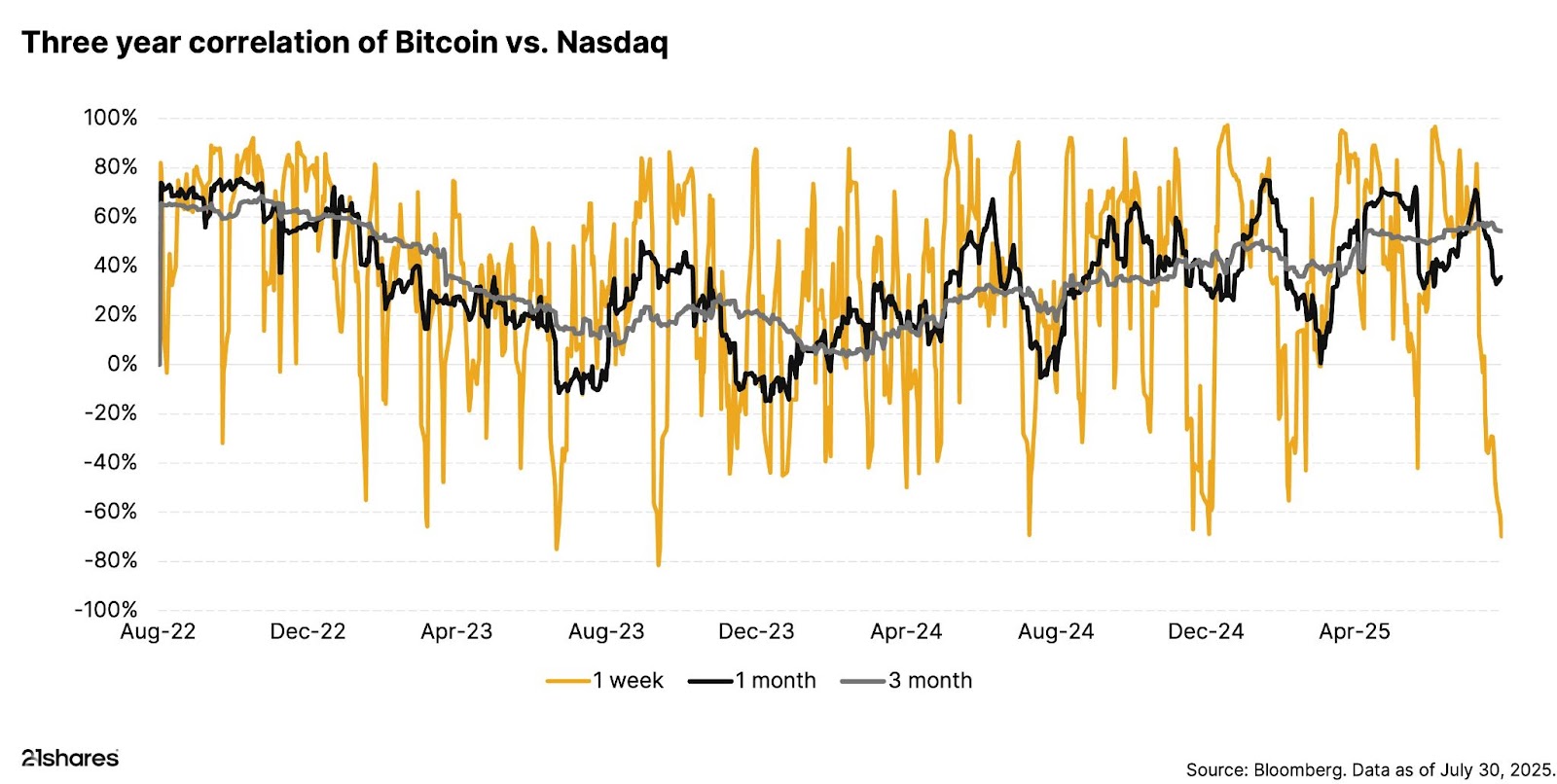
The chart below shows that Bitcoin’s correlation with the Nasdaq is low, around 35%, and it’s not stable. It can rise during big market rallies but often breaks down during major economic shifts, highlighting Bitcoin’s unique behavior.
Two recent examples stand out:
- In April 2025, as trade tensions rattled equity markets, Bitcoin's correlation collapsed.
- In July 2025, amid regulatory optimism and institutional inflows, Bitcoin rallied sharply while tech remained relatively flat.
These decoupling moments are valuable. They enable Bitcoin to act as either a return amplifier or a volatility buffer, depending on the prevailing market conditions.
The bottom line
Bitcoin’s unique performance, lower correlation with technology stocks, and evolving relationship with the market indicate that it behaves asymmetrically in meaningful ways.
This debunks the notion of Bitcoin as a simple leveraged Nasdaq play. Instead, it’s becoming a new kind of macro asset, still growing but already offering a distinct investment option that traditional stocks can’t match. For investors looking for something different, Bitcoin stands apart.





.svg)



_logo.svg)

.svg.png)